
Rival Store Closures Spark Sales Turnaround, Boosting Brazil Stocks
Magazine Luiza’s October sales grew as rival Casas Bahia's bankruptcy and closure of 300 stores handed the e-commerce giant a market-share windfall.
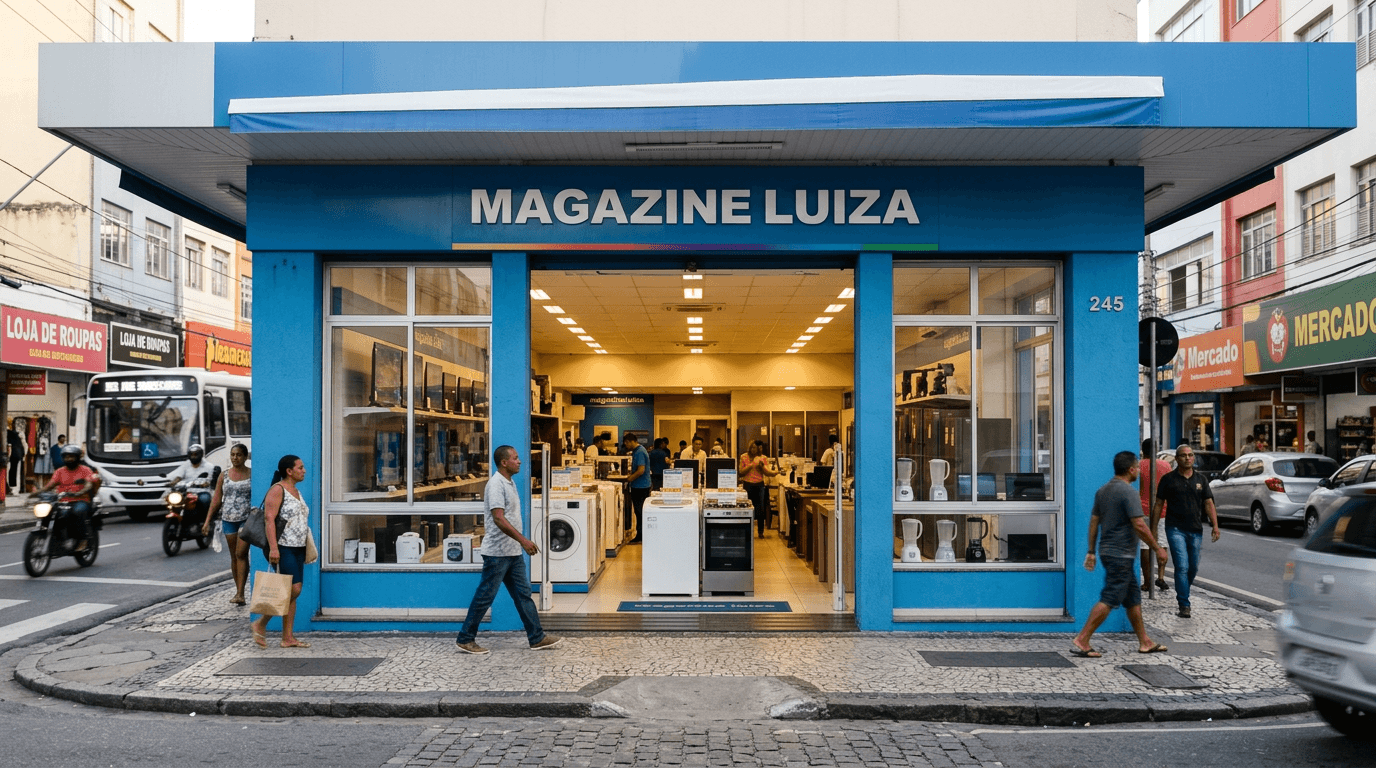
For retail investors tracking global e-commerce in their brokerage apps, a dramatic shake-up in South America's largest retail market is proving that one competitor’s bankruptcy can trigger a massive turnaround for another. In a material fact filed on November 9, 2026, Brazilian retail giant Magazine Luiza S.A. disclosed a first-ever October sales preview showing that its physical store sales grew 16% year-over-year and its proprietary (1P) e-commerce sales jumped 14% year-over-year.
This sudden operational acceleration marks a major shift in the e-commerce landscape, reversing a cumulative 12% decline in the company's online sales from January to August 2026, according to the same November 9, 2026 securities filing. The engine behind this sudden windfall is the swift collapse of its arch-rival, Casas Bahia, which shuttered 298 retail stores as part of its August 16, 2026 bankruptcy filing, reported by Reuters.
To an American investor, Casas Bahia and Magazine Luiza are the equivalent of Walmart and Target in Brazil's retail sector, historically locked in a fierce battle for working-class consumers. These shoppers rely heavily on installment-plan financing (known locally as carnê) to buy household appliances, furniture, and electronics. However, a prolonged period of high interest rates and credit restrictions squeezed consumer wallets, forcing Casas Bahia into judicial reorganization—Brazil's version of Chapter 11 bankruptcy—to restructure 17.3 billion reais ($3.46 billion) in debt, per court documents from August 16, 2026, reported by Courthouse News.
Magazine Luiza has swiftly stepped in to capture this newly orphaned market share. By keeping its own physical stores open and expanding its digital marketplace, the retailer absorbed the displaced demand, translating Casas Bahia's distress into its own double-digit revenue gains in October 2026. The sudden shift has sent shockwaves through the local stock market. In the trading week ending November 13, 2026, Magazine Luiza's local shares (MGLU3) surged 39.22% to end at R$ 7.81, crowning it the top weekly gainer on Brazil’s benchmark Ibovespa index, according to market data.
While this October sales preview signals a powerful operational pivot, global investors should watch whether Magazine Luiza can translate this market-share windfall into sustained, long-term profitability. With Brazil's central bank maintaining elevated interest rates (the Selic rate) to curb inflation, the cost of funding installment credit remains high, meaning that consumer discretionary spending will continue to face headwinds. The ultimate test will come when the company reports its full consolidated fourth-quarter financial results in early 2027, which will reveal whether this holiday season marks a permanent turnaround or a temporary consolidation peak.
In your brokerage app
For U.S. retail investors, Magazine Luiza trades in the over-the-counter market as an unsponsored American Depositary Receipt under the ticker MGLUY, which ended at $5.45 on November 13, 2026, according to OTC Markets data. Those seeking broader exposure to the Brazilian retail consolidation without individual stock risk can look to the iShares MSCI Brazil ETF (EWZ), which holds diversified stakes in Brazil’s largest publicly traded enterprises.
Latest articles
 How Grain Futures Shift Past Brazil Stock Market Holidays in 2026Large speculators trimmed their net-long soybean positions as of November 3, 2026, navigating a record-breaking South American export crop.
 How a Major Brazil Holding Company Is Swapping CEOs to Slash DebtBrazilian conglomerate Cosan announced CEO Marcelo Martins is stepping down in January 2027 as the company shifts from expansion to aggressive deleveraging.
 Court Delay on Brazil Shorter Workweek Eases Corporate PressuresSupreme Court Justice Luiz Fux halts a virtual trial on Brazil's 6x1 to 5x2 workweek transition, resetting votes but leaving a temporary December start date active.