
Why Corporate Headwinds in Brazil Today Match Wall Street Expectations
Brazil’s Senate backs a $10.8B spending-cut bill as high interest rates, new labor rules, and a temporary Philippine pork ban squeeze corporate margins.
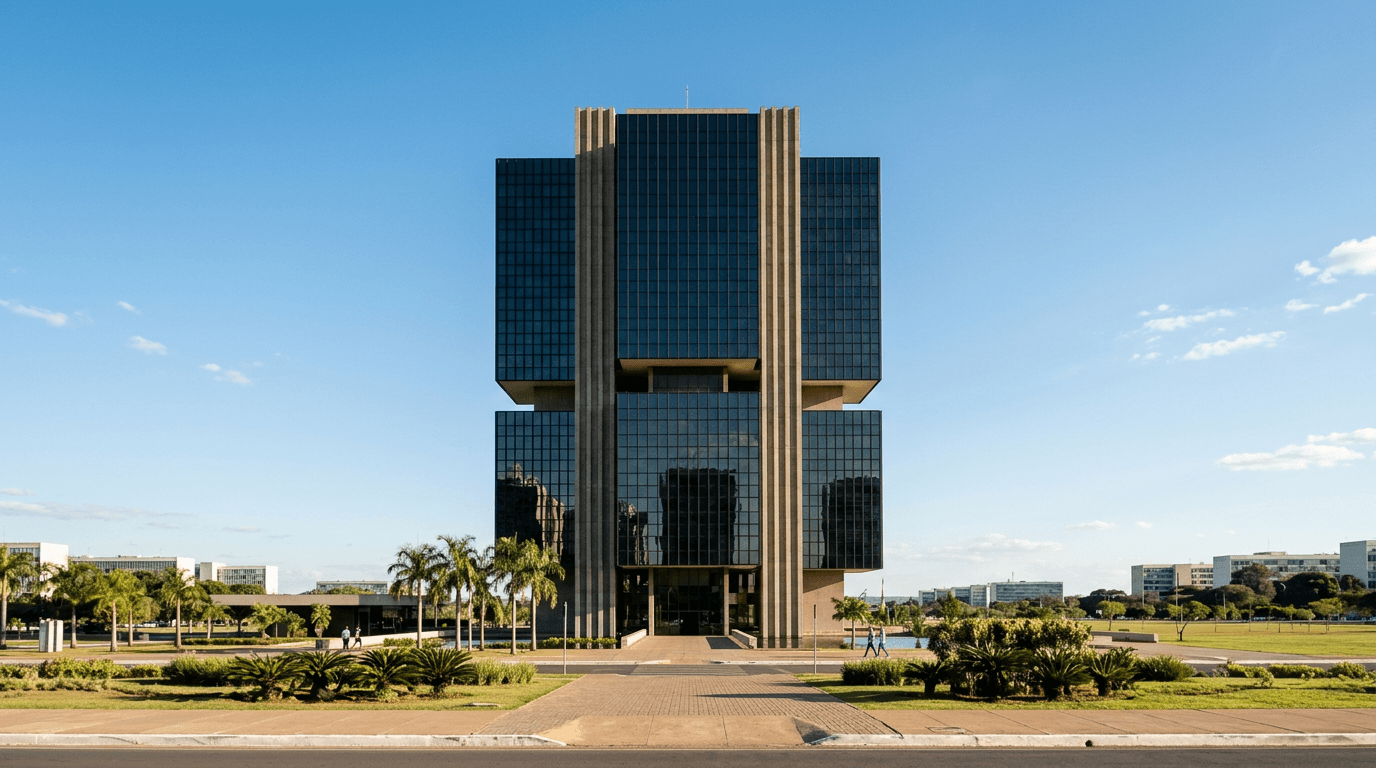
For American retail investors holding international funds, the persistent high-interest-rate environment abroad directly affects their portfolio returns. This mechanical link is on full display in Latin America’s largest economy, where the Banco Central do Brasil recently paused its rate-cutting cycle, holding its benchmark Selic rate at a highly restrictive 13.75% per year on November 4, 2026. In response to this hawkish turn and mounting debt worries, the Brazilian Senate stepped in on November 12, 2026, passing the base text of an ambitious R$60 billion (approximately $10.8 billion) fiscal package to curb spending and support the volatile Brazilian real.
High Rates Clash with Fiscal Relief
While macroeconomic policymakers scramble to reassure Wall Street, corporate operations face a massive, state-mandated shift in labor rules. On October 16, 2026, the Brazilian Congress promulgated Constitutional Amendment 141/2026, which permanently bans the traditional six-day workweek and reduces maximum weekly hours from 44 to 40 over a 14-month transition. The first drop, to 42 hours, takes effect on December 16, 2026.
Because wages cannot be reduced, retail experts project this reform will automatically increase hourly labor costs by up to 10%. Giant retail chains like Assaí Atacadista, which employs more than 90,000 workers, are already preparing to shorten store hours and accelerate self-checkout automation to defend their margins.
Shorter Weeks and Squeezed Margins
This operational squeeze is already punishing dominant regional platforms. In its third-quarter financial results reported on November 4, 2026, Nasdaq-listed e-commerce giant MercadoLibre posted a massive 45% jump in revenue to $10.75 billion, yet saw its operating margin compress to a thin 6.3%.
To fight off global competitors like Amazon, the company chose to subsidize more transactions by slashing its free-shipping threshold in Brazil. While this aggressive strategy successfully grew Brazilian sales volumes by 45%, the high logistics costs directly ate into the company’s operating income, which fell to $676 million.
Pork Bans and Trade Negotiations
On the agricultural front, Brazil's global meat exporters are facing sudden barriers in their most critical markets. The Philippines, which represents Brazil's largest customer for pork exports and accounts for 23.36% of its overseas volume, announced a temporary 60-day pork import suspension starting November 24, 2026.
Signed on November 7 by Philippine Agriculture Secretary Francisco Tiu Laurel Jr., the ban is a protective measure for struggling domestic farmers. The disruption is so significant that Brazilian President Luiz Inácio Lula da Silva flew to Manila on November 13, 2026, to personally negotiate a resolution with Philippine President Ferdinand Marcos Jr.
Looking ahead, global investors must watch how these micro and macro pressures converge. The fiscal package approved by the Senate faces a critical round of votes on outstanding amendments on November 17, 2026, before it moves to the Chamber of Deputies. Meanwhile, the initial phase of the mandatory shorter workweek begins on December 16, 2026.
In your brokerage app
American investors holding shares of MercadoLibre, which is listed in New York, or tracking broad-market emerging market funds like the iShares MSCI Brazil ETF, are directly exposed to these developments. While MercadoLibre faces high shipping costs in Brazil to defend its market share, the broader corporate sector must navigate the 13.75% benchmark interest rate and the upcoming labor adjustments.
Analysis · NWX analysis desk
Which Brazil assets this touches
- EWZ, NU, STNE, PAGS, IBOV — Big swings in U.S. tech stocks tend to spill into Brazil's fintechs listed in New York and into the broad Brazil fund, as global investors change how much risk they hold.
Technical picture · iShares MSCI Brazil ETF (EWZ)
iShares MSCI Brazil ETF (EWZ) closed at $32.22 on Nov 13, 2026, up 0.8% from five sessions earlier. The last close is below its 20-day average of $35.03 and below its 50-day average of $37.59. Since May 12, 2026 it has traded between $31.73 (low, Nov 3, 2026) and $43.54 (high, Oct 9, 2026).
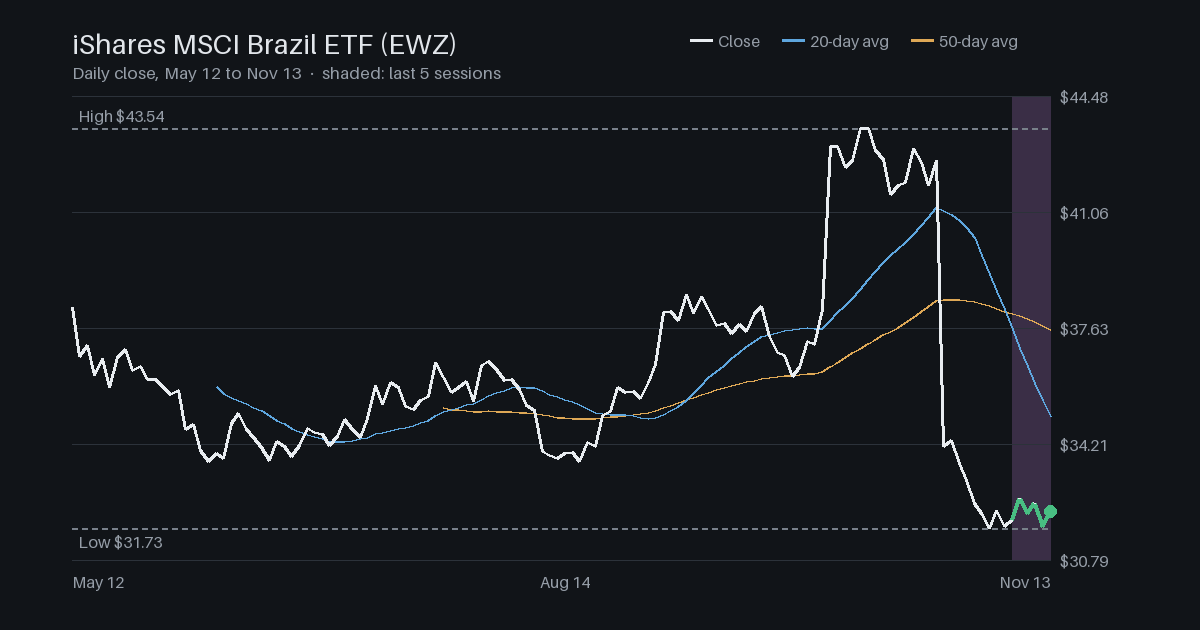
| Last close | $32.22 | Closing price on Nov 13, 2026. |
|---|---|---|
| 5-session move | +0.8% | Change in the closing price over the last five trading days. |
| 20-day average | $35.03 | The average closing price of the last 20 trading days. |
| 50-day average | $37.59 | The average closing price of the last 50 trading days. |
| Period high | $43.54 | Highest price since May 12, 2026. |
| Period low | $31.73 | Lowest price since May 12, 2026. |
Related coverage
 How Grain Futures Shift Past Brazil Stock Market Holidays in 2026Large speculators trimmed their net-long soybean positions as of November 3, 2026, navigating a record-breaking South American export crop.
 How a Major Brazil Holding Company Is Swapping CEOs to Slash DebtBrazilian conglomerate Cosan announced CEO Marcelo Martins is stepping down in January 2027 as the company shifts from expansion to aggressive deleveraging.
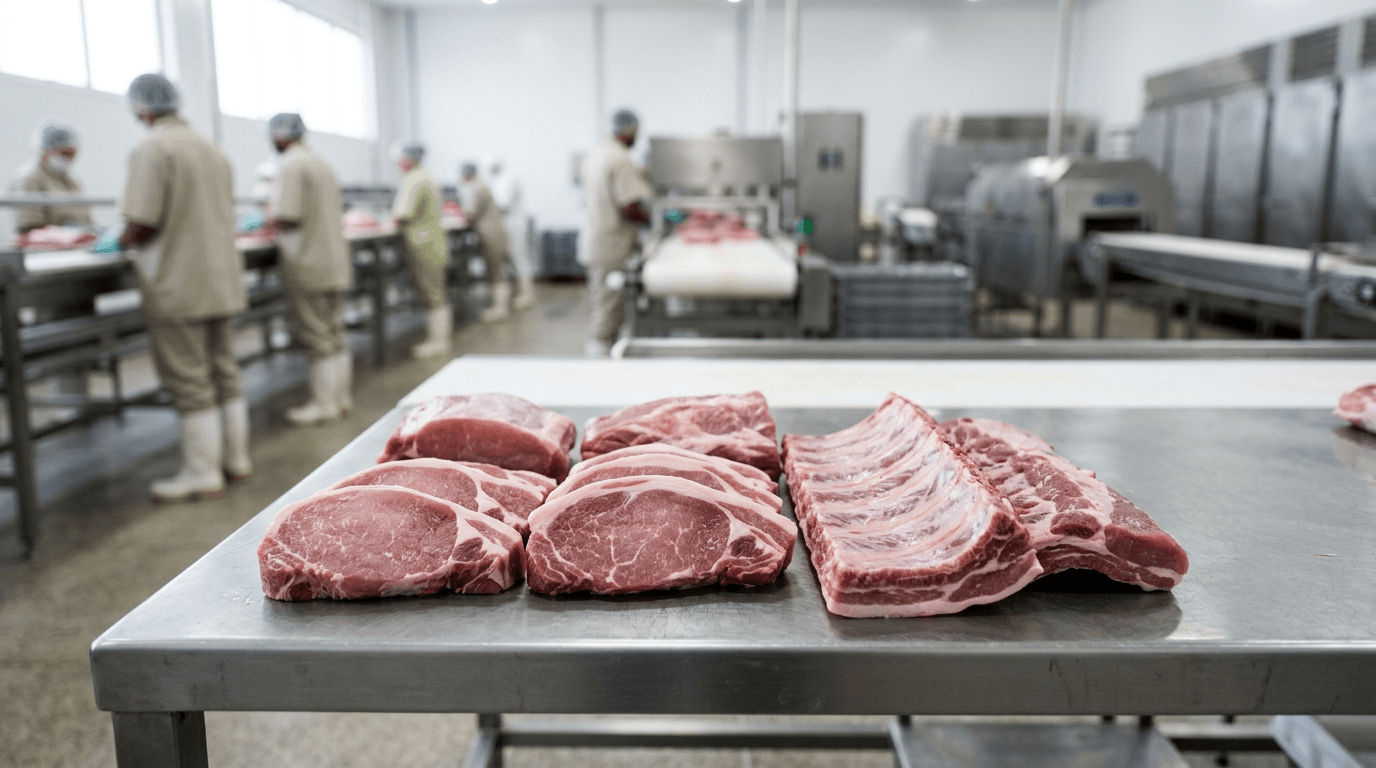 Philippines Pork Ban on Brazil, the Food Giant, Impacts Meat StocksA temporary 60-day safeguard on pork by the Philippines, Brazil’s top export market, raises the risk of domestic oversupply and price pressures.