
How a Major Brazil Holding Company Is Swapping CEOs to Slash Debt
Brazilian conglomerate Cosan announced CEO Marcelo Martins is stepping down in January 2027 as the company shifts from expansion to aggressive deleveraging.
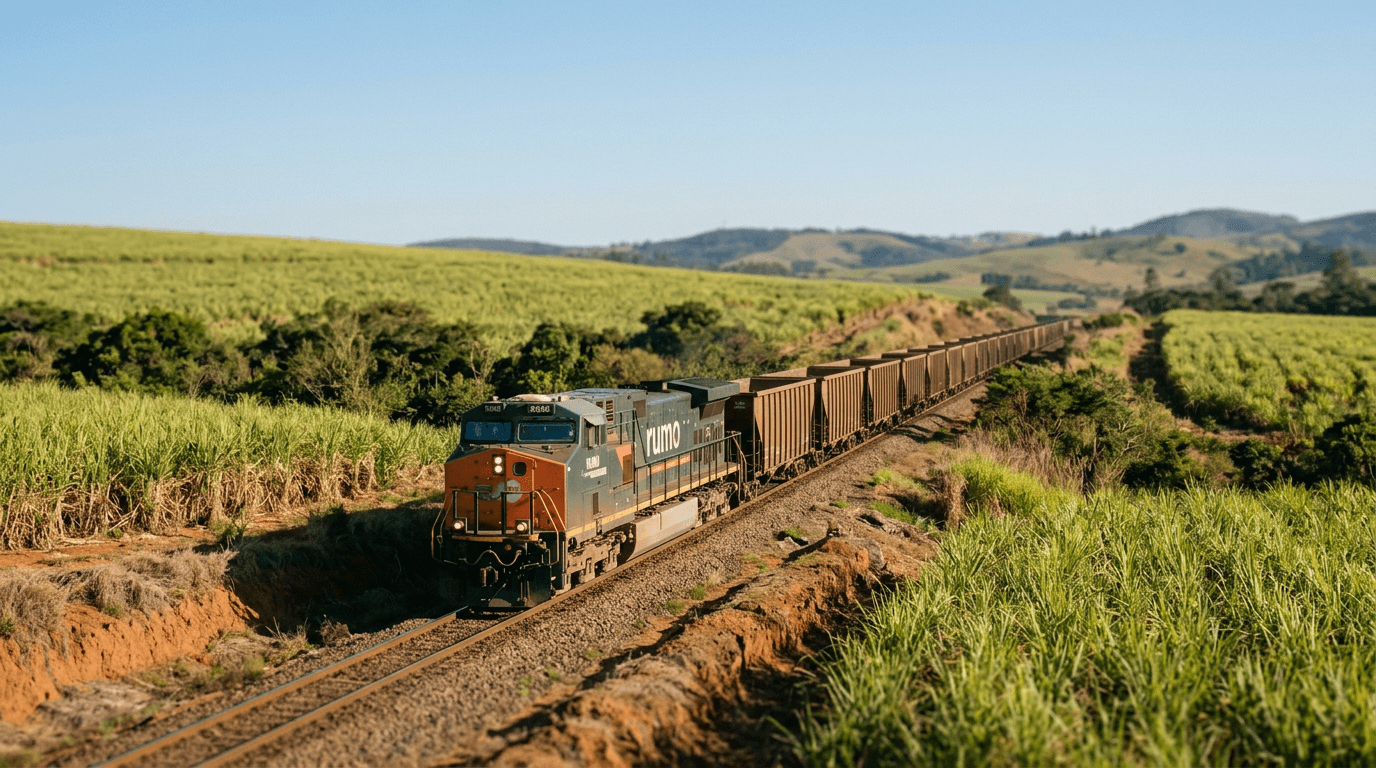
American retail portfolios exposed to foreign energy and logistics through New York-listed assets are facing a major strategy shift at one of South America's largest conglomerates. On November 13, 2026, industrial holding company Cosan announced that its chief executive, Marcelo Martins, will step down on January 4, 2027, bringing a close to a 20-year executive career that built the group's massive infrastructure portfolio through aggressive acquisitions.
As a major Brazil holding company, the São Paulo-based group controls key national assets including sugarcane and ethanol giant Raízen and railway operator Rumo. Cosan is now pivoting away from high-stakes mergers and acquisitions to focus on aggressive debt reduction. Cosan's expanded net debt, which ballooned during its rapid expansion era, has been carved down to 12 billion reais (around $2.1 billion) as of late 2026, down from over 30 billion reais in early 2025, according to a November 14, 2026, report by the Brazil Journal. Incoming interim CEO Guilherme Penin, a 10-year company veteran and current vice president of strategy, will lead the transition with a strict mandate to divest assets rather than buy them.
To clear its remaining holding-company obligations, Cosan is making difficult choices across its sprawling business empire. This includes staying completely out of a massive capital increase of up to 39.8 billion reais approved by the board of its fuel and ethanol subsidiary, Raízen, as disclosed in a CVM regulatory filing on November 13, 2026. While co-owner Shell and a private vehicle of Cosan’s founder Rubens Ometto will inject cash and convert debt to recapitalize Raízen, Cosan’s choice to sit out the transaction will dilute its ownership stake, prioritizing immediate cash conservation over maintaining its previous footprint.
Martins will not exit the company entirely; he is set to remain on the board of directors of Cosan as well as its key traded subsidiaries, including Rumo, Compass, and Moove, where he will assist Penin with ongoing asset sales. Retail investors should monitor the progress of these upcoming divestments, which include potential partial sales of stakes in railway operator Rumo and gas distributor Compass, as the company works to completely clear its holding-level debt.
In your brokerage app
For retail investors holding Cosan S.A. (NYSE: CSAN) ADRs or tracking Latin American energy and logistics ETFs, this transition signals a move from high-growth capital expenditure to balance-sheet repair. While corporate deleveraging can limit short-term expansion, it often reduces the risk premium on the underlying equity, making Cosan’s execution of its asset-sale program the primary driver of the stock's valuation over the coming year.
Analysis · NWX analysis desk
Which Brazil assets this touches
- CSAN, CSAN3, USDBRL — Named in this story.
Technical picture · CSAN3 (CSAN3)
CSAN3 (CSAN3) closed at R$3.10 on Nov 13, 2026, up 11.9% from five sessions earlier. The last close is below its 20-day average of R$3.37 and below its 50-day average of R$3.83. Since May 19, 2026 it has traded between R$2.16 (low, Oct 30, 2026) and R$5.47 (high, Oct 9, 2026).
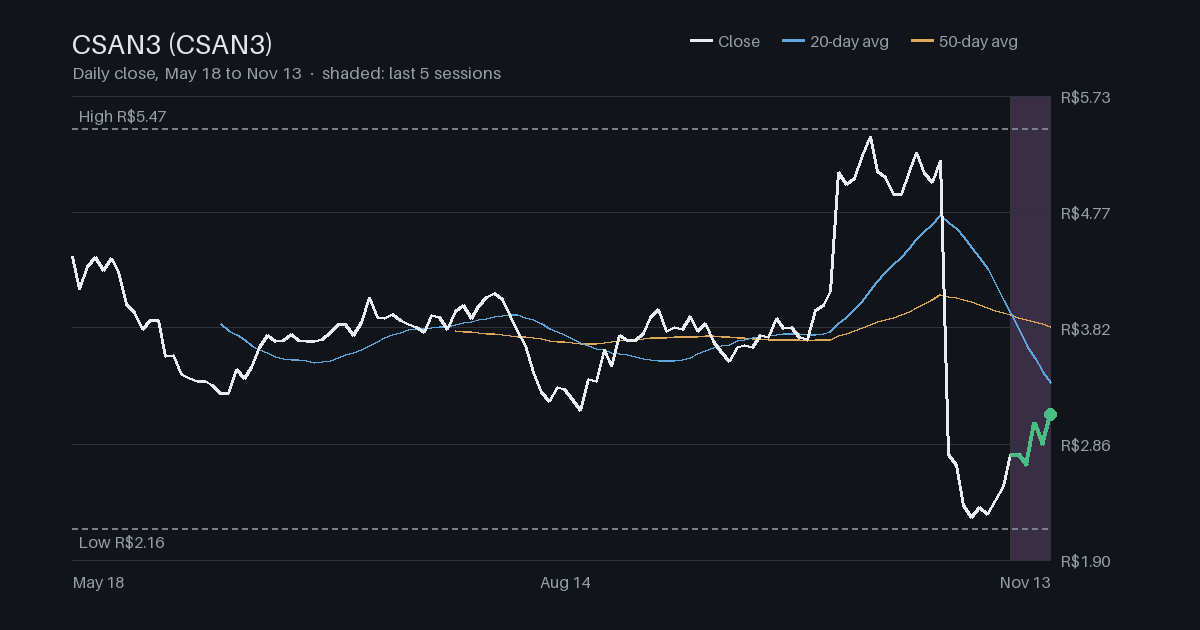
| Last close | R$3.10 | Closing price on Nov 13, 2026. |
|---|---|---|
| 5-session move | +11.9% | Change in the closing price over the last five trading days. |
| 20-day average | R$3.37 | The average closing price of the last 20 trading days. |
| 50-day average | R$3.83 | The average closing price of the last 50 trading days. |
| Period high | R$5.47 | Highest price since May 19, 2026. |
| Period low | R$2.16 | Lowest price since May 19, 2026. |
Related coverage
 How Grain Futures Shift Past Brazil Stock Market Holidays in 2026Large speculators trimmed their net-long soybean positions as of November 3, 2026, navigating a record-breaking South American export crop.
 Why Corporate Headwinds in Brazil Today Match Wall Street ExpectationsBrazil’s Senate backs a $10.8B spending-cut bill as high interest rates, new labor rules, and a temporary Philippine pork ban squeeze corporate margins.
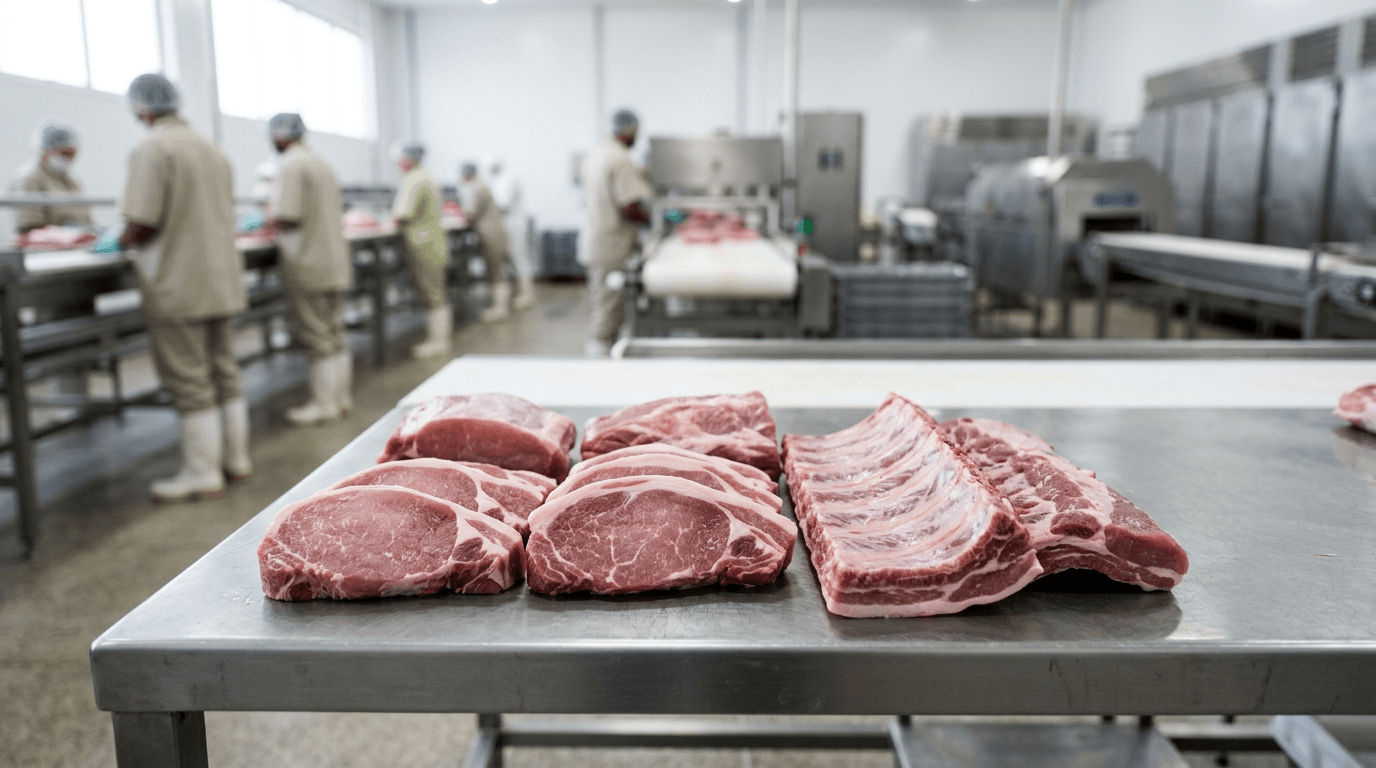 Philippines Pork Ban on Brazil, the Food Giant, Impacts Meat StocksA temporary 60-day safeguard on pork by the Philippines, Brazil’s top export market, raises the risk of domestic oversupply and price pressures.