
Last-Minute Polls Confirm Brazil Election Runoff, High Court Crisis Deepens Institutional Tension
Final polls before Sunday’s election show President Lula and Senator Flávio Bolsonaro in a statistical tie for a likely runoff, fueling political and fiscal uncertainty amid a deepening crisis at the Supreme Federal Court.
Brazil’s highly polarized presidential election appears headed for a contentious second-round runoff, with final polls before Sunday’s vote showing incumbent President Luiz Inácio Lula da Silva and challenger Senator Flávio Bolsonaro in a statistical tie for the decisive ballot. The high probability of an extended and fiercely fought campaign for the October 25 runoff has solidified political and fiscal uncertainty just as a major institutional crisis involving the country’s highest court has come to a head.
If no candidate secures more than 50% of the valid votes in the October 4 first round, the top two contenders will proceed to the runoff, as is widely expected. Recent surveys from multiple major polling firms confirm the virtual tie in a potential second-round scenario: for instance, a Datafolha poll showed Lula with 47% against Bolsonaro’s 45%, while a recent AtlasIntel poll put Bolsonaro at 47.7% and Lula at 47.6%—all results falling within the respective margins of error.
The contest pits the veteran leftist Lula, who seeks a fourth non-consecutive term, against a new face of the far-right in Senator Flávio Bolsonaro. Flávio, who serves as a Senator for Rio de Janeiro, is the son of former President Jair Bolsonaro, who was declared politically ineligible and is currently serving a prison sentence for attempting to overturn his 2022 election defeat to Lula. The younger Bolsonaro is running with the explicit endorsement of his father and has centered his campaign on uniting the conservative movement.
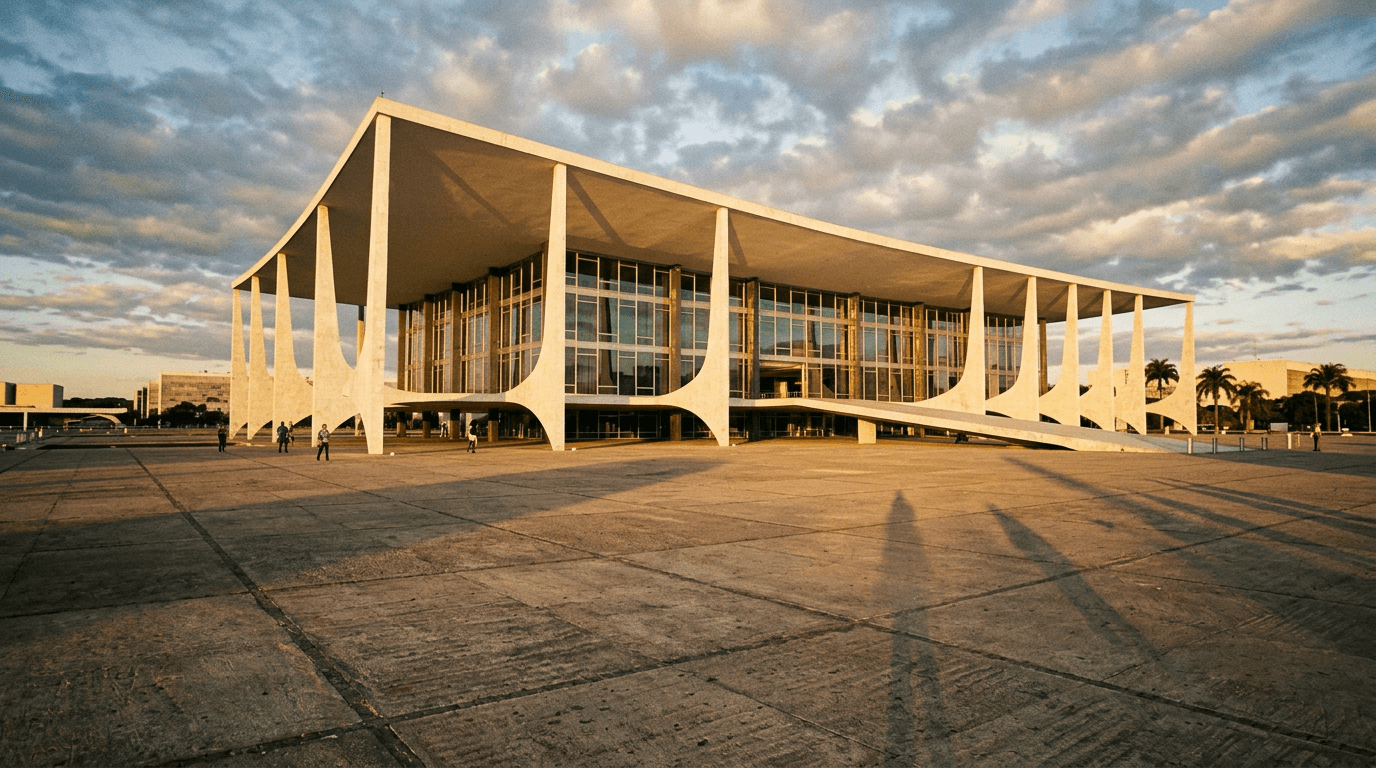
The final stretch of the campaign has been overshadowed by persistent institutional tension, particularly surrounding the Supreme Federal Court (STF), Brazil's constitutional court. The STF is facing its most significant internal crisis since the return to democracy, linked to the unfolding Banco Master case. This case has placed one of the STF's justices, Alexandre de Moraes, at the center of controversy over past contacts with a banker, Daniel Vorcaro, who was subsequently arrested by the court's order in an alleged fraud case.
This institutional turmoil—along with the frequent intervention of the Superior Electoral Court (TSE) in campaign disputes—reflects the deep polarization that has characterized Brazilian politics since the last election cycle. The STF was instrumental in securing the integrity of the 2022 election, leading to the arrest and ineligibility of the former president. Now, with a critical case reaching close to the political core of the Bolsonaro campaign, the judiciary remains central to the country's political stability and the credibility of the electoral outcome.
The focus now shifts to the results of the October 4 vote, which will not only determine if the election goes to a runoff, but also the composition of the National Congress and state governorships. The runoff, if confirmed, is scheduled for October 25, guaranteeing an additional three weeks of intense political negotiation and uncertainty for Latin America's largest economy.
What it touches
The prospect of a three-week extension to an already highly polarized election campaign is a key factor in short-term volatility for Brazilian assets. Prolonged political uncertainty historically drives caution among investors, affecting the Brazilian real, interest rate futures, and the country's sovereign risk outlook.
Related coverage
Politics · PRO
Brazil’s Soaring Public Debt Traps Next President on Spending and Policy
Published
Politics · PRO
Brazil Supreme Court Fines Lawyer R$ 5,000 for AI 'Prompt Injection' in January 8th Case
Published
Politics
Media Industry Challenges Brazil’s Federal Ban on Sports Betting Advertising at STF
Published