
How Brazil ground beef is filling U.S. shelves as China quotas shift exports
Minerva Foods redirects exports to the U.S. to bypass China tariffs as U.S. cattle herds hit a 75-year low, driving ground beef prices higher.
Key takeaways
- Minerva Foods reported a net loss of R$ 717.3 million for Q3 2026, per Money Times on November 11, 2026
- Minerva Foods redirected its operational sales to the U.S., expanding them from 12% to 21% of external sales, per Rico aos Poucos on November 14, 2026
- The USDA forecast a U.S. cattle herd at its lowest level since 1951, driving an estimated 8.7% surge in U.S. beef prices in 2026, per Datamar News on November 6, 2026
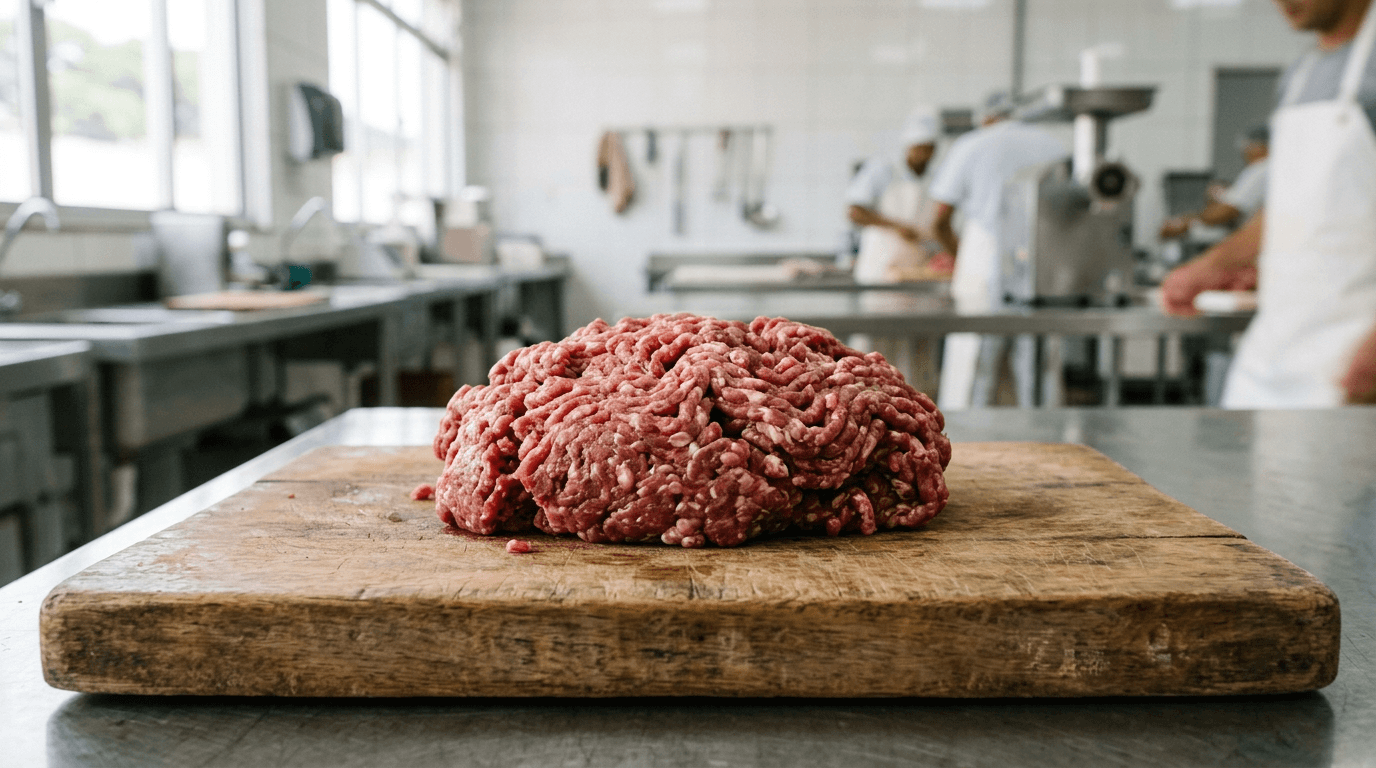
American shoppers paying record-high prices at the grocery store for ground beef are increasingly buying meat raised in South America, as U.S. cattle herds drop to their lowest numbers in 75 years. According to a U.S. Department of Agriculture (USDA) outlook published in October 2026, retail beef and veal prices are forecast to surge by 8.7% in 2026, forcing a growing reliance on lean beef imports to meet domestic demand.
This supply crunch has opened a massive gateway for Brazilian beef giant Minerva Foods, the largest exporter of beef in South America. On November 11, 2026, Money Times reported that Minerva Foods logged a net loss of R$ 717.3 million ($124 million) for the third quarter of 2026, reversing a net profit of R$ 120 million in the third quarter of 2025. This steep loss was entirely driven by a massive negative net financial result of R$ 1.64 billion from currency and commodity hedging derivatives, while the company's core operations remained highly active.
Bypassing Tariffs and Chasing Margins
The operational strength of Minerva Foods lies in its quick pivot away from China toward the lucrative U.S. market. As reported by Rico aos Poucos on November 14, 2026, China imposed an extra 55% tariff on over-quota Brazilian beef after Brazil exhausted its annual export limits. In response, Minerva Foods leveraged its multi-origin facilities across Argentina, Uruguay, and Colombia to redirect its export mix, expanding its sales to the United States from 12% to 21% of its total external volume. This allowed the company to keep shipping beef to high-paying international buyers while dodging China's heavy financial penalties.
For American consumers, this shift means that the lean ground beef used to blend fat-heavy domestic meat will continue to rely heavily on South American trade. According to a report by Datamar News on November 6, 2026, the U.S. cattle inventory began 2026 at just 86.2 million head—the lowest since 1951—meaning that domestic herds will take years to rebuild due to natural biological breeding lags. Brazilian trade officials are already using the sidelines of international conferences to discuss negotiating a dedicated U.S. export quota of 100,000 to 200,000 metric tons per year to lock in this long-term supply relationship.
In your brokerage app
For retail investors watching global food supply chains, major multinational meatpackers are accessible in the United States. While Minerva Foods trades on South American exchanges, its larger competitor, JBS N.V., is listed in New York and directly benefits from the same global beef price arbitrage as U.S. supply remains constrained.
Related coverage
 How Shifting Policies in Brazil Today Match the Needs of US InvestorsBrazil passes a major $10 billion fiscal package, tightens rules on strategic rare earth mining, and cracks down on systemic judicial debt fraud.
 How Cosan's New CEO Impacts Brazil, Your Infrastructure HoldingCosan's Board of Directors appointed Guilherme Penin as interim CEO to lead a shift toward asset sales and deleverage its R$ 9.5 billion net debt.
 Why the Brazil Tuesday Vote Matters for Your Emerging Market ETFBrazil's Senate approved its R$60 billion fiscal package, but a Tuesday vote on four key amendments will decide if its actual spending cuts survive.