
Judicial Power Struggle Erupts in Brazil Over Election Fake News and Religion
Contradictory rulings by Supreme Court ministers on a fake news story about the national patron saint and a presidential candidate expose a deep institutional and political split days before the election.
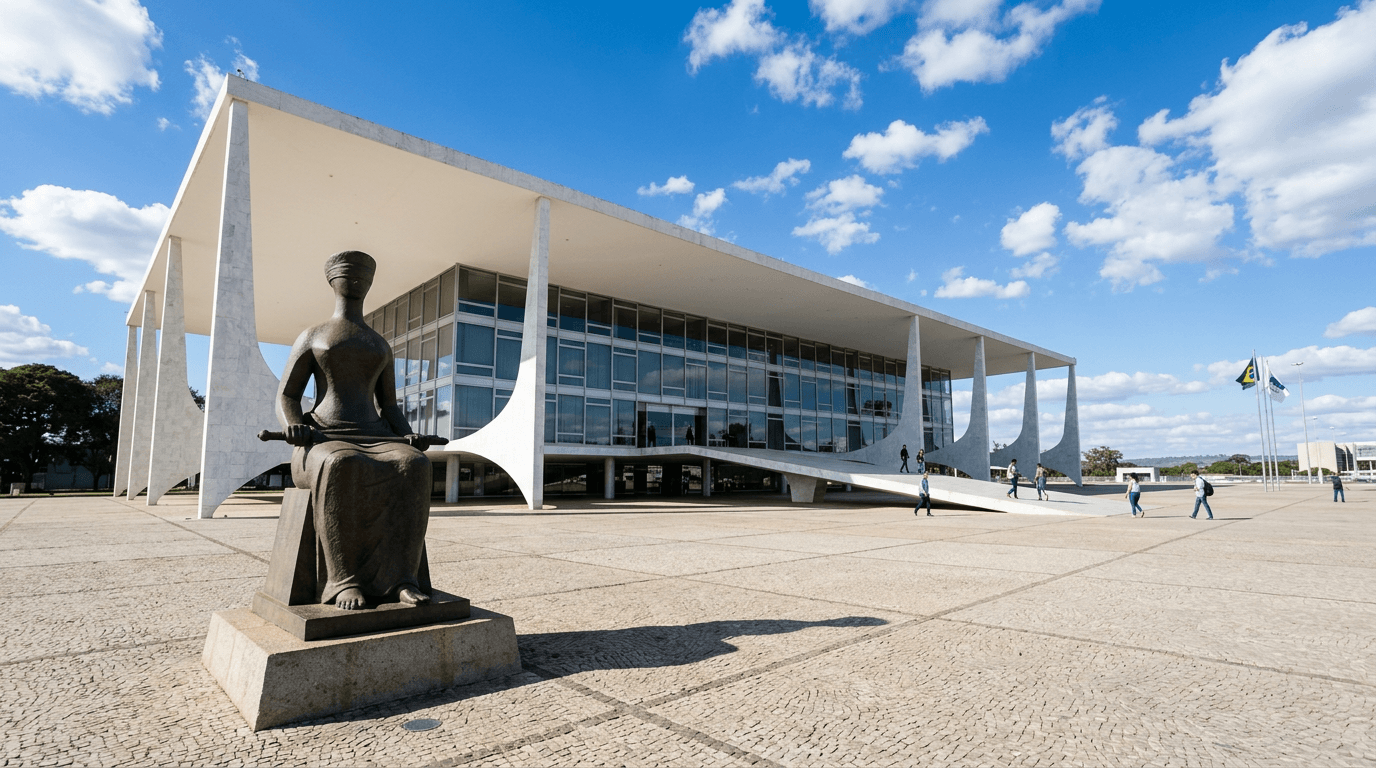
A profound power struggle has erupted between Brazil’s top justices just days before the national election, marked by contradictory decisions over social media posts and the intersection of political speech and religion. The clash centers on a circulating rumor that presidential candidate Flávio Bolsonaro—son of former President Jair Bolsonaro—intends to strip Nossa Senhora Aparecida (Our Lady of Aparecida), the country’s patron saint, of her title.
The dispute has involved three ministers from the Supreme Federal Court (STF) in a rapid-fire sequence of rulings. On September 25, Justice André Mendonça, who also sits on the Superior Electoral Court (TSE), ordered the removal of posts, calling the claim “notoriously untrue” and damaging to the candidate's campaign. Two days later, STF Minister Flávio Dino overturned that decision, arguing that the restriction violated freedom of expression and religious liberty. Then, on September 29, Justice Luiz Fux struck down Dino’s ruling, restoring the order to remove the content.
The conflict has exposed a critical institutional fault line between the STF, Brazil’s constitutional court, and the TSE, which is responsible for electoral law. Mendonça, a justice appointed by Jair Bolsonaro, and Fux, a former STF President, argued the matter fell under the TSE's specific jurisdiction as the "natural judge" for election-related disputes. Mendonça and Fux's positions were widely seen as a defense of the electoral court's autonomy. Dino, a politically active justice appointed by President Lula, intervened despite not being a member of the TSE, a move Fux criticized as attempting to create a "TSE parallel" within the Supreme Court.
Adding to the complexity, the institutional tension plays against the political backgrounds of the key ministers: Mendonça, known to be an evangelical, was appointed by Flávio Bolsonaro's father; Dino is a political heavyweight from the left; and Fux, who has previously criticized the STF’s own aggressive anti-fake news inquiries, restored the decision arguing for legal predictability. Separately, on September 30, Minister Dino simultaneously ordered the Federal Police to open an investigation into what he called a "wave of attacks" against religious images across the country, further linking his judicial authority to religious issues in the final days of the campaign.
The escalating back-and-forth has raised questions about the limits of judicial authority in curbing political speech and misinformation—and who has the final say. The current rulings have created legal uncertainty for social media platforms and for the campaign itself. To resolve the matter and contain the public confrontation between the justices, the President of the Supreme Federal Court, Edson Fachin, is expected to bring the underlying dispute before the full court Plenário for a final, collegiate ruling.
Related coverage
 Court Delay on Brazil Shorter Workweek Eases Corporate PressuresSupreme Court Justice Luiz Fux halts a virtual trial on Brazil's 6x1 to 5x2 workweek transition, resetting votes but leaving a temporary December start date active.
 US Tech Investors Track Brazil Semiconductor Industry PushBrazilian President Lula proposed integrating the nation's critical minerals with the Philippine chip sector to create new South-South tech supply chains.
 Senator's Escape to Florida Heightens Brazil Geopolitical RiskSenator Flávio Bolsonaro's sudden flight to Florida after his election defeat defies a Supreme Court passport order and escalates political tensions.