
Internal Strife Erupts at Brazil Supreme Court as Justice Mendes Warns Against 'Political' Probes
STF Justice Gilmar Mendes criticized a colleague over selective leaks and "political-electoral bias" in an investigation, exposing a deep rift in Brazil's highest court.
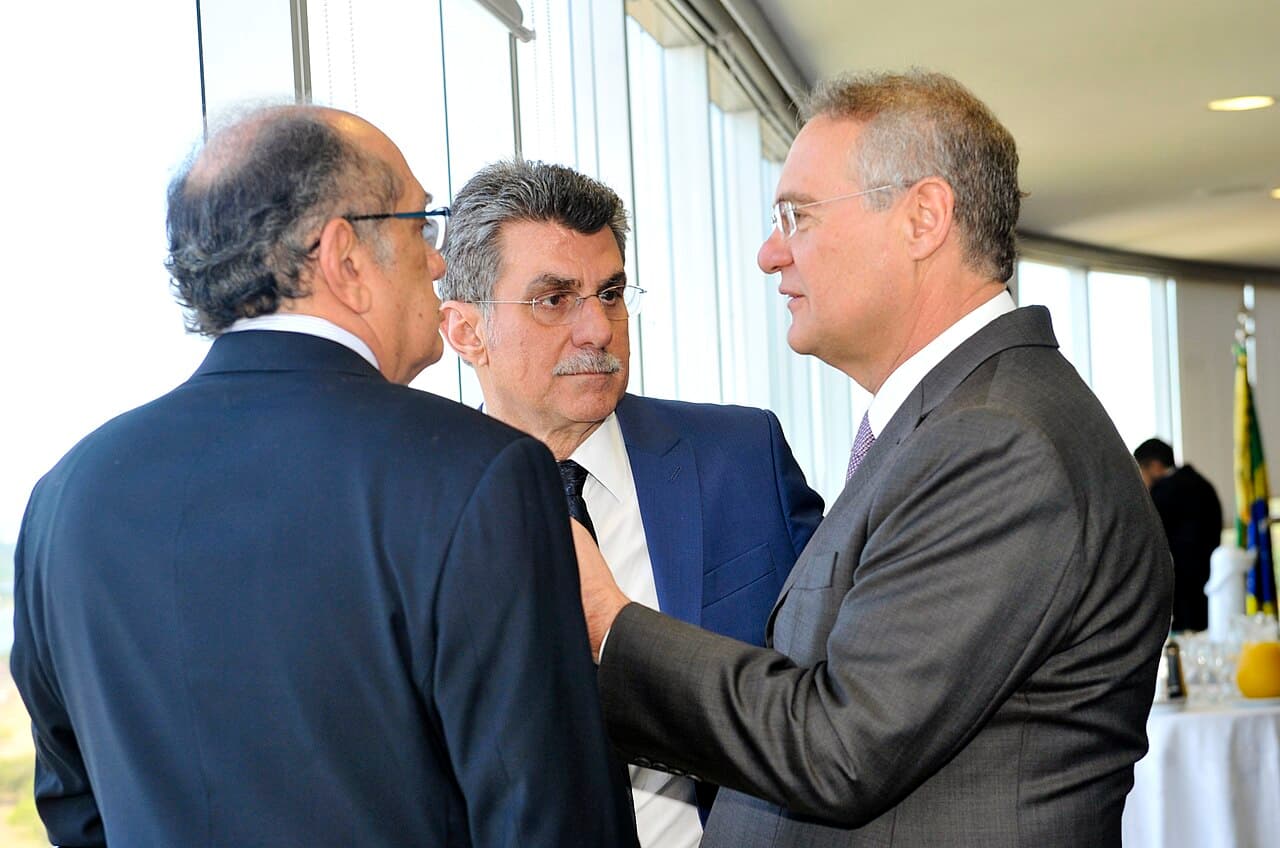
Brazil’s highest court, the Supreme Federal Court (STF), has descended into open conflict, with senior Justice Gilmar Mendes publicly accusing a colleague of using a high-stakes investigation for political ends. During a court session on Wednesday, Mendes warned against the "political-electoral use of investigations" and "selective leaks," an unmistakable reference to the handling of the controversial Banco Master case by Justice André Mendonça.
The outburst highlights the deepening polarization within the STF, Brazil's ultimate constitutional body, which often serves as the final arbiter of major political and corruption cases. The judicial infighting centers on a feud between Justice Mendonça and Justice Alexandre de Moraes, two of the court’s most powerful members.
The underlying case involves an investigation into a suspected fraud scheme at Banco Master, a private bank. As the case’s initial rapporteur, Mendonça released a police report that identified Moraes as a possible contact of the bank’s former owner, Daniel Vorcaro. Moraes, a key figure in numerous ongoing political probes, responded by seeking an investigation into Mendonça for alleged abuse of authority, further escalating the institutional crisis.
Mendes—the court’s longest-serving justice—has since become Moraes’s most vocal ally in the dispute, accusing Mendonça of conducting the case with a clear political agenda. On the court floor, Mendonça, a justice appointed by former President Jair Bolsonaro, has retorted to Mendes's accusations, calling them "frivolous" and demanding respect for the court. The public clashes have been intense, with colleagues attempting to intervene and the court’s president, Edson Fachin, forced to cancel one extraordinary session over the heightened tension.
The public spectacle of Brazil’s top judges trading barbs and accusations of misconduct has alarmed political observers, who view it as a severe degradation of the court’s image and an indicator of the high institutional stress in Brasília. As the STF navigates numerous high-stakes political cases and election-related controversies, this internal division risks undermining the court’s ability to act as an impartial and unified judicial check on Brazil’s executive and legislative branches.
The next development will likely involve the procedural handling of the two intertwined cases—Mendonça’s probe into Banco Master and Moraes’s counter-request for an investigation into Mendonça—which will determine how the court manages the unprecedented claims of judicial misconduct among its own members.
Related coverage
 Court Delay on Brazil Shorter Workweek Eases Corporate PressuresSupreme Court Justice Luiz Fux halts a virtual trial on Brazil's 6x1 to 5x2 workweek transition, resetting votes but leaving a temporary December start date active.
 US Tech Investors Track Brazil Semiconductor Industry PushBrazilian President Lula proposed integrating the nation's critical minerals with the Philippine chip sector to create new South-South tech supply chains.
 Senator's Escape to Florida Heightens Brazil Geopolitical RiskSenator Flávio Bolsonaro's sudden flight to Florida after his election defeat defies a Supreme Court passport order and escalates political tensions.