
Brazil Formally Schedules Annual Power Auctions Through 2029, Locking in Role for Battery Storage
The Ministry of Mines and Energy published a schedule for capacity reserve auctions through 2029, with a specific focus on integrating battery storage and pumped hydro to stabilize the grid.
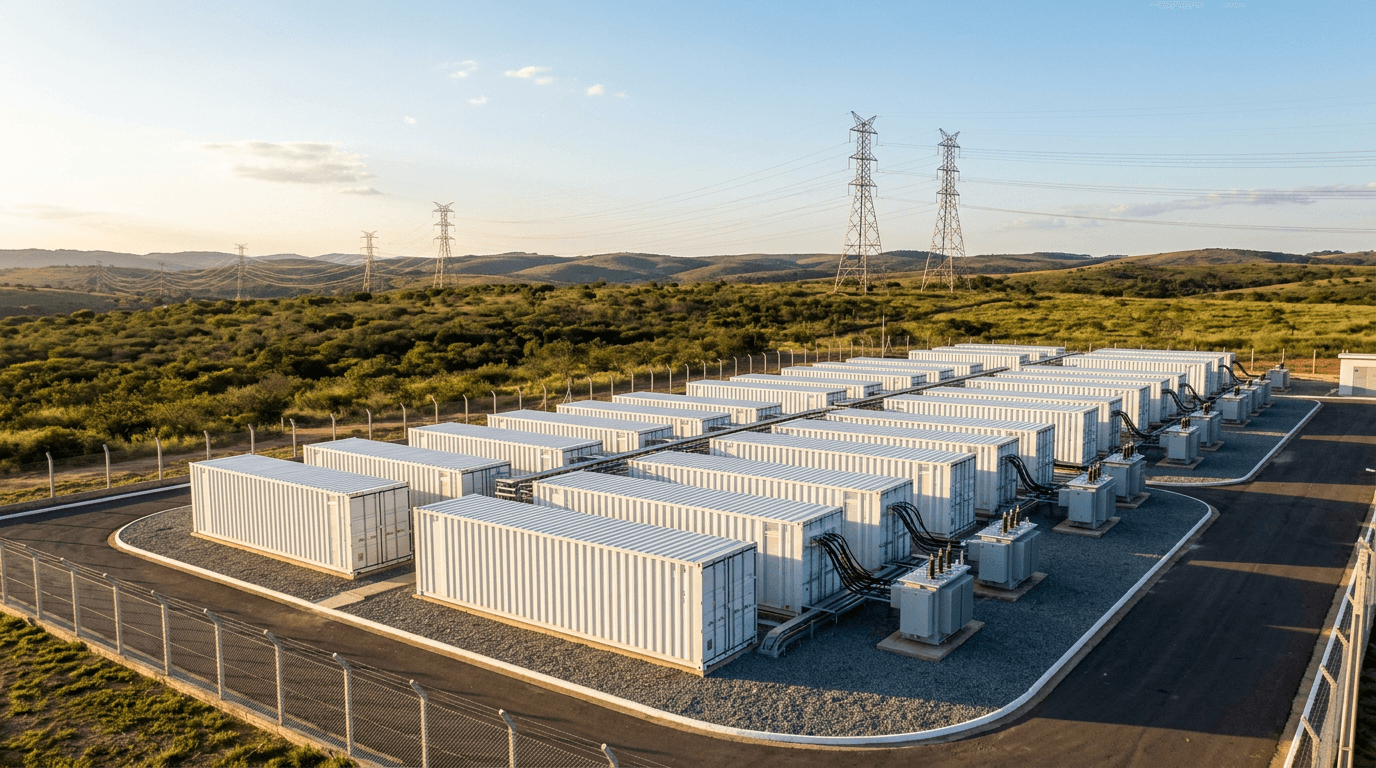
Brazil’s Ministry of Mines and Energy (MME) has formalized an ambitious schedule for annual power auctions through 2029, establishing a clear pathway for major investment in energy storage to stabilize the country's grid. The Ministry's Ordinance No. 143/2026, published on September 29, schedules two capacity reserve auctions (LRCAP) per year from 2027 to 2029, explicitly including new energy storage technologies such as electrochemical batteries (BESS) and pumped hydro storage alongside traditional generation sources.
The new, multi-year schedule is a crucial commitment from the government to integrate storage solutions, which are seen as vital for managing the intermittency of Brazil’s fast-growing solar and wind capacity. It follows the first-ever BESS-focused auctions slated for December 2026, which are expected to contract between 2 gigawatts (GW) and 5 GW of power capacity and potentially attract up to R$20 billion in estimated investment. This move sends a powerful signal to international equipment manufacturers, project developers, and investors that Brazil’s electricity regulatory framework is modernizing to match its energy transition goals.
The National Interconnected System (SIN), which supplies power to most of the country, is also preparing to utilize storage as a transmission asset. The National Electrical Energy Agency (ANEEL), the sector’s regulator, plans to include the first battery storage lot in a major transmission auction scheduled for April 30, 2027. This project, a pilot in the state of Acre, will be contracted as part of the transmission network itself, marking a significant shift in how authorities view the role of batteries—not just as an energy source, but as a core piece of grid infrastructure.
For foreign companies, the formalized auction schedule provides the necessary long-term predictability to enter a new segment of the Brazil power sector. Capacity reserve contracts, which pay generators to be on standby during peak demand, are now a guaranteed annual event, with auctions in the second half of each year specifically dedicated to new power projects that may include battery and hydraulic storage. This ensures that the momentum from the inaugural BESS auction in December 2026 will be followed by a sustained pipeline of opportunities over the next three years.
The next concrete steps for the market are the first two dedicated BESS auctions on December 2 and 4, 2026, which will test the appetite of developers and the structure of the new reserve capacity contracts. Following that, the April 2027 transmission auction will determine the model for contracting batteries as a core grid asset, setting a precedent for future infrastructure projects across the SIN.
What it touches
The commitment to a long-term auction schedule and the explicit inclusion of energy storage is a direct boost to companies in the Power and Utilities sector, specifically those involved in infrastructure and energy storage technology. The plan creates a clear revenue stream for electrochemical battery suppliers, equipment integrators, and engineering, procurement, and construction (EPC) firms, all of whom can now factor Brazil's newly-predictable demand for grid-scale storage into their planning.
Related coverage
 Court Delay on Brazil Shorter Workweek Eases Corporate PressuresSupreme Court Justice Luiz Fux halts a virtual trial on Brazil's 6x1 to 5x2 workweek transition, resetting votes but leaving a temporary December start date active.
 US Tech Investors Track Brazil Semiconductor Industry PushBrazilian President Lula proposed integrating the nation's critical minerals with the Philippine chip sector to create new South-South tech supply chains.
 Senator's Escape to Florida Heightens Brazil Geopolitical RiskSenator Flávio Bolsonaro's sudden flight to Florida after his election defeat defies a Supreme Court passport order and escalates political tensions.