
Brazil Federal Audit Court Flags 30 Fiscal Risks in Lula Government’s 2026 Management
Brazil's Federal Court of Accounts identified 30 major fiscal risks in the Lula administration's 2026 budget management, focusing on excessive tax waivers and uncontrolled mandatory spending.
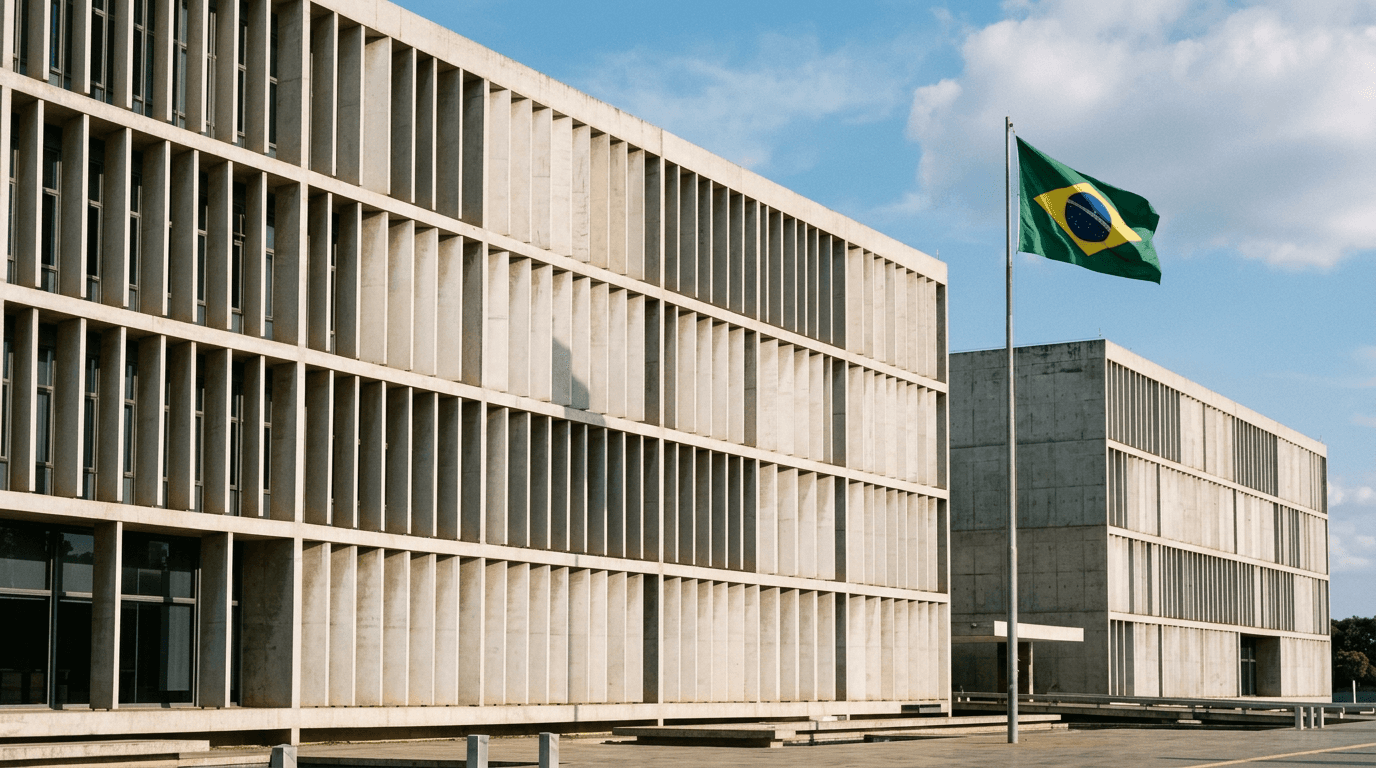
The Brazilian Federal Court of Accounts (TCU), the country’s supreme external audit body, has identified 30 systemic fiscal risks in President Luiz Inácio Lula da Silva’s administration for the 2026 fiscal year, raising concerns about the government’s ability to manage its public finances. The report, approved by the court’s plenary on September 23, will serve as a key reference for the Congressional review of the government’s accounts next year and points to deep-seated structural issues in federal spending control.
The court’s findings focus on failures in the control of tax expenditures, also known as revenue waivers (renúncias tributárias), mandatory expenditures (Despesas Obrigatórias de Caráter Continuado - DOCCs), and the reliability of fiscal reports. According to the TCU, the administration’s projected tax waivers alone are set to reach R$ 612.8 billion in 2026, a figure equivalent to 4.43% of the country’s Gross Domestic Product (GDP).
This projected spending far exceeds the 2% of GDP limit for tax expenditures established by a recent complementary law (LC 224/2025), presenting a significant challenge to the government’s attempts to regain control over its budget. The report, presented by Minister Antonio Anastasia, also cited risks of "sub-notification" and a lack of financial impact estimates for many of the continuous mandatory expenditures, making it difficult to fully assess the permanent effect of new obligations on public accounts.
For foreign readers, the TCU is the Tribunal de Contas da União, Brazil’s highly technical federal audit office that functions as an auxiliary arm of the National Congress. It is tasked with overseeing the executive branch’s use of public funds, promoting integrity, and ensuring good governance. While it cannot itself overturn government policy, its reports are politically consequential, providing the legal and technical foundation for the National Congress to approve or reject the president's annual accounts. The identification of 30 material risks in the management of the 2026 budget—Lula's last full year in office before the 2026 general election—highlights the potential for political friction.
The core issue flagged is the sustainability of the government's fiscal path, which relies on significant cuts to tax expenditures to meet its primary balance targets. The TCU's finding that this cap is already at risk of being breached injects a new level of caution among financial analysts regarding the credibility of the medium-term fiscal framework. The court’s action pressures the administration to not only detail its spending but to demonstrate that it has the mechanisms to enforce its own fiscal rules.
What follows is an increased scrutiny from Congress and the market as the Lula administration attempts to submit its budget proposal and demonstrate compliance with fiscal targets. The report will serve as a technical blueprint for opposition lawmakers and could constrain the government's latitude for additional spending ahead of the election cycle.
What it touches
The report directly impacts investor perception of Brazil sovereign risk and the reliability of government financial projections. Highlighting the risk of breaching fiscal rules puts pressure on government bonds and could factor into the cost of financing for the Brazilian Treasury. It also affects the long-term outlook for the Brazilian Real (BRL) against the US Dollar and other major currencies, as fiscal indiscipline is a core concern for currency stability.
Related coverage
 Court Delay on Brazil Shorter Workweek Eases Corporate PressuresSupreme Court Justice Luiz Fux halts a virtual trial on Brazil's 6x1 to 5x2 workweek transition, resetting votes but leaving a temporary December start date active.
 US Tech Investors Track Brazil Semiconductor Industry PushBrazilian President Lula proposed integrating the nation's critical minerals with the Philippine chip sector to create new South-South tech supply chains.
 Senator's Escape to Florida Heightens Brazil Geopolitical RiskSenator Flávio Bolsonaro's sudden flight to Florida after his election defeat defies a Supreme Court passport order and escalates political tensions.