
Philippines Pork Ban on Brazil, the Food Giant, Impacts Meat Stocks
A temporary 60-day safeguard on pork by the Philippines, Brazil’s top export market, raises the risk of domestic oversupply and price pressures.
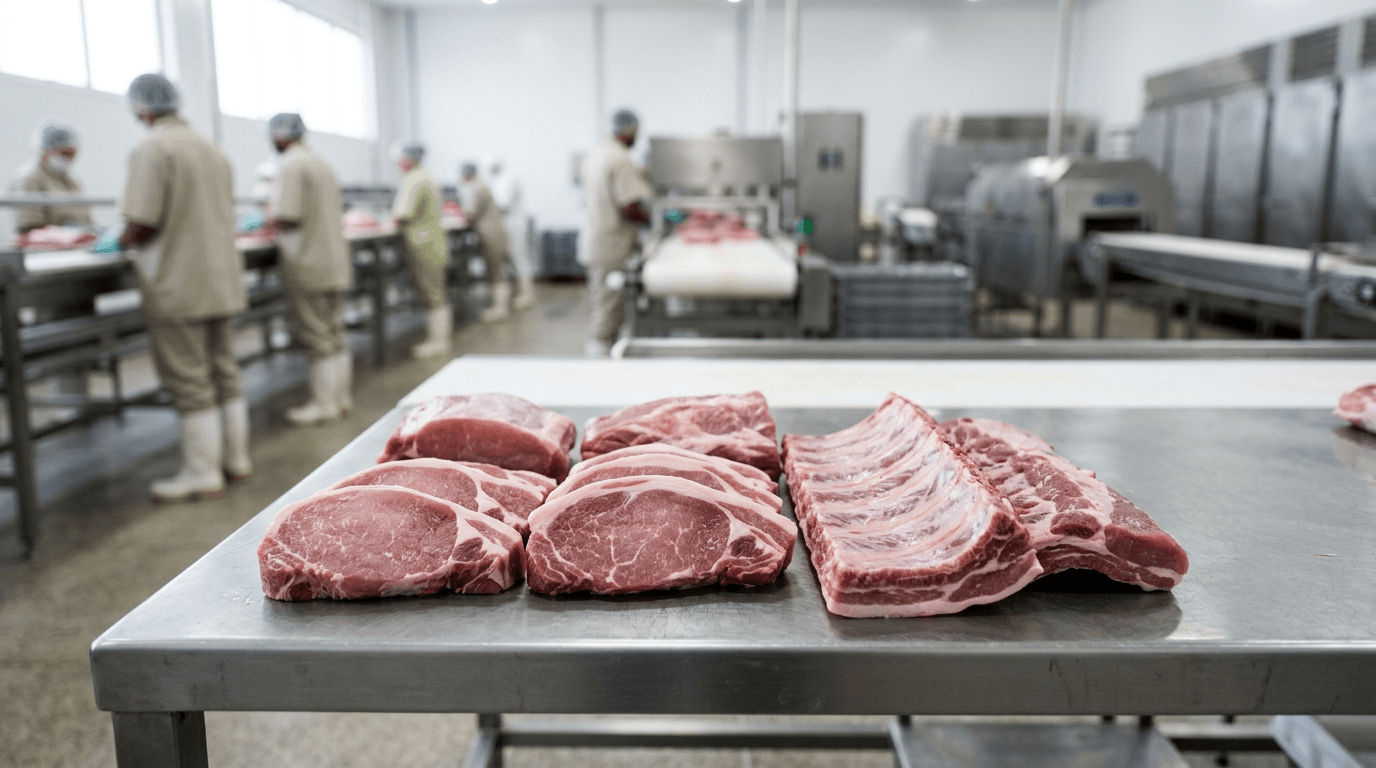
U.S. retail investors holding shares of global food giants JBS or BRF S.A. are facing sudden trade friction in Southeast Asia that could temporarily depress global pork prices and shift export dynamics. A new regulatory hurdle has emerged in one of the world's fastest-growing consumer markets, directly impacting major South American suppliers traded on Wall Street.
On November 9, 2026, the Department of Agriculture of the Philippines announced a 60-day temporary import safeguard on pork and edible offal products starting November 24, 2026, according to official statements reported by CNN Brasil. The Southeast Asian nation is Brazil's largest pork buyer, meaning the sudden restriction directly impacts the world's third-largest exporter of the protein. In 2025, Brazil shipped 381.27 thousand tons of pork to the Philippines, representing 25.9% of its total pork exports, worth $885 million, per Agrostat trade data. Between January and September 2026, Brazil exported another 222.7 thousand tons valued at $530.9 million to the Philippines, according to Brazil's Ministry of Development, Industry, and Commerce data reported on November 9, 2026.
The sudden ban stems from a preliminary investigation by Philippine authorities, who reported that surging imports have caused domestic hog farmers losses of roughly $441 million (28 billion Philippine pesos) in the first seven months of 2026. While the temporary ban is intended to protect local producers recovering from African swine fever, the abrupt suspension of trade creates an immediate headache for Brazilian exporters who supply nearly half of all the pork imported by the Philippines.
For corporate giants like JBS S.A. and BRF S.A., the immediate financial impact might be manageable, but it changes the short-term domestic outlook. Miguel Gularte, the CEO of Marfrig-controlled BRF S.A., downplayed the direct hit to his company, stating that the Philippines represents under 1% of its overall trade volume, as reported by The AgriBiz on November 13, 2026. However, because Brazil consumes about 73% of its pork production domestically, according to trade data published by BrasilAgro on November 10, 2026, any export volume blocked from the Philippines that gets redirected inward could put downward pressure on local pork prices, squeezing margins for packers operating inside the country.
What food is brazil known for?
While global consumers often associate Brazil primarily with coffee, sugar, and soy, the country has quietly become a global powerhouse in animal protein. Today, Brazil stands as the world's third-largest pork exporter, trailing only the United States and the European Union. Over the past three years, Southeast Asian buyers have become increasingly vital to Brazilian meatpackers as Chinese import demand cooled. This rapid market expansion has turned the Philippines into Brazil's single largest pork market, exposing local exporters to geopolitical and regulatory shifts in Manila.
What happens next will depend on high-level bilateral diplomacy. Brazil's Minister of Agriculture, André de Paula, expressed optimism on November 14, 2026, ahead of technical negotiations in Manila, as reported by G1. He emphasized that because the restriction is structured as a temporary 60-day safeguard, it is unlikely to permanently freeze trade flow into 2027, though exporters must still navigate the immediate two-month diversion.
In your brokerage app
Investors holding shares in JBS S.A. (listed in New York as JBS N.V.) or BRF S.A. (listed on the NYSE as BRFS) should monitor how these agricultural giants pivot their shipping routes. While both companies have the scale to reroute export volumes to alternative global channels, a prolonged suspension past the initial 60 days could weigh on broader pork pricing and domestic margins. Broader agricultural exchange-traded funds with emerging market exposure may also reflect minor shifts in Brazilian meatpacking valuations.
Analysis · NWX analysis desk
Which Brazil assets this touches
- BRFS, JBS, BRFS3, JBSS3, USDBRL — Named in this story.
Technical picture · JBSS3 (JBSS3)
JBSS3 (JBSS3) closed at R$69.16 on Nov 13, 2026, up 1.4% from five sessions earlier. The last close is above its 20-day average of R$66.57 and above its 50-day average of R$64.22. Since May 19, 2026 it has traded between R$55.44 (low, Oct 1, 2026) and R$73.85 (high, Aug 19, 2026).
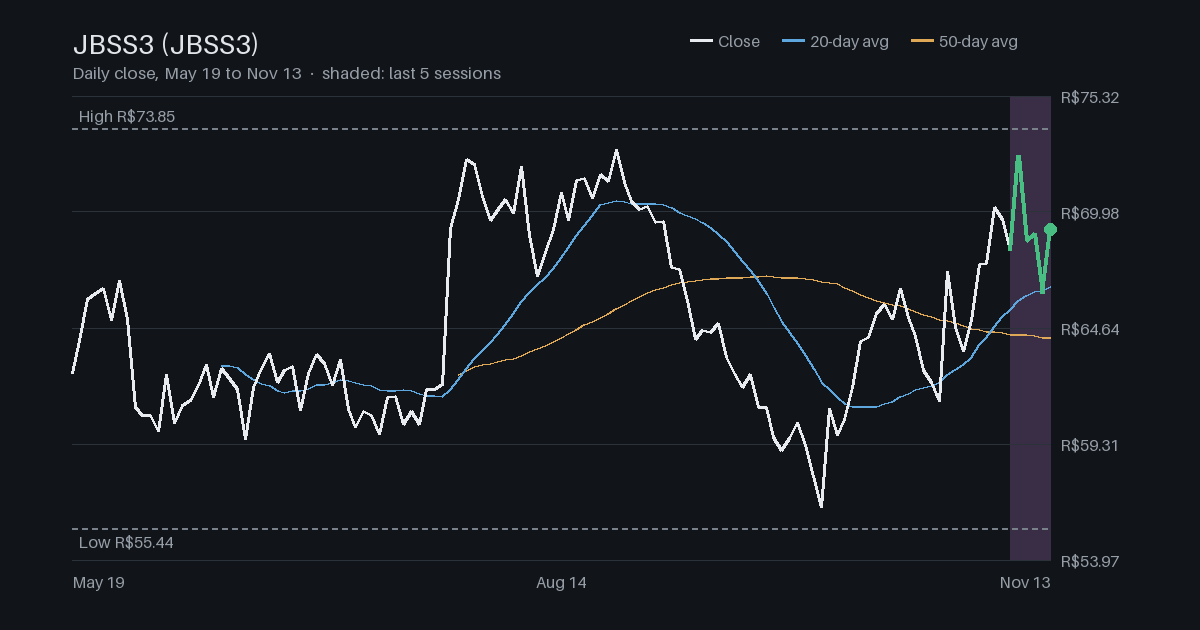
| Last close | R$69.16 | Closing price on Nov 13, 2026. |
|---|---|---|
| 5-session move | +1.4% | Change in the closing price over the last five trading days. |
| 20-day average | R$66.57 | The average closing price of the last 20 trading days. |
| 50-day average | R$64.22 | The average closing price of the last 50 trading days. |
| Period high | R$73.85 | Highest price since May 19, 2026. |
| Period low | R$55.44 | Lowest price since May 19, 2026. |
Related coverage
 How Grain Futures Shift Past Brazil Stock Market Holidays in 2026Large speculators trimmed their net-long soybean positions as of November 3, 2026, navigating a record-breaking South American export crop.
 How a Major Brazil Holding Company Is Swapping CEOs to Slash DebtBrazilian conglomerate Cosan announced CEO Marcelo Martins is stepping down in January 2027 as the company shifts from expansion to aggressive deleveraging.
 Why Corporate Headwinds in Brazil Today Match Wall Street ExpectationsBrazil’s Senate backs a $10.8B spending-cut bill as high interest rates, new labor rules, and a temporary Philippine pork ban squeeze corporate margins.