
Brazil AI data centers scale up as Redata tax cuts draw Wall Street
Brazil's newly approved Redata tax incentive and backing from BlackRock and Nvidia are positioning the country as Latin America's primary hub for AI infrastructure.
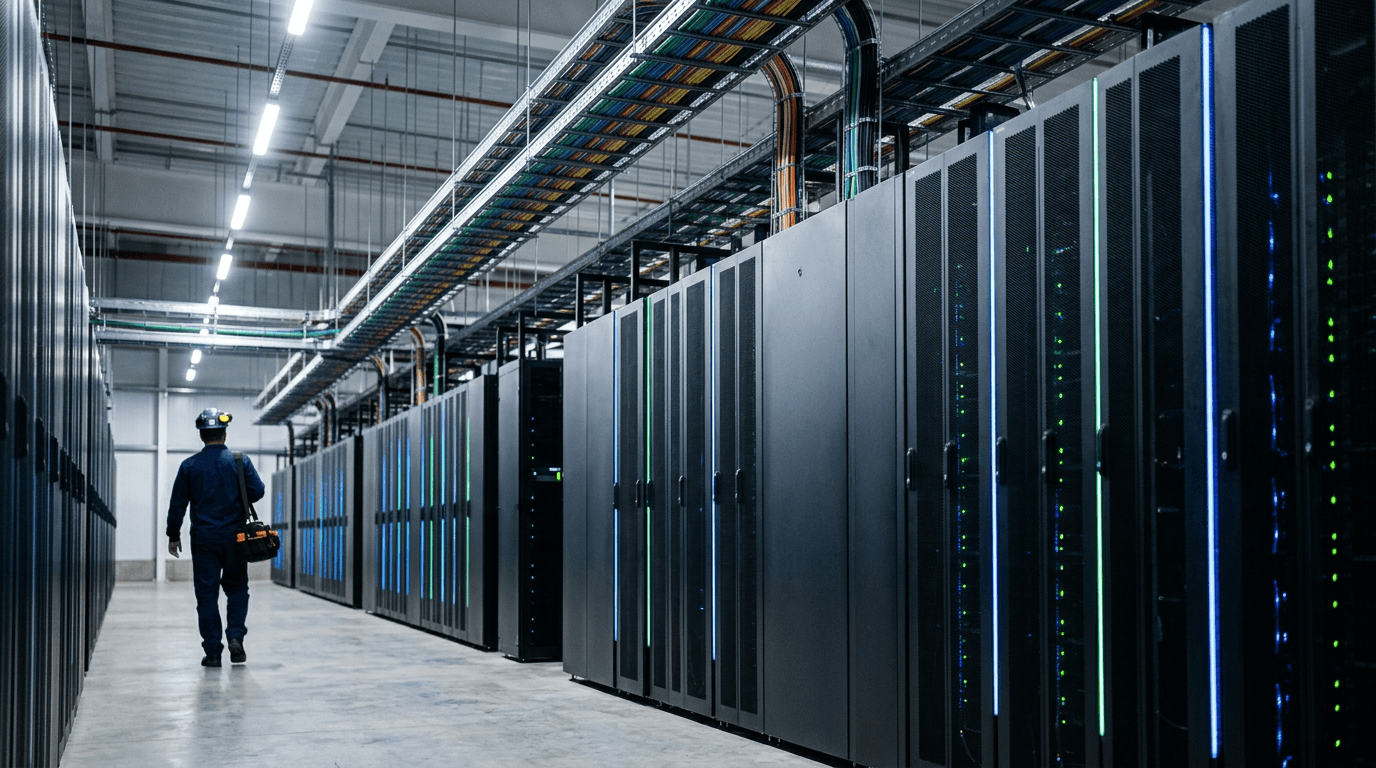
A newly enacted tax incentive program is transforming Brazil into Latin America's primary battleground for artificial intelligence infrastructure. In September 2026, Brazilian President Luiz Inácio Lula da Silva signed "Redata" into law, a special tax regime designed to slash the high cost of importing critical technology gear. By suspending federal taxes on information technology and electronic components for five years, the government is attempting to eliminate the steep import barriers that have historically held back the country's digital development.
This regulatory shift comes at a moment of unprecedented scale for the industry. Building modern, AI-ready data centers is no longer a mid-sized real estate play; individual projects now require starting investments of US$ 1 billion. To meet these capital requirements, local operators are leaning on global financial giants. Odata, a major regional operator owned by U.S.-based Aligned Data Centers, is leveraging the new tax framework alongside backing from the AI Infrastructure Partnership (AIP)—a massive global consortium that includes BlackRock, Nvidia, Microsoft, and Abu Dhabi’s sovereign investment firm MGX.
With these deep pockets and tax exemptions, Odata's chief executive officer, Ricardo Alário, expects the local market's growth rate to triple. The company aims to help scale regional data center capacity from 2 gigawatts (GW) to 5 GW over the next five years. Brazil already boasts the largest digital infrastructure footprint in Latin America, but the high cost of importing specialized servers and cooling systems has kept many hyperscale developments on hold until now.
However, the tax breaks come with strict environmental and domestic commitments. To qualify for Redata, data center operators must secure 100% clean or renewable energy sources, meet strict water-efficiency targets, and allocate at least 10% of their processing capacity to the domestic Brazilian market. Furthermore, companies must reinvest 2% of the value of their imported equipment back into local research and development.
While the policy is designed to decentralize digital infrastructure away from the saturated hubs of São Paulo and Rio de Janeiro toward the North, Northeast, and Center-West regions, execution risks remain. The Ministry of Finance and the Ministry of Mines and Energy are still negotiating specific regulatory decrees, particularly regarding energy grid integration. How smoothly the government processes applications and integrates these massive energy consumers into the national grid will determine how quickly Wall Street's capital translates into operational server racks.
What it touches
The rapid expansion of AI infrastructure directly impacts global technology and asset management firms heavily exposed to digital real estate. This includes Nvidia (NASDAQ: NVDA), which supplies the high-density chips required for these facilities; BlackRock (NYSE: BLK), which co-leads the AI Infrastructure Partnership funding the expansion; and Microsoft (NASDAQ: MSFT), a primary partner and potential tenant for these hyperscale hubs.
Related coverage
 How Shifting Policies in Brazil Today Match the Needs of US InvestorsBrazil passes a major $10 billion fiscal package, tightens rules on strategic rare earth mining, and cracks down on systemic judicial debt fraud.
 How Brazil ground beef is filling U.S. shelves as China quotas shift exportsMinerva Foods redirects exports to the U.S. to bypass China tariffs as U.S. cattle herds hit a 75-year low, driving ground beef prices higher.
 How Cosan's New CEO Impacts Brazil, Your Infrastructure HoldingCosan's Board of Directors appointed Guilherme Penin as interim CEO to lead a shift toward asset sales and deleverage its R$ 9.5 billion net debt.