
Braskem Debt Restructuring Stalls as Petrobras and IG4 Resist $3 Billion Capital Injection
Petrochemical giant Braskem's $11 billion debt rework faces high risk of collapse as controlling shareholders refuse to fund a creditor-demanded equity injection.
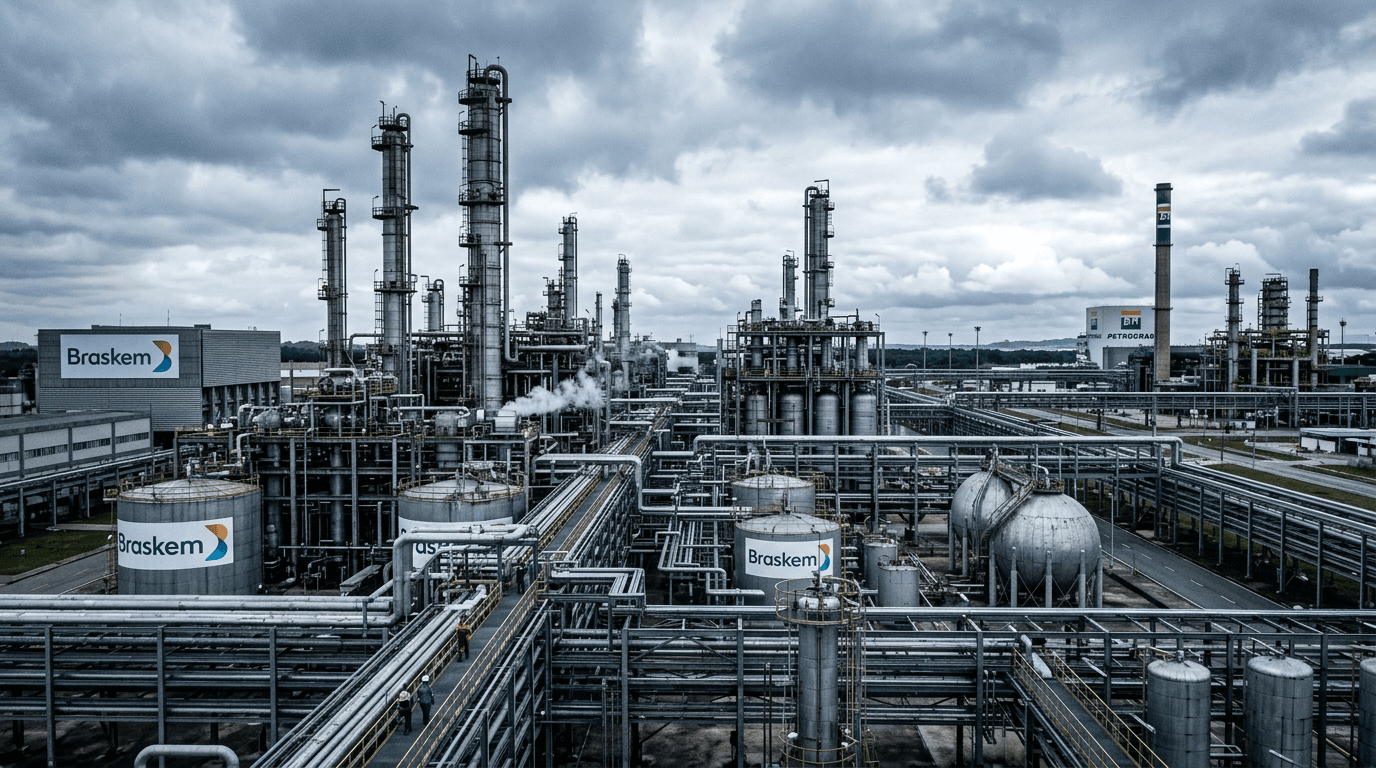
The extrajudicial debt restructuring for Brazil's petrochemical giant Braskem S.A. is at a standstill after controlling shareholders, the state-owned oil company Petrobras and investment firm IG4 Capital, refused to provide a $3 billion capital injection demanded by creditors. The deadlock has significantly increased the risk that Braskem, one of Latin America's largest chemical producers, may be forced into a court-supervised bankruptcy filing, known in Brazil as a recuperação judicial.
Braskem is seeking to reorganize approximately $11 billion in financial obligations through an out-of-court process (recuperação extrajudicial), which is similar to a prepackaged bankruptcy filing in the United States. However, major international bondholders recently rejected a proposal that asked them to contribute new funds. Instead, they are insisting that the company's owners—primarily Petrobras and funds managed by IG4—must provide $3 billion in fresh equity to create a capital buffer that will absorb losses before the bondholders do.
The impasse focuses squarely on Petrobras, which holds 47% of Braskem’s voting capital, and IG4, which controls the other large block of shares. Petrobras CEO Magda Chambriard recently made it clear the state-controlled company will not increase its stake or inject capital unless other shareholders, including IG4, contribute proportionally. The reluctance from the shareholders to put up capital shifts the core issue from a purely financial negotiation on debt terms to a fundamental conflict over who will bear the cost of the company’s turnaround.
For Petrobras, the dilemma carries political and financial risk. Injecting billions of dollars into Braskem would add new liabilities to the oil giant’s balance sheet, a move the company has been keen to avoid. For Braskem, the clock is ticking: the company is reportedly under pressure to secure the support of more than half of its creditors by a deadline in late November, without which the out-of-court process could collapse, forcing a more complex and potentially value-destructive court-supervised bankruptcy. The key question now for investors and the Brazilian industrial sector is whether the controlling shareholders blink first, or if the creditors will back down on their demand for a full $3 billion equity cure.
What it touches
The mounting uncertainty around Braskem’s survival plan has a direct impact on the publicly traded assets of both companies. The liabilities and operations of Braskem (BRKM5 on the B3 exchange and BAK as an ADR in the U.S.) are at the center of the dispute, but the need for a major capital injection also poses a contingent risk to the balance sheet of Petrobras (PETR4 on the B3, PBR as an ADR), especially given the company's significant percentage of voting capital in the petrochemical firm.
Related coverage
 How Grain Futures Shift Past Brazil Stock Market Holidays in 2026Large speculators trimmed their net-long soybean positions as of November 3, 2026, navigating a record-breaking South American export crop.
 How a Major Brazil Holding Company Is Swapping CEOs to Slash DebtBrazilian conglomerate Cosan announced CEO Marcelo Martins is stepping down in January 2027 as the company shifts from expansion to aggressive deleveraging.
 Why Corporate Headwinds in Brazil Today Match Wall Street ExpectationsBrazil’s Senate backs a $10.8B spending-cut bill as high interest rates, new labor rules, and a temporary Philippine pork ban squeeze corporate margins.