
Why a 9.75% Interest Gap Moves the Brazil Real to USD Exchange Rate
The 9.75% yield gap between U.S. and Brazilian interest rates remains a key driver for the real and U.S.-listed Brazil funds like EWZ.
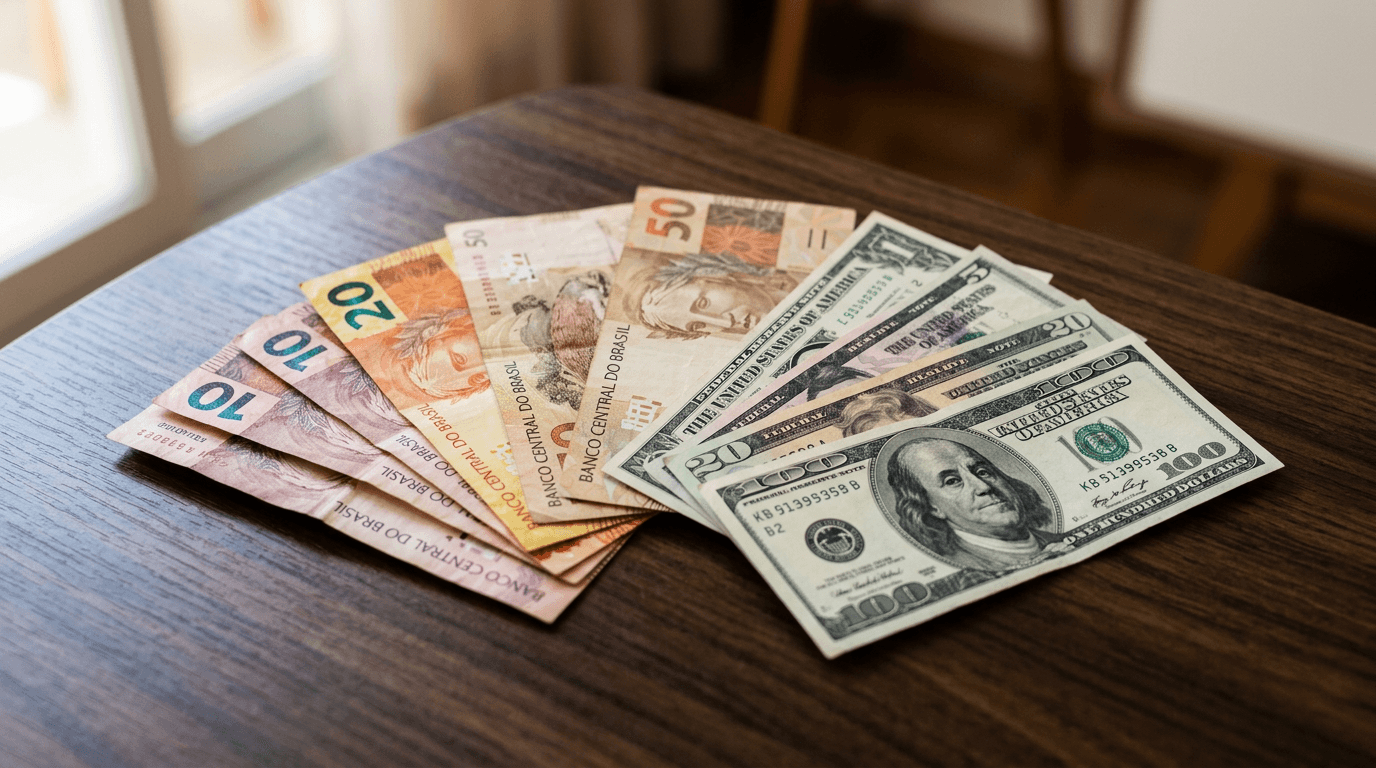
For an American retail investor accustomed to parking cash in high-yield savings accounts, the Federal Reserve's benchmark rate pays an upper target of 4.0%, according to FRED data on November 14, 2026. Meanwhile, halfway across the Americas, the central bank of Brazil offers a benchmark Selic target rate of 13.75%, per the Banco Central do Brasil on the same date. This massive 9.75 percentage point yield gap—which has held flat from 30 days ago—is the ultimate fulcrum shifting global capital between safe-haven Treasuries and emerging markets.
This interest rate differential directly influences the brazil real to usd exchange rate, serving as the foundation for the "carry trade" where investors borrow in low-yielding currencies to buy high-yielding ones. As of November 14, 2026, the U.S. dollar traded at 5.6512 Brazilian reais (+0.38%), while the euro sat at 6.2321 reais (-0.04%) and the British pound stood at 7.4748 reais (+0.05%). For international investors, a wider yield gap provides a larger buffer against potential currency depreciation, but a narrowing gap can trigger a rapid exit of foreign capital from Brazil.
The Banco Central do Brasil's decision to maintain the high Selic rate of 13.75% at its October 28, 2026 monetary policy meeting reflects persistent domestic inflation concerns. Under the leadership of the central bank's policy committee, Copom, Brazil has utilized double-digit interest rates to anchor local prices and stabilize the financial system. Conversely, the U.S. Federal Reserve chose to pause its rate-hiking cycle, holding its benchmark steady at a target range of 3.75% to 4.0% at its October 2026 meeting as policymakers took a wait-and-see approach.
What happens next depends on the upcoming December policy meetings for both institutions. If the Federal Reserve pursues further tightening, or if Brazil's central bank resumes cutting rates to support growth, the 9.75-percentage-point gap will shrink, reducing the incentive for global investors to hold Brazilian risk. Market participants will closely monitor U.S. inflation prints and Brazilian fiscal policy developments to gauge if this high-yield window is beginning to close.
In your brokerage app
For retail investors looking to capture or hedge these macroeconomic swings, the easiest vehicle is the iShares MSCI Brazil ETF, which trades under the ticker EWZ in New York. This fund holds major Brazilian stocks and is highly sensitive to changes in the country's benchmark Selic rate and the value of the Brazilian real.
Latest articles
 How Grain Futures Shift Past Brazil Stock Market Holidays in 2026Large speculators trimmed their net-long soybean positions as of November 3, 2026, navigating a record-breaking South American export crop.
 How a Major Brazil Holding Company Is Swapping CEOs to Slash DebtBrazilian conglomerate Cosan announced CEO Marcelo Martins is stepping down in January 2027 as the company shifts from expansion to aggressive deleveraging.
 Court Delay on Brazil Shorter Workweek Eases Corporate PressuresSupreme Court Justice Luiz Fux halts a virtual trial on Brazil's 6x1 to 5x2 workweek transition, resetting votes but leaving a temporary December start date active.