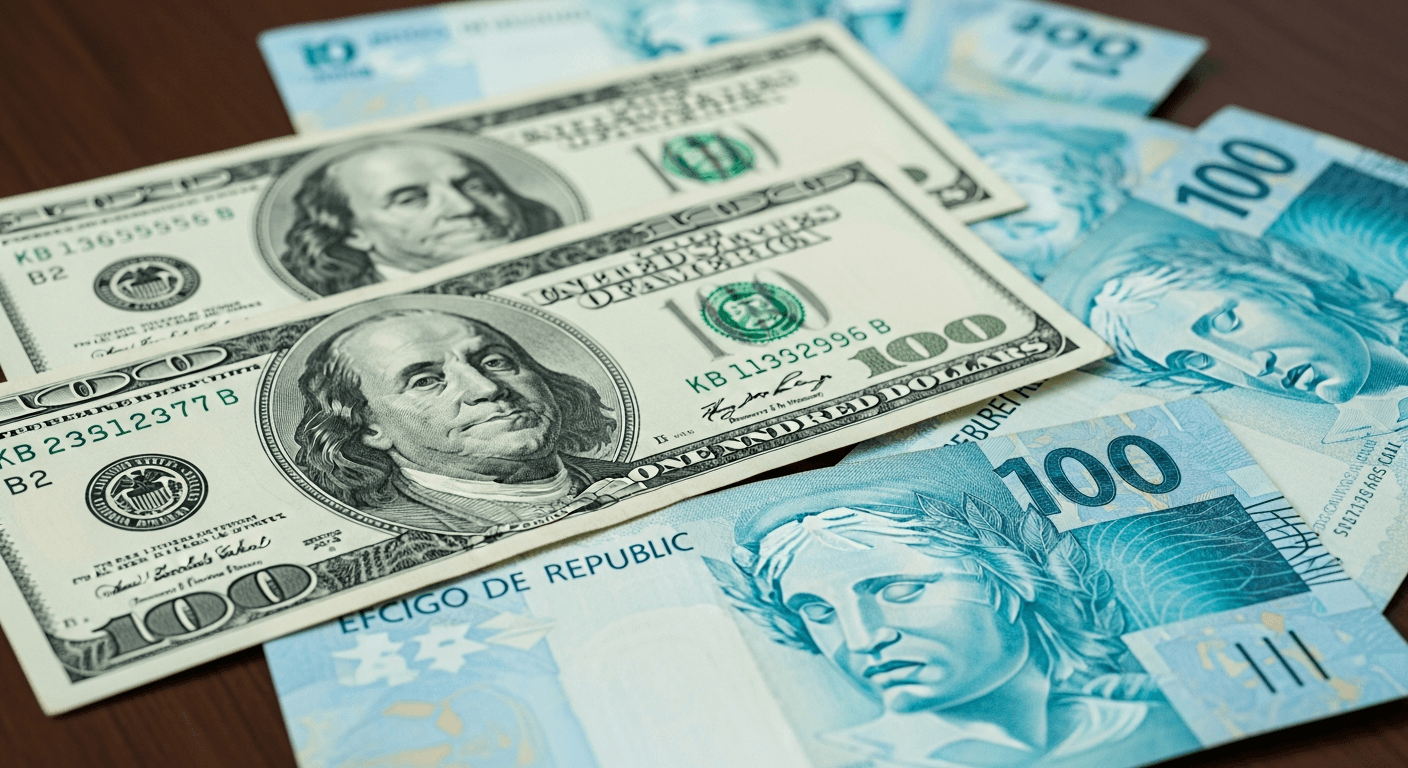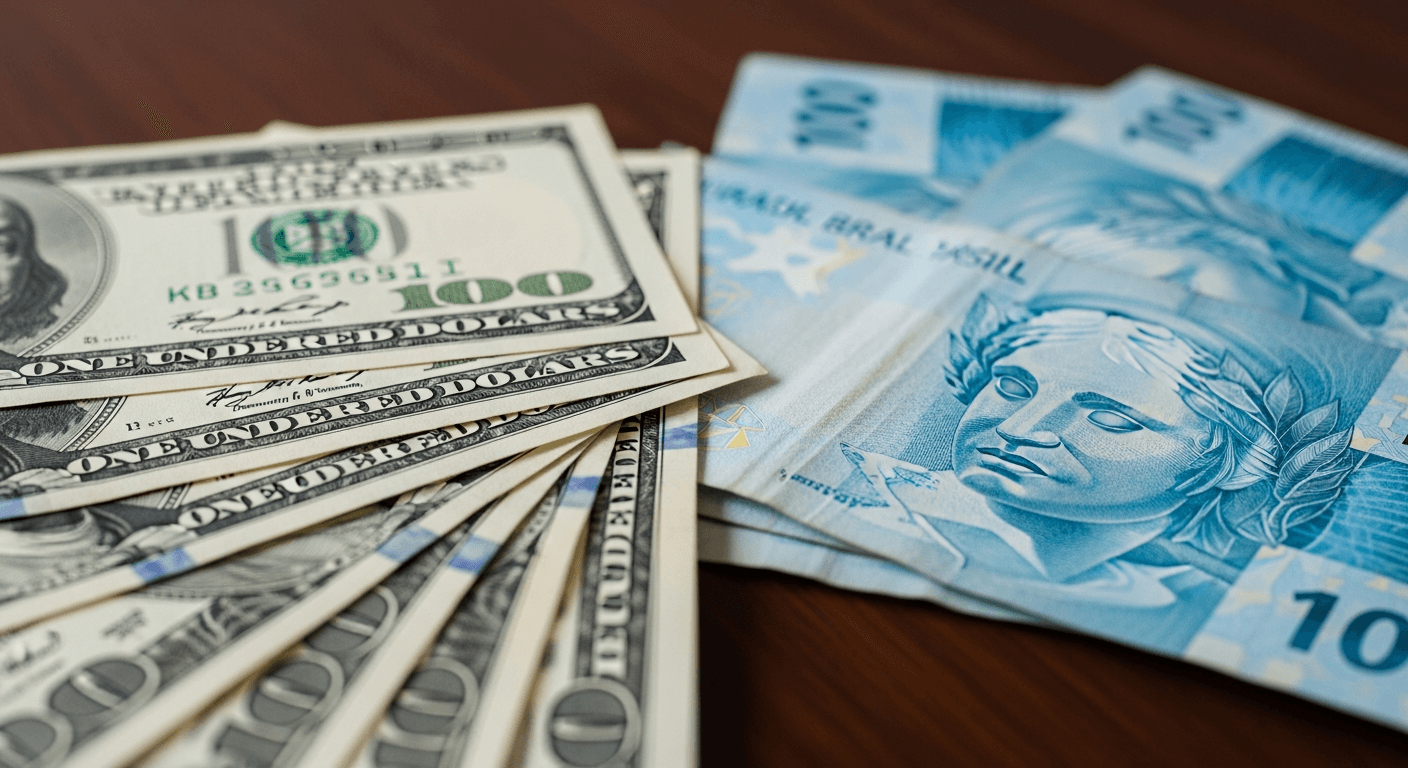
Sharp Drop in Brazil Industrial Output Bolsters Selic Cut Case, Pressuring BRL Carry Trade
Weaker-than-expected industrial production data reinforces the expectation for deeper Selic rate cuts, eroding the Brazilian Real's carry trade appeal.


Weaker-than-expected industrial production data reinforces the expectation for deeper Selic rate cuts, eroding the Brazilian Real's carry trade appeal.
The Banco Central do Brasil's simultaneous FX action aims to cut the FX coupon, favoring the lucrative carry trade in the Brazilian Real while increasing hedging costs.
A stronger U.S. Dollar driven by a hawkish Federal Reserve threatens BRL depreciation and upward pressure on local interest rate futures.
Brazil logged a $1.938 billion net foreign exchange inflow in July, driven by trade, which offers a fundamental backstop to BRL volatility.
The Brazilian Real is trading under pressure after the US revoked the visa of Brazil's Ambassador, signaling political risk.
The Brazilian Real faced a sharp climb in volatility after US-Brazil diplomatic tensions escalated, driven by a visa revocation.
Brazil’s central bank cut the Selic rate by 25 basis points to 14.00%, a move that was fully priced in, stabilizing USD/BRL.
The Brazilian real sharply depreciated, hitting R$5.13 this week as a US-Brazil diplomatic row introduced a severe geopolitical risk premium.
A sharp drop in crude oil prices combined with renewed political uncertainty pushed the BRL to its weakest close since mid-July.
A major bank maintains a cautious long-term forecast for the USD/BRL exchange rate, citing structural limits to the Real's appreciation.
The Brazilian real depreciated sharply following an escalation of US-Brazil diplomatic tension and fresh Middle East geopolitical risk.
The Brazilian Real's recent weakness highlights an elevated correlation with crude oil prices, pushing the USD/BRL pair higher despite a softer U.S. Dollar Index (DXY).
The Brazilian Real was the worst-performing liquid currency against the dollar as US sanctions threats amplified political risk.
The Brazilian Real's recent rally stalled near R$5.05 after increased demand for US Dollar from domestic importers and bank treasuries.
Investors are focused on the Central Bank's signal about the easing cycle's future, as the expected Selic rate cut is fully priced into USD/BRL.
Brazil's currency remains vulnerable as sustained financial outflows counter the strength of its US$42.4 billion trade surplus.
Currency traders eye the USD/BRL rate as the Central Bank is poised to make a 25 basis point cut to the benchmark Selic interest rate.
The BRL has strengthened by 7.67% over the last year, driven by high interest rates and a post-Fed weak US Dollar.
The Brazilian Real's short-term movements are entirely driven by US economic signals, with the USD/BRL falling after the Fed held rates.
Record inflows from Foreign Direct Investment and a surging trade balance are providing a structural counterweight to USD/BRL volatility.
The Brazilian Real hit its strongest level in nearly seven weeks, driven by the attractive carry trade yield from the high Selic rate.
Brazil’s elevated Selic rate of 14.25% makes the BRL a top carry trade beneficiary, driving significant foreign capital inflows.
Brazil’s Central Bank is expected to cut the Selic rate by 25bps this week, a move that could expose BRL to fiscal risk.
The Brazilian Real's carry trade appeal will be tested by an expected 25bp Selic cut next week, set against a resilient labor market.
The Brazilian Real's nearly 1% gain against the U.S. Dollar is already retreating, vulnerable to Middle East tensions and a hawkish Fed repricing.
Investment bank forecasts for the Brazilian Real show a wide R$0.48 spread, signaling intense market disagreement on the BRL's trajectory.
The Brazilian Real gained against the US Dollar, driven by the Federal Reserve's rate hold and persistent investor interest in Brazil's high-yield carry trade.
The Brazilian real struggles to hold below R$5.10, with the USD/BRL rate breaking past R$5.11 amid shifting interest rate expectations and fiscal concerns.
Brazil recorded a net negative foreign exchange flow of US$1.065 billion in July, reversing a recent surplus and signaling fresh capital flight.
The Brazilian Real appreciated 0.4% against the US Dollar after the Fed held rates, reinforcing the appeal of the high-yielding currency for the carry trade.