
USD/BRL Volatility Hinges on Fed Policy, US Treasury Yields as Dollar Retreats to R$5.07
The Brazilian Real's short-term movements are entirely driven by US economic signals, with the USD/BRL falling after the Fed held rates.
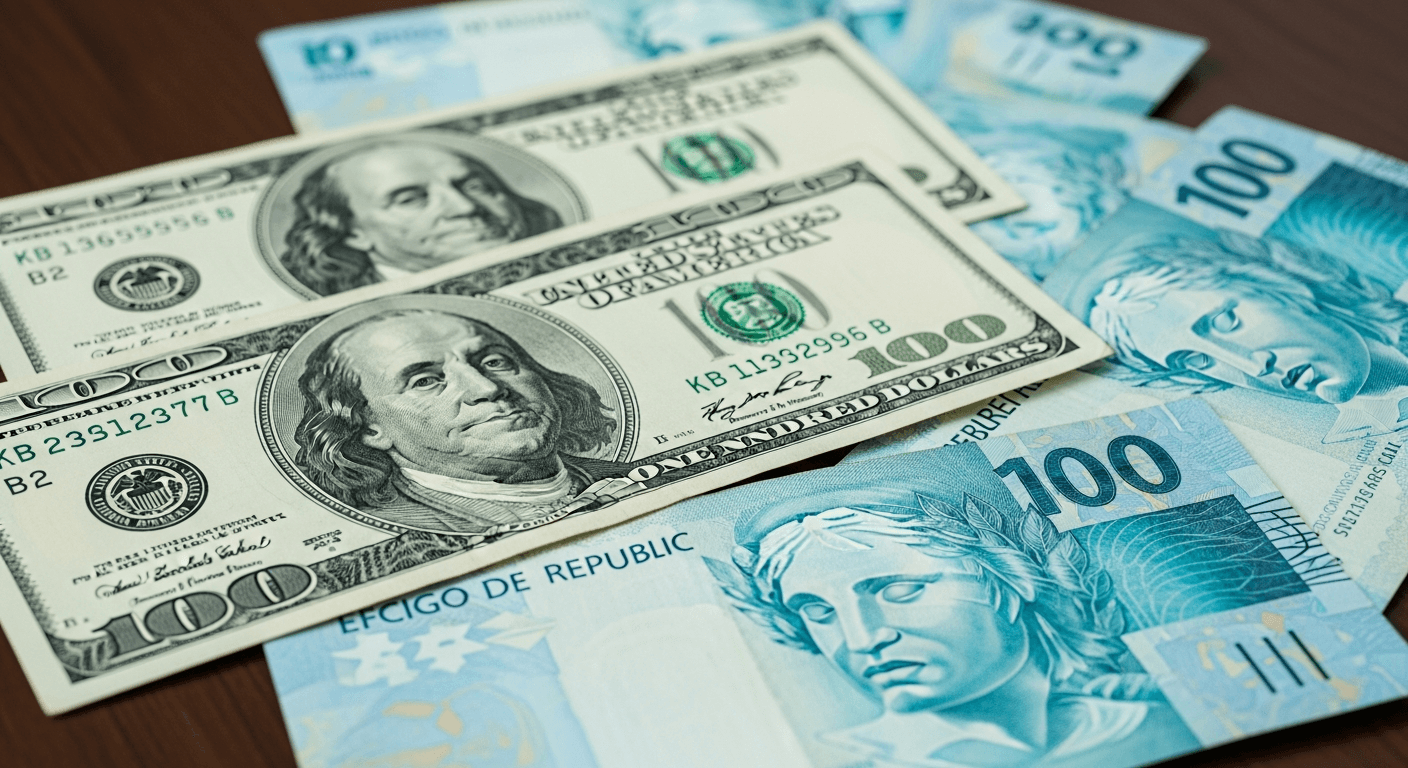
The Brazilian Real is exhibiting extreme sensitivity to external factors, with the dollar trading near the R$5.07 level this week after a period of sharp volatility driven by US monetary policy signals. As of today, the USD/BRL pair is quoted at 5.071333, reflecting the currency’s strong dependence on American market movements that are currently overshadowing most domestic economic news in Brazil.
This high sensitivity was immediately evident following the latest US Federal Reserve interest rate decision. The Fed’s move to maintain its target rate in late July contributed to a weaker dollar internationally, which directly benefited the Brazilian Real. However, the currency's trajectory had shown a sharp reversal just prior to the decision, spiking higher on a surge in US Treasury yields, where the 30-year yield briefly hit a 19-year high near 5.2%. The mechanism here is clear: rising US yields attract capital back to dollar-denominated assets, which strengthens the greenback against emerging market currencies like the BRL. Conversely, the Fed's eventual decision to hold rates—despite some dissenting votes for a hike—was taken by the market as less hawkish than expected, softening the dollar’s global strength.
The net effect of these external pressures has been positive for the Real, which accumulated a fall of nearly 2% for the dollar in July. This appreciation, which lifted the Real from R$5.17 earlier in the month, highlights that the "carry trade" appeal of investing in Brazil remains a potent force. With the Selic rate maintained at a significantly higher level than the US policy rate, the wide interest rate differential continues to attract foreign inflows into Brazilian fixed income and equities (as seen in the performance of the Brazil ETF, EWZ). This makes the currency highly susceptible to shifts in the risk-appetite driven by US policy.
For investors following the Brazilian Real forecast, the path forward remains tied to Washington, not Brasília. Attention must focus squarely on incoming US economic data, particularly the next prints for inflation and the US labor market, which will either confirm or deny expectations for the next Fed move. Any data suggesting the US central bank may be forced to hike rates sooner than anticipated will likely trigger another spike in US Treasury yields and immediately pressure the Real toward R$5.10 or higher. Conversely, continued signs of cooling US inflation will reinforce the weaker dollar trend, allowing the BRL to test new recent highs.
Latest articles
Agro · PRO
Brazil's Bid for 80,000 Tons of Beef Exports to China Awaits Beijing's Quota Veto
Published
Markets · PRO
Brazil Finance Ministry Cuts 2026 GDP Forecast to 2.0% on Drag From High Selic Rate
Published
Investing · PRO
Brightshore Capital, Formerly GTIS Partners, Launches $250 Million Debt Platform Eyeing Brazilian Real Estate
Published