
USD/BRL Outlook Diverges on Fiscal Risks vs. Carry Trade Appeal
Investment bank forecasts for the Brazilian Real show a wide R$0.48 spread, signaling intense market disagreement on the BRL's trajectory.
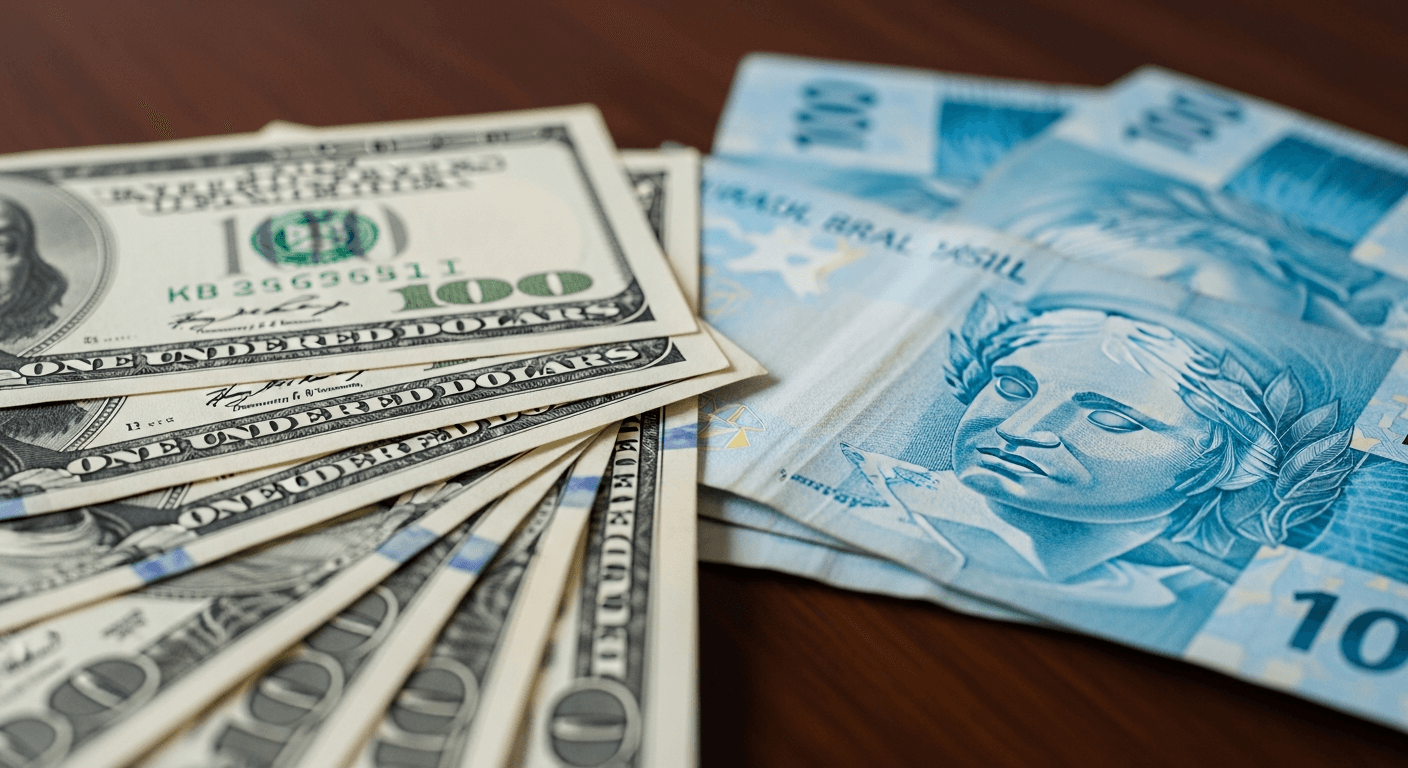
The Brazilian Real (BRL) is facing a sharp divergence in its forecast outlook, creating a wide expectation gap for investors, with the currency currently trading at R$5.119853 against the U.S. Dollar (USD). While the most optimistic outlooks point to significant strengthening, citing the strong R$4.91 consensus from the Central Bank of Brazil (BCB) Focus Survey as a benchmark for what is achievable, other major investment banks predict a sharp depreciation. Bearish projections, such as R$5.39 by Santander Research, suggest the USD/BRL rate could climb substantially by the end of 2026. This R$0.48 spread signals intense near-term volatility and a fundamental disagreement among market participants on the durability of Brazil’s fiscal and monetary policy backdrop.
The mechanism driving the bullish case for the Real centers on Brazil's high local interest rates, which support the lucrative carry trade. Despite recent cuts, the Central Bank of Brazil (BCB) has maintained the Selic rate at an elevated level to combat inflation, keeping the currency attractive to foreign investors seeking high yields. This appeal is reinforced by a resilient domestic labor market and a historically positive trade balance. Conversely, the bearish forecasts are rooted in growing fiscal fragility and increased geopolitical risk. Analysts, including those at Rabobank, project the USD/BRL to reach R$5.35 or higher in the next two years, citing expectations of a smaller spread between local and global interest rates and a fragile domestic fiscal environment, particularly during a future election year. Explicit attribution to these institutions ensures the price points are recognized as third-party targets and not BRZ News' own projections.
The BRL has recently shown acute sensitivity to geopolitical shocks, weakening from R$5.07 to R$5.09 in mid-July after the U.S. announced a new 25% tariff on a broad range of Brazilian imports under Section 301. The measure, which took effect on July 22, is expected to reduce dollar inflows into Brazil by weighing on exports to the U.S., potentially eroding the country's trade surplus. The resulting reduction in dollar supply serves as a direct mechanism for BRL depreciation, causing the currency to lose ground and briefly touch R$5.14 before recovering slightly. This trade tension highlights the currency's vulnerability to external shocks that impact dollar-denominated trade revenue.
For investors monitoring their Brazilian Real exposure via instruments like the Brazil ETF (EWZ) or Brazilian ADRs (e.g., PBR, VALE), the critical factor determining which forecast prevails will be the BCB's commitment to maintaining its high interest rate policy against a challenging fiscal backdrop. The market will be watching the upcoming Copom meeting on August 4-5th for guidance on the future of the Selic rate. Any signal that the central bank is nearing the end of its high-rate cycle, or any further deterioration in the government's fiscal targets, could quickly validate the more bearish R$5.39 forecast by reducing the BRL’s carry-trade appeal and accelerating the flight to the safety of the U.S. Dollar.
Latest articles
Agro · PRO
Brazil's Bid for 80,000 Tons of Beef Exports to China Awaits Beijing's Quota Veto
Published
Markets · PRO
Brazil Finance Ministry Cuts 2026 GDP Forecast to 2.0% on Drag From High Selic Rate
Published
Investing · PRO
Brightshore Capital, Formerly GTIS Partners, Launches $250 Million Debt Platform Eyeing Brazilian Real Estate
Published