

Mato Grosso Highway Dispute Tests Brazil's Concession Framework
A R$ 3.4 billion legal battle over key highway concessions in Mato Grosso is raising concerns about regulatory stability in Brazil's top grain-producing state.
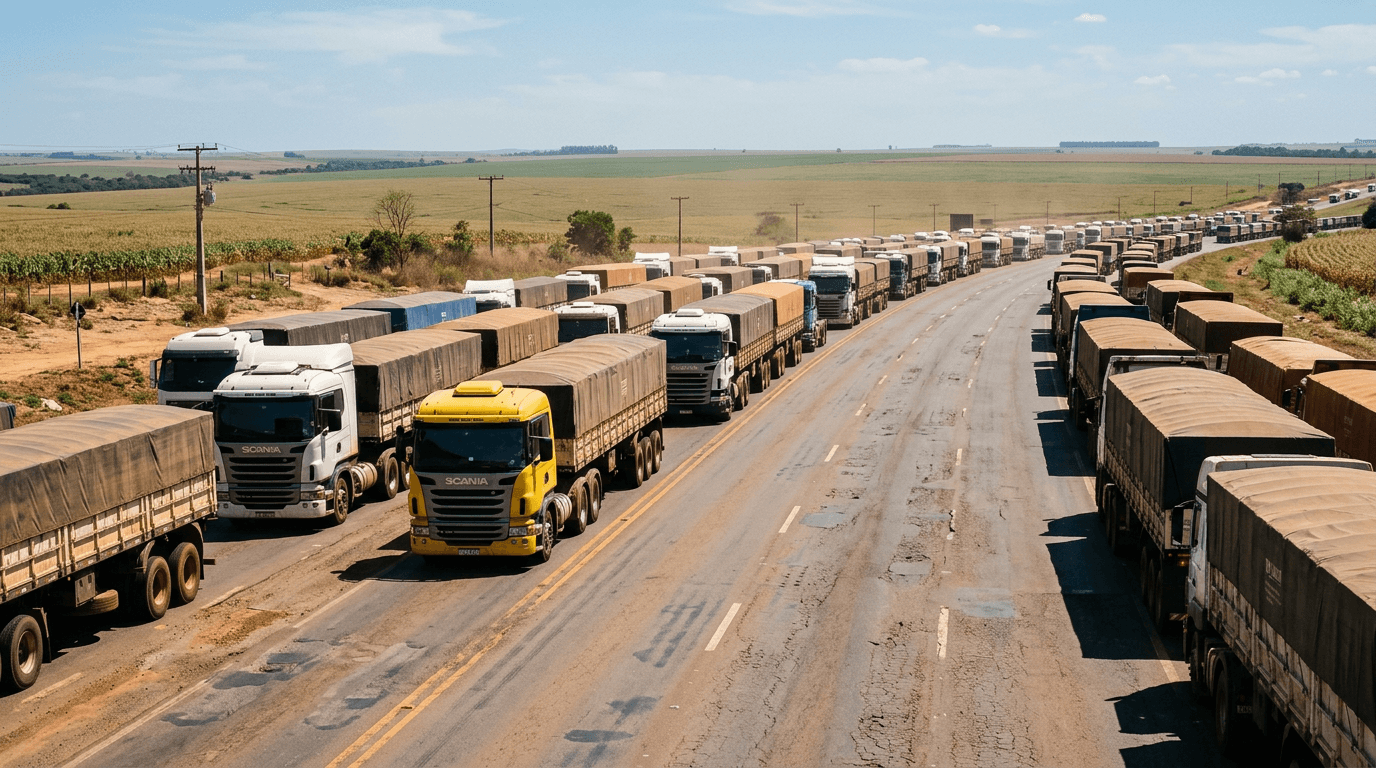
A major legal and regulatory battle over key agricultural transport corridors in Mato Grosso, Brazil's top grain-producing state, is testing the stability of the country's massive infrastructure concession pipeline. The dispute involves state highway concessions spanning nearly 872 kilometers of road, representing an estimated R$ 3.4 billion (approximately $620 million) in planned direct investments. The ongoing conflict has raised concerns among private operators and observers regarding contract stability in the country's most critical agribusiness corridors.
The legal impasse centers on two highway packages, Lot 1 and Lot 6, which were auctioned by the Mato Grosso state government in 2025. Following the auctions, the initial winning bidders were disqualified, triggering a series of appeals and counter-appeals. For Lot 1, which covers 237 kilometers and R$ 698.7 million in investments, the state court of accounts (TCE-MT) suspended the contract execution, though the decision was later overturned by the Superior Court of Justice (STJ), Brazil's second-highest court. Meanwhile, Lot 6, which spans 634 kilometers and requires R$ 2.7 billion in investments, remains frozen as a consortium led by CS Infra—a subsidiary of the logistics giant Simpar—challenges its disqualification in court.
This local dispute carries national weight because Mato Grosso is the heart of the Brazilian agribusiness machine, producing the lion's share of the country's soy, corn, and cotton. The state's road network serves as the primary artery connecting inland farms to northern and southern export ports. Delays in upgrading these roads directly affect transport costs, cargo transit times, and road safety for thousands of truck drivers who navigate the heavily congested routes daily.
The timing of the legal deadlock is particularly delicate for the federal government. The National Land Transport Agency (ANTT) is currently managing a major wave of federal highway auctions. These include high-profile logistics corridors such as the "Rota Agro Central," which connects Mato Grosso to Rondônia, and sections of the BR-163 highway. The federal ministry of transport has designed these auctions to attract billions in private capital, but regulatory experts warn that protracted legal battles over state-level contracts could dampen investor appetite by highlighting the political and judicial risks of operating in Brazil.
While the STJ's recent interventions have provided some procedural clarity, they have not fully resolved the underlying disputes regarding bidder qualifications. The cases highlight a recurring challenge in the Brazil highway system: the friction between state-level regulatory bodies, national courts, and private consortia. How these disputes are resolved in the coming months will serve as a crucial bellwether for foreign and domestic operators evaluating the long-term reliability of Brazil's regulatory framework.
What it touches
The ongoing gridlock in Mato Grosso directly impacts the corporate strategy of Simpar SA (SIMH3), whose subsidiary CS Infra is a key player in the contested Lot 6 concession. The broader dispute also serves as a critical test of risk perception for major infrastructure groups and toll-road operators active in Brazil, including CCR SA (CCRO3) and Ecorodovias SA (ECOR3), which regularly bid on large-scale transport concessions managed by ANTT.
Related coverage
 Brazil Policy Shifts and Tax Overhaul Pressure Stock MarketBrazil's dual VAT proposals, tech regulations, and utility license reviews are creating headwinds for international investors.
 Senate's R$18B Tax Credit Cap Threatens Corporate Cash FlowThe Brazilian Senate is debating PLP 299/2026, a fiscal package that limits companies from offsetting federal taxes with accumulated tax credits.
 Citi Cuts Petrobras ADR Target to $18.50 on Capital Spending RisksCitigroup lowered its Petrobras ADR target to $18.50 on capital expenditure concerns, ahead of the oil company's strategic plan release on November 23.