EU Postpones Key Vote on Reopening Market to BRF Poultry Exporters
The European Union delayed a critical vote on lifting its ban on Brazilian poultry, pushing the decision to December and hitting major exporters like BRF S.A.
Key takeaways
- The EU SCoPAFF postponed its vote to lift the poultry and honey import ban to December 7-8, 2026, per MAPA on November 17, 2026
- The import ban, in place since September 3, 2026, stems from EU antimicrobial rules, per EU veterinary legislation
- Brazil exported 315,000 tons of poultry to the EU from January to October 2026, worth $925 million, per MAPA trade data
- Brazil's global chicken exports reached 4.9 million tons ($9.7 billion) from January to October 2026, per ABPA data
American retail investors holding shares of global meat giants like BRF S.A. will have to wait longer for a crucial, margin-boosting market reopening. On November 17, 2026, the European Union's Standing Committee on Plants, Animals, Food and Feed (SCoPAFF) postponed its highly anticipated vote to lift the import ban on Brazilian poultry and honey, rescheduling the decision for December 7-8, 2026, according to an official statement by Brazil's Ministry of Agriculture and Livestock (MAPA). This delay prolongs a premium market embargo that has squeezed major exporters since early autumn.
The import ban, which has been in effect since September 3, 2026, was originally enacted by the EU over concerns regarding antimicrobial control rules in food-producing animal chains. While a technical audit by the European Commission in August and September yielded a positive assessment of Brazil's sanitary controls, protectionist pressure from European poultry groups prompted member states to defer the vote. According to a report published by Jornal do Comércio on November 17, 2026, the sudden postponement triggered sharp reactions from both the Brazilian government and industry associations, who had expected an immediate resolution.
For global investors looking to invest in Brazil, understanding the scale of this trade is critical. Brazil is the world's largest exporter of chicken meat. Brazilian poultry exports to the EU totaled approximately 315,000 tons, valued at $925 million, from January to October 2026, according to official trade data published by MAPA on November 17, 2026. During that same ten-month span, Brazil’s total global chicken exports reached 4.9 million tons, bringing in $9.7 billion, according to the Brazilian Animal Protein Association (ABPA).
Is Brazil under European Union regulations?
While Brazil is not under European Union jurisdiction, its agricultural sector must fully adapt to the bloc's strict veterinary standards to maintain access to its lucrative markets. In its statement released on November 17, 2026, MAPA expressed deep concern over the SCoPAFF decision, emphasizing that Brazil had met all technical requirements. ABPA similarly criticized the delay as an unnecessary bureaucratic hurdle, arguing that the country's strict physical and logistical segregation lines had already been officially validated by EU auditors.
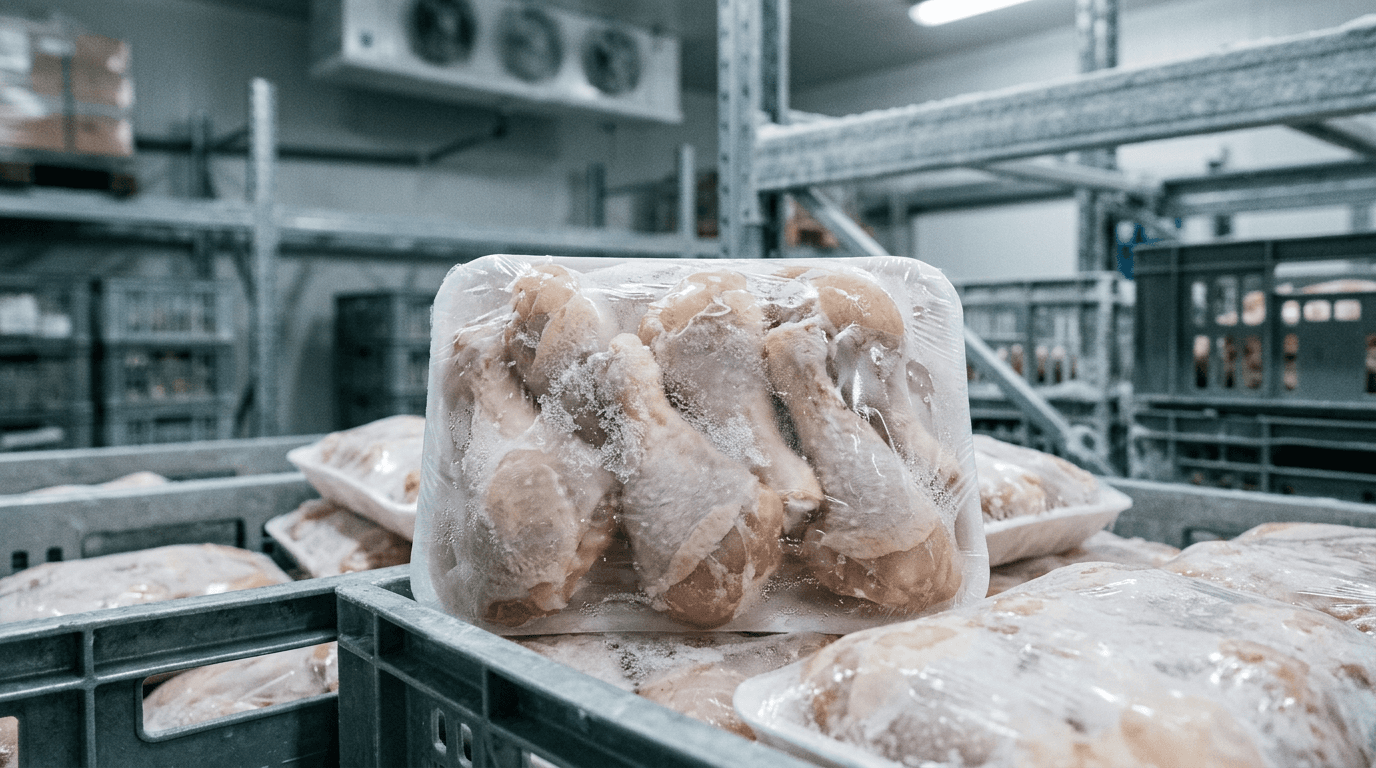
The postponed vote shifts the industry's focus to the next SCoPAFF meetings scheduled for December 7-8, 2026. Until then, exporters will continue to redirect high-quality cuts to alternative markets or hold them in cold storage, keeping export margins under temporary pressure as the Brazilian real trades at USD/BRL 5.7845 on November 17, 2026.
In your brokerage app
The postponement directly touches major food producers and meatpackers exposed to international markets. Investors holding shares of BRF S.A., which is listed in New York under the ticker BRFS, or JBS S.A., which operates massive global poultry divisions, will need to monitor the upcoming December vote. While Brazil's poultry industry remains highly diversified, the lifting of the European ban is a crucial catalyst that could boost export margins and affect broader Brazilian poultry and meatpacker stocks.