

Hedging Brazil Foreign Exchange: Real Plunges to 18-Month Low
U.S. dollar breaks past 5.76 Brazilian Reais as rising inflation projections and fiscal uncertainties push the currency to its lowest level in 18 months.
Key takeaways
- The U.S. dollar broke past 5.76 Reais, peaking at 5.768 Reais, to reach an 18-month high, per local market data on November 16, 2026
- The Central Bank of Brazil raised its 2027 inflation projection to 5.0% and its year-end interest rate forecast to 12.75%, per the Focus survey on November 16, 2026
- The Brazilian Senate approved a fiscal adjustment bill targeting up to 60 billion Reais in savings for 2027, per legislative voting on November 12, 2026
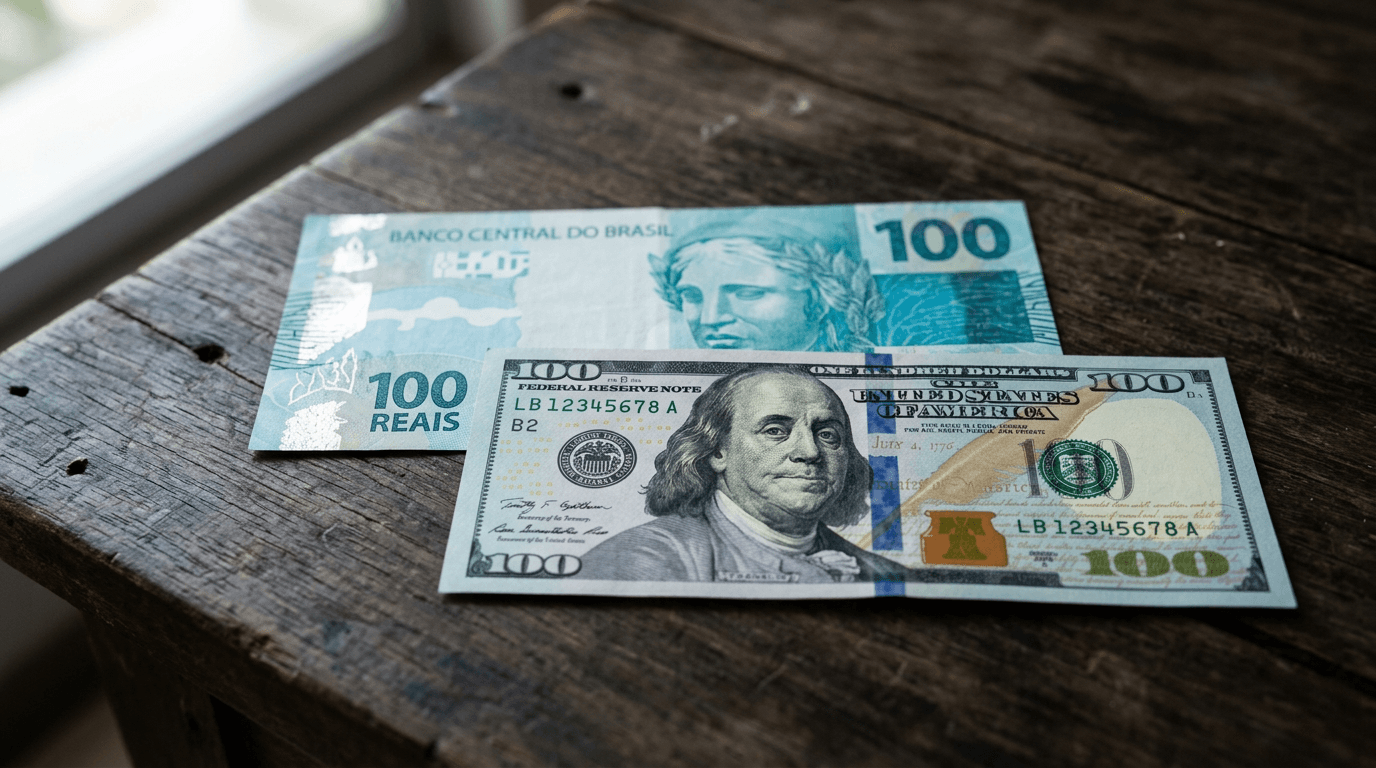
American retail investors holding New York-listed Brazilian giants like Petrobras or the broad iShares MSCI Brazil ETF saw their asset values drop on November 16, 2026, as the U.S. dollar jumped nearly 2% to break past 5.76 Brazilian Reais. The greenback peaked at 5.768 Reais, hitting its highest trading level in 18 months and severely eroding the dollar-denominated returns of Brazilian holdings, according to local exchange data compiled by InfoMoney. This currency slide was driven by a combination of deteriorating domestic inflation expectations and ongoing investor anxiety over the government’s fiscal discipline.
The Central Bank of Brazil's weekly Focus survey, released on November 16, 2026, compiled estimates from over 100 financial institutions showing heightened consumer inflation projections for 2027, which rose to 5.0% from 4.90%. In response to these price pressures, economists surveyed by the monetary authority on November 16, 2026, also hiked their forecast for the year-end 2027 benchmark Selic interest rate to 12.75% from 12.50%. These adjustments indicate that the financial sector expects interest rates to remain higher for longer to keep inflation from spiraling.
This local currency sell-off was compounded by political tension surrounding the government’s fiscal adjustment bill, known as PLP 299/2026. While the Senado Federal approved the main text of the bill on November 12, 2026, by a 45-to-31 vote—targeting up to 60 billion Reais ($10.4 billion) in savings for 2027—investors remain highly cautious. This caution stems from four crucial legislative amendments scheduled for debate on Tuesday, November 17, 2026, which threaten to dilute the spending cuts by introducing exemptions and preserving certain expenditures.
For foreign observers, understanding the fiscal back-and-forth is key: Brazil is currently grappling with a public debt that has ballooned to roughly 83% of its gross domestic product, according to Treasury estimates reported in November 2026. The Central Bank has been forced to maintain a highly restrictive stance, holding its current benchmark rate at 13.75% for 2026 to curb persistent cost-of-living pressures. Without solid, permanent spending cuts from the administration of President Luiz Inácio Lula da Silva, the burden of fighting inflation falls entirely on monetary policy, keeping domestic borrowing costs painfully high and discouraging economic expansion.
Looking ahead, the market is bracing for several key developments that will determine the currency's trajectory. Beyond the Senate's final vote on the bill’s amendments on November 17, 2026, the legislation must still clear the Chamber of Deputies before becoming law. Furthermore, investors are closely watching for the official return of President Lula to Brasília this week after foreign travel, which is expected to trigger a formal announcement regarding the cabinet's economic team and further clarify the administration's long-term budget strategy.
In your brokerage app
For retail investors watching the exchange rate, this volatility directly affects major Brazilian companies listed in New York. Assets like Petrobras and mining giant Vale, as well as the broad iShares MSCI Brazil ETF that holds them, remain highly exposed to this domestic currency risk, as their underlying cash flows are generated in Reais but reported and distributed to shareholders in U.S. dollars.
Analysis · NWX analysis desk
Which Brazil assets this touches
- EWZ, USDBRL, DI1 — Named in this story.
Technical picture · iShares MSCI Brazil ETF (EWZ)
iShares MSCI Brazil ETF (EWZ) closed at $32.22 on Nov 13, 2026, up 0.8% from five sessions earlier. The last close is below its 20-day average of $35.03 and below its 50-day average of $37.59. Since May 13, 2026 it has traded between $31.73 (low, Nov 3, 2026) and $43.54 (high, Oct 9, 2026).
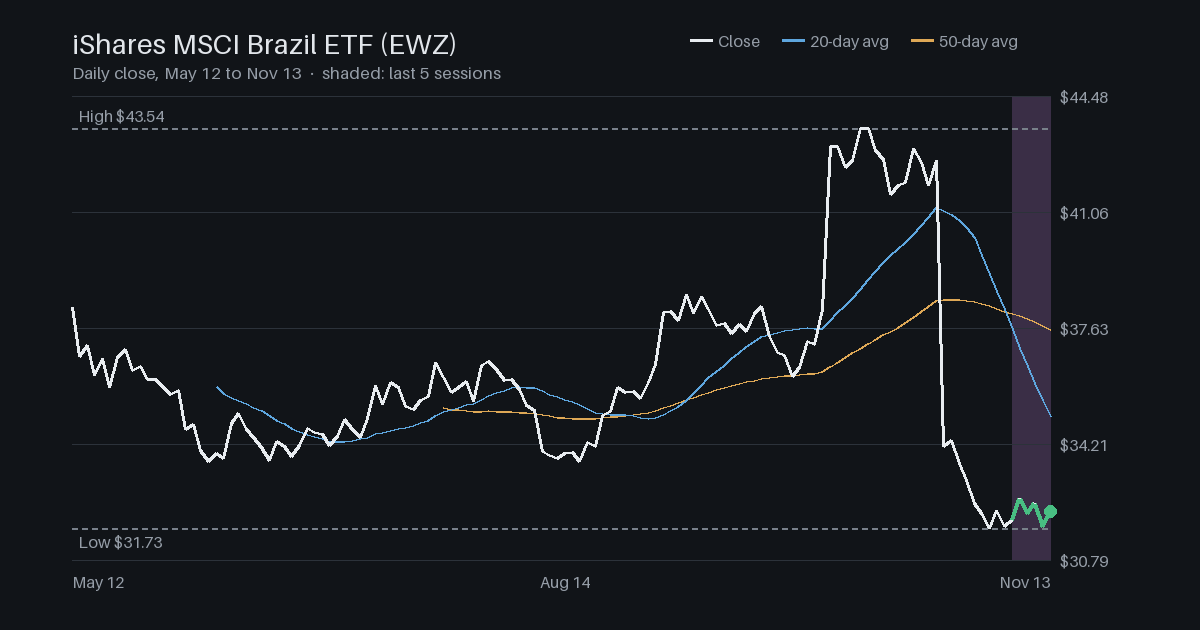
| Last close | $32.22 | Closing price on Nov 13, 2026. |
|---|---|---|
| 5-session move | +0.8% | Change in the closing price over the last five trading days. |
| 20-day average | $35.03 | The average closing price of the last 20 trading days. |
| 50-day average | $37.59 | The average closing price of the last 50 trading days. |
| Period high | $43.54 | Highest price since May 13, 2026. |
| Period low | $31.73 | Lowest price since May 13, 2026. |
Related coverage
 Brazil Policy Shifts and Tax Overhaul Pressure Stock MarketBrazil's dual VAT proposals, tech regulations, and utility license reviews are creating headwinds for international investors.
 Senate's R$18B Tax Credit Cap Threatens Corporate Cash FlowThe Brazilian Senate is debating PLP 299/2026, a fiscal package that limits companies from offsetting federal taxes with accumulated tax credits.
 Citi Cuts Petrobras ADR Target to $18.50 on Capital Spending RisksCitigroup lowered its Petrobras ADR target to $18.50 on capital expenditure concerns, ahead of the oil company's strategic plan release on November 23.