

Chicago soybean net-longs rise as Brazil planting gets slow start
Speculative traders build net-long soybean positions amid uneven early rains in Brazil, where the 2026/27 planting season is off to a slower-than-usual start.
Speculative traders are ramping up their bullish bets on soybeans as the critical South American planting season begins under highly uneven weather conditions. According to the latest Commitments of Traders report from the U.S. Commodity Futures Trading Commission (CFTC), non-commercial market participants held a substantial net-long position in Chicago Board of Trade (CBOT) soybean contracts as of October 6, 2026.
The data shows that non-commercial traders held 360,967 long contracts compared to 87,071 short contracts, resulting in a net-long position of 273,896 contracts. Total open interest for the CBOT soybean contract (code 005602) stood at 1,121,298 contracts for the weekly observation period. This positioning reflects growing market attention on South American weather, which dictates global grain prices during the final quarter of the year.
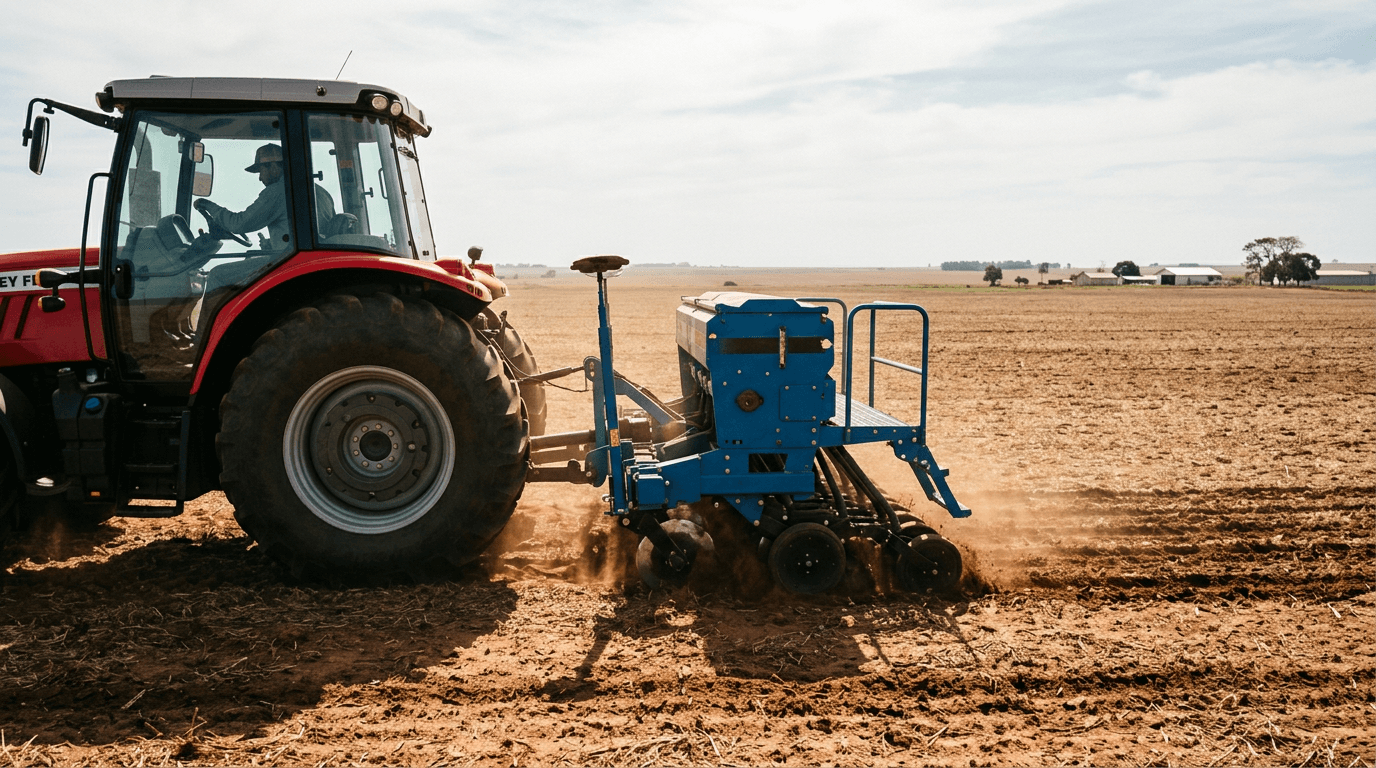
The buildup in net-long positions coincides with a sluggish start to the 2026/27 soybean planting campaign in Brazil, the world's largest exporter of the oilseed. According to data from private agribusiness consultancy AgRural, Brazilian farmers had sown 7.3% of the projected soybean area by early October, lagging behind the 9.0% pace recorded at the same point in the previous season. While southern states have dealt with excessive moisture, key central and northern growing regions have faced irregular early-season rainfall, forcing some farmers to wait for better soil moisture before seeding.
Despite the initial delays, Brazil's national supply agency, Conab, remains optimistic about the upcoming harvest. In its latest agricultural outlook, Conab projected a record 2026/27 soybean crop of approximately 181.6 million tonnes, driven by yield expectations and a modest 1.4% expansion in planted area. However, the agency noted that this represents the slowest expansion of Brazil's soybean footprint in two decades, indicating that the era of rapid land conversion is giving way to a focus on productivity per hectare.
For foreign observers, the weekly CFTC positioning serves as a barometer of market sentiment rather than a definitive price forecast. The slow start to planting in states like Mato Grosso and Goiás has kept global supply chains on alert, as any prolonged delay in the soybean harvest could compress export windows and delay the subsequent planting of "safrinha" corn, which is grown on the same fields immediately after the soybean harvest.
What it touches
The shifting dynamics in global soybean supply directly affect major agricultural producers and land management firms operating in South America. Companies with large-scale farming footprints in the region, such as Adecoagro S.A. (NYSE: AGRO), are highly exposed to local weather variations and the resulting swings in Chicago commodity futures. Additionally, global logistics and protein giants like JBS N.V. (NYSE: JBS) monitor these feed-cost inputs closely, as soybean meal is a primary component in global livestock production.
Related coverage
 Itaú Enters Low-Income Housing Program to Challenge State DominanceItaú Unibanco is entering Brazil's flagship affordable housing program, Minha Casa Minha Vida, to challenge state-owned lenders in the mortgage market.
 Petrobras Approves $2.7B Extra Dividend, Hikes Capex to $122BPetrobras approved a $2.7 billion extra dividend on Nov. 23, 2026, alongside a larger-than-expected $122 billion five-year capital spending plan.
 Lower House Passes $9.6B Fiscal Plan, Boosting Brazil RealBrazil's Chamber of Deputies approved a R$56 billion ($9.6 billion) fiscal package, boosting the real as it corrected from a brief spike above R$6.00.