
Dry Spell in Key Bahia Soybean Hub Raises Crop Stress Risk for Brazil Exports
Farmers in Luís Eduardo Magalhães, a major soy exporter in Brazil's Matopiba region, are facing dry conditions with just 18.7mm of rain in the past week, potentially delaying the start of the 2026/27 soybean planting season.
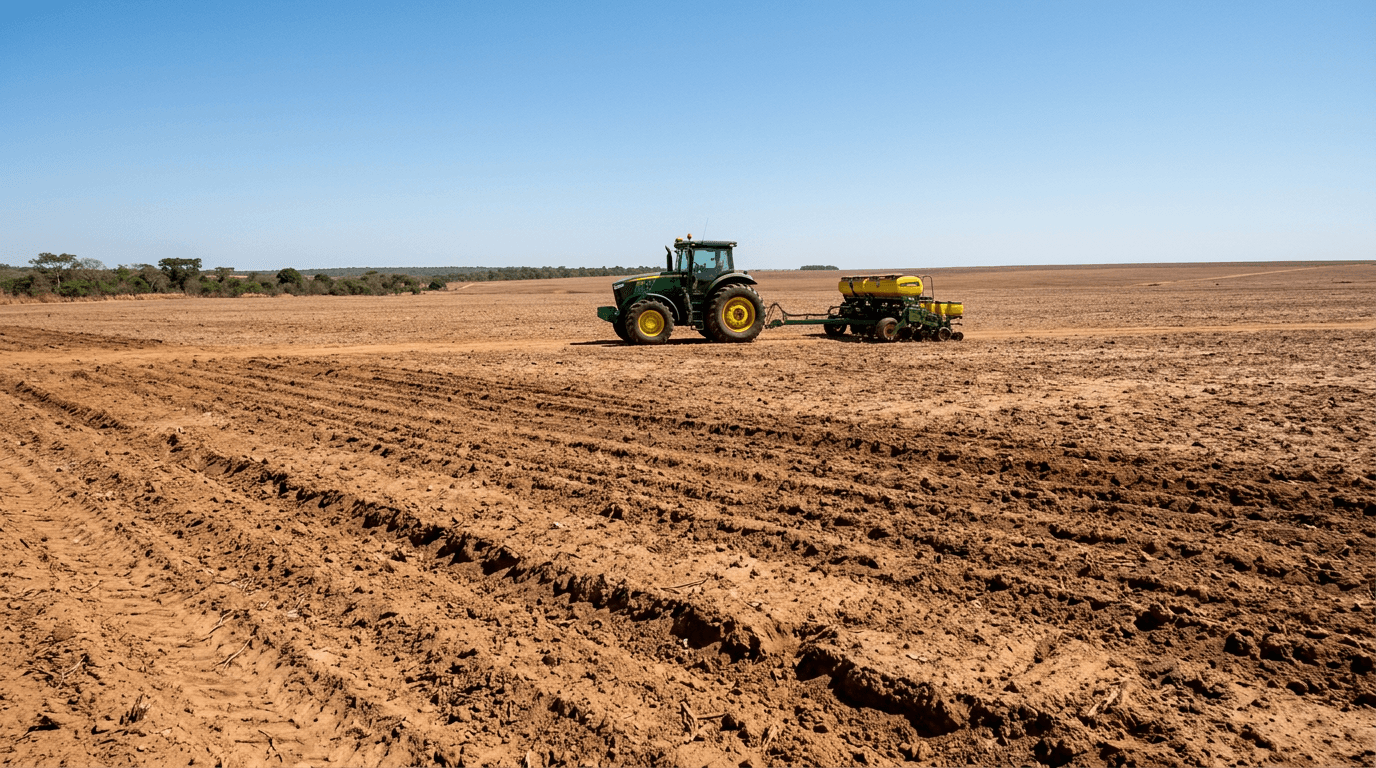
The crucial 2026/27 Brazil soybean planting season is facing an early challenge in one of the country’s most important agricultural frontiers, as the region around Luís Eduardo Magalhães, Bahia, endures a significant dry spell just as field work should ramp up. The municipality, a major hub in the Matopiba region, has recorded only 18.7 millimeters of rain over the past seven days and five consecutive dry days, a deficit that threatens to postpone planting and raise the risk of crop stress later in the cycle.
Luís Eduardo Magalhães (LEM) is the industrial heart of Western Bahia's agribusiness, an area of the vast Cerrado biome that funnels substantial volumes of soybeans into export markets. With the bulk of Brazil’s national planting window opening in late September, the success of the rainfed crop is entirely dependent on the consistent return of soil-drenching rains. The current lack of moisture makes it risky or impossible for many farmers to deploy machinery and plant seeds, which are susceptible to rotting if germination starts and then halts due to subsequent dry conditions.
The overall advance of the Brazil soybean crop is already modest, reaching just 3.4% planted nationally as of late last week, according to consultancy AgRural. While southern states like Paraná have seen progress, the country’s central-western regions, including parts of the massive state of Mato Grosso, are also struggling with uneven rainfall. Delays in planting are particularly concerning, as they compress the time available for the crop to develop, potentially limiting yields and pushing the harvest into periods of greater risk.
The Matopiba region, which includes Bahia, is a critical component of Brazil agriculture, accounting for a significant share of the country's output, much of which is dedicated to export. A dry start that pushes planting well beyond the optimal October window could structurally limit the national crop size, which analysts project to be in the range of 181.7 to 185.6 million tonnes.
What farmers will watch next is the forecast for the first half of October. A return to substantial and sustained rainfall is necessary to provide the soil moisture needed for confident planting and to ensure the crop does not start its development with a moisture deficit that could prove difficult to overcome.
What it touches
The risk of a delayed or reduced 2026/27 Brazil soybean harvest introduces a supply-side tension that can be supportive of global soybean prices, which closed yesterday at 1305.25 cents per bushel. While the Brazilian real showed strength against the dollar, closing at R$5.1827 to the USD, persistent crop concerns could eventually weigh on the currency by threatening export revenue.