

Supreme Court Judge Exits Case Governing Vale and BHP Foreign Lawsuits
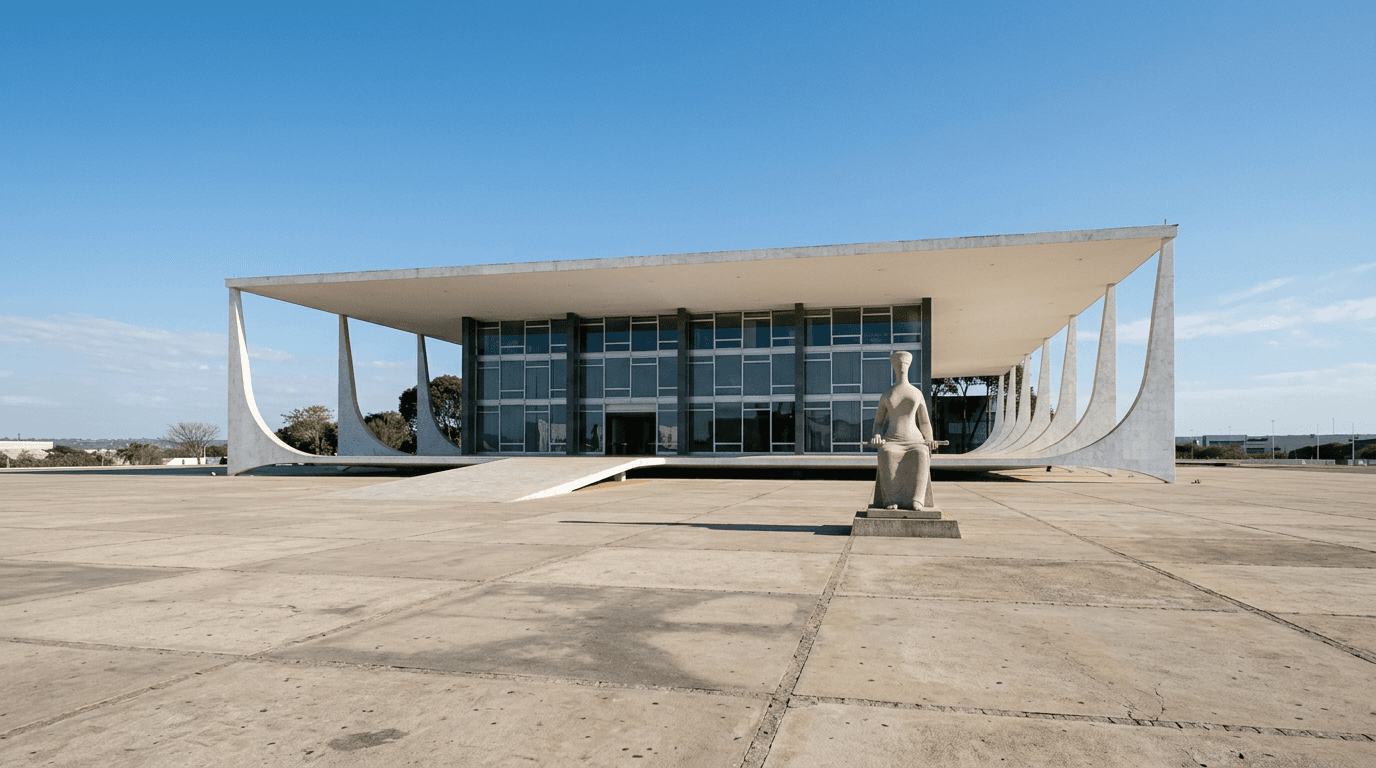
Brazilian Supreme Court Justice Alexandre de Moraes has recused himself from a critical lawsuit that dictates whether municipalities can sue Vale and BHP abroad.
Key takeaways
- Justice Alexandre de Moraes recused himself from the ADPF 1178 sovereign mining lawsuit, per Metrópoles on November 24, 2026
- Mining association Ibram filed the case in June 2024 to block foreign lawsuits against Vale and BHP, per Metrópoles on November 24, 2026
- Relator Flávio Dino used the case to block automatic US Magnitsky sanctions in Brazil, per Court records on November 24, 2026
Global investors managing mining equities and foreign liability exposure are facing a sudden judicial shift in how billions of dollars in environmental damage claims are handled. A critical Brazilian Supreme Court lawsuit that could block municipalities from bringing parallel claims against mining giants in international courts has lost a key voting member. The outcome of this case is paramount for shareholders trying to gauge the true liability risk of major resource operators in South America.
On November 24, 2026, Supreme Court Justice Alexandre de Moraes recused himself for personal reasons (foro íntimo) from the landmark constitutional case, ADPF 1178, as reported by Metrópoles on November 24, 2026. The case was originally filed in June 2024 by the Brazilian Mining Association (Ibram) to prevent local municipalities from hiring foreign lawyers and bypassing domestic settlements to sue companies in overseas jurisdictions, according to court documents reported by g1 on November 24, 2026.
The litigation relates to the 2015 collapse of the Mariana tailings dam, which was operated by Samarco, a joint venture between Vale SA and BHP Group Ltd, as documented by g1 on November 24, 2026. The parallel overseas claims in London represent over 600,000 plaintiffs seeking damages, according to a report by CNN Brasil on October 22, 2024. If the Brazilian Supreme Court blocks municipal actions abroad, it could invalidate the legal basis for these massive international lawsuits, directly impacting the legal liability of brazil vale and its partners.
The ADPF 1178 case has also become highly politicized, housing a broader constitutional conflict over international jurisdiction. Relator Justice Flávio Dino ruled on October 27, 2026, that unilateral foreign measures like the U.S. Magnitsky Act sanctions against Moraes do not have automatic legal effect in Brazil, according to Supreme Court records published on November 24, 2026. Dino also used the proceedings to authorize a Federal Police investigation into potential foreign campaign financing, adding layers of geopolitical tension to what began as a corporate mining dispute, per g1 on November 24, 2026.
Moraes did not elaborate on his reasons for stepping down from the case, citing only standard procedural codes for personal recusals. The recusal leaves the court's remaining 10 active justices to decide on the sovereign jurisdictional boundary, according to STF internal regulations updated as of November 24, 2026. A final ruling in favor of the mining association would sharply limit municipal authority to pursue claims abroad, providing a major legal victory for the companies involved.
In your brokerage app
For retail investors holding ADRs of Vale SA, listed in New York, or shares of BHP Group Ltd, this Supreme Court decision represents the single most important domestic regulatory risk to watch. It directly impacts the potential size of the companies' multi-billion-dollar liabilities from the Mariana disaster. Currently, the Brazilian real is trading at an official Ptax rate of 5.8573 per dollar, as of November 25, 2026, according to Central Bank of Brazil data.
Related coverage
 Lula Signs $9.5 Billion Fiscal Law to Ease Pressure on Brazil RealPresident Lula has signed a major fiscal adjustment package, capping spending growth at 2% and cutting tax breaks to stabilize the weakening Brazil real.
 Vale Ordered to Deposit 133.1 Million Reais for BrumadinhoBrazil's Supreme Court ordered mining giant Vale S.A. to deposit 133.1 million reais within five days to resume Brumadinho disaster compensation.