
Lula and Flávio Bolsonaro Face Off in Tight Brazil Election
Incumbent President Lula da Silva leads conservative Senator Flávio Bolsonaro in the final polls ahead of Brazil's high-stakes October 4 presidential vote.
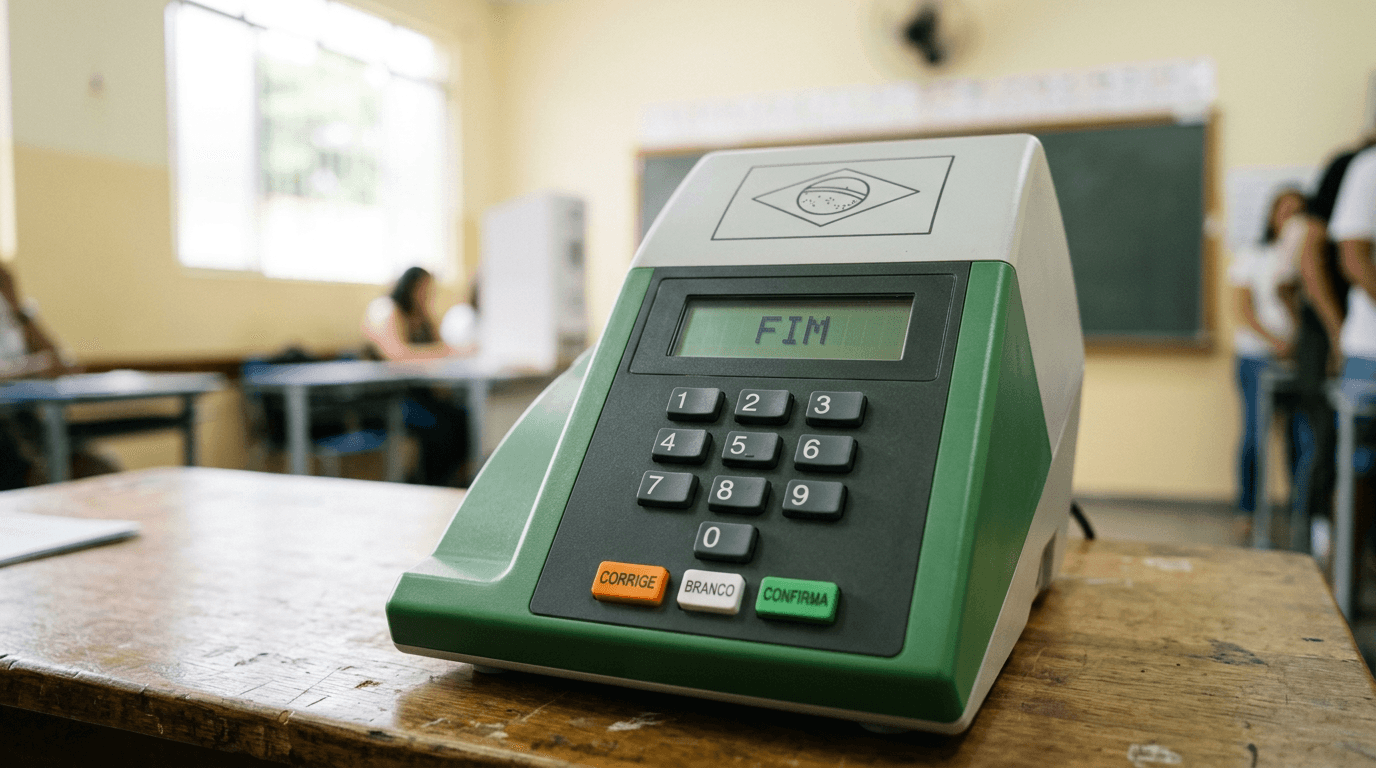
Brazilians head to the polls on Sunday, October 4, 2026, for the first round of a highly polarized presidential election that will shape the country's economic and environmental path. The race has boiled down to a direct clash between incumbent leftist President Luiz Inácio Lula da Silva and conservative Senator Flávio Bolsonaro, the eldest son of former right-wing President Jair Bolsonaro.
A final Datafolha poll released on October 1, 2026, shows Lula leading with 42% of the vote against Flávio Bolsonaro's 38%. Because neither candidate is currently projected to secure the absolute majority of valid votes required to win outright in the first round, the two frontrunners are widely expected to face off in a decisive second-round runoff scheduled for late October. In a hypothetical head-to-head matchup, Datafolha shows Lula holding a narrow lead of 48% to 45%.
The election represents a fundamental choice between two starkly different visions for Latin America's largest nation. Lula, a titan of the Brazilian left who is seeking to extend his third non-consecutive presidential term, has focused his platform on social welfare programs, state-led infrastructure investments, and strict environmental protections in the Amazon rainforest. Flávio Bolsonaro, representing the conservative Liberal Party (PL), has rallied his father's passionate base by campaigning on market-friendly economic reforms, deregulation, and conservative social values.
Regional Divides and Key Battlegrounds
The tight polling numbers reflect a deeply divided country, with regional voting patterns highlighting the polarization. According to Datafolha's state-level breakdowns, Lula maintains a commanding lead in the poorer, historically leftist northeastern state of Pernambuco, where he captures 65% of valid votes compared to Flávio Bolsonaro's 26%. Conversely, Flávio Bolsonaro dominates in the conservative stronghold of Rio de Janeiro with 48% to Lula's 40%.
The election will likely be decided in the populous southeast, particularly in the swing state of Minas Gerais. Historically, Minas Gerais is considered Brazil's ultimate bellwether; no presidential candidate has won the republic without also winning this state since the return of democracy in 1989. The latest poll shows Lula leading in Minas Gerais with 45% of valid votes to Flávio Bolsonaro's 38%. Meanwhile, the industrial powerhouse of São Paulo remains a virtual tie, with Flávio Bolsonaro holding 41% of valid votes to Lula's 40%.
If no candidate crosses the 50% threshold on Sunday, the country will endure four more weeks of intense campaigning. The official results of the first round will be tallied rapidly by Brazil's Superior Electoral Court (TSE), which utilizes a fully electronic voting system, with definitive outcomes expected within hours of polls closing on Sunday evening.
What it touches
The outcome of the election is highly consequential for international investors tracking Brazilian equities and the national currency. A victory for Flávio Bolsonaro would likely boost state-controlled companies and private-sector players anticipating privatization and deregulation, whereas a Lula victory would signal policy continuity for environmental initiatives and public spending. US-based investors closely monitor these political shifts through the iShares MSCI Brazil ETF (EWZ), which tracks the performance of the largest publicly traded Brazilian enterprises.