
How Brazil Supreme Court Crisis Fueled Flávio Bolsonaro's Surge
Public backlash over Supreme Court scandals and its ties to President Lula has reshaped political risk, driving voters toward the right-wing opposition.
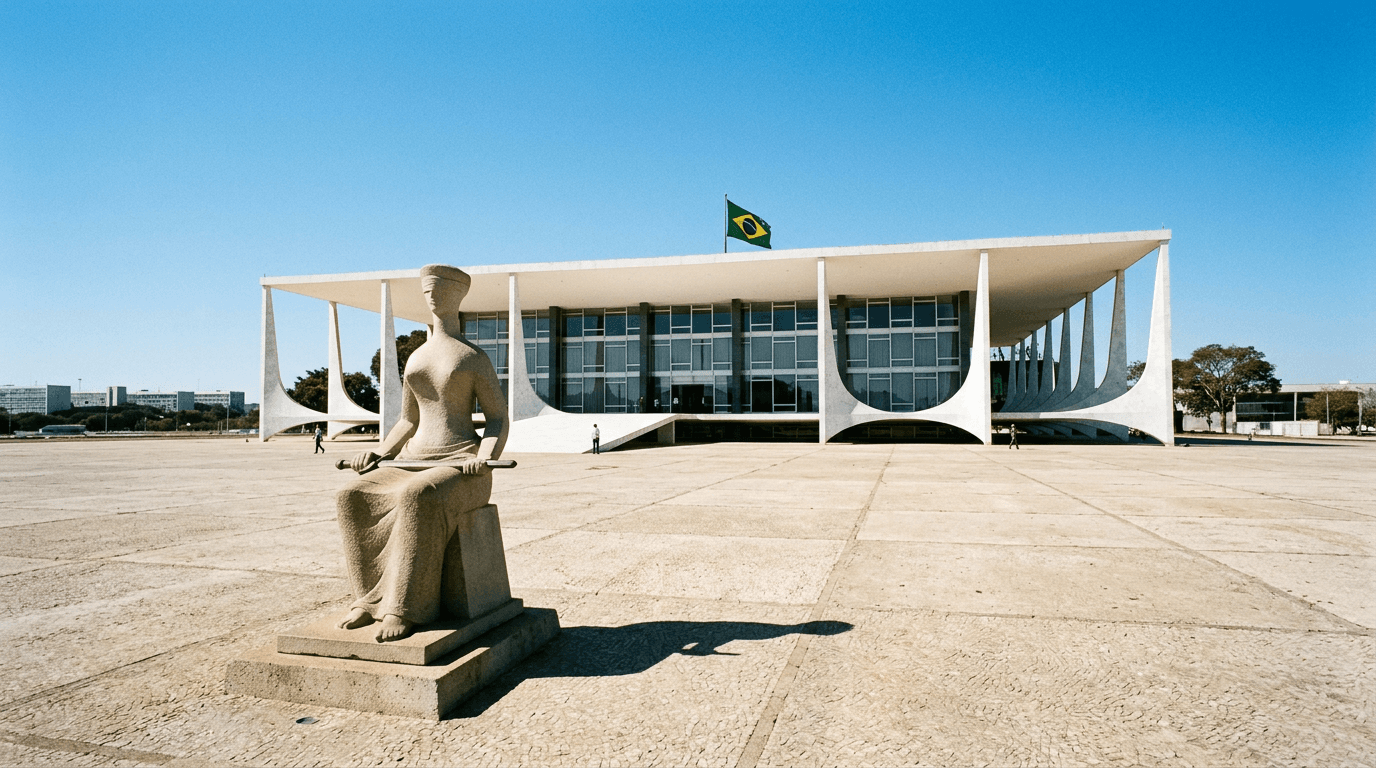
The severe image crisis engulfing the Brazil Supreme Court has emerged as a decisive force in the country's presidential race, reshaping political risk and propelling the right-wing opposition to a first-round victory. In the first round of the presidential election, conservative Senator Flávio Bolsonaro—son of former President Jair Bolsonaro—finished in first place with 47.03% of the vote. He led the incumbent, left-wing President Luiz Inácio Lula da Silva, who secured 45.16%, forcing a highly polarized runoff scheduled for October 25, 2026.
Following the vote, President Lula publicly admitted during a meeting with allies that his reelection campaign is carrying a heavy political burden due to the public's deep distrust of the Supreme Federal Court (STF). Lula lamented that his campaign is "carrying on our backs" what he described as "promiscuity" within the tribunal, referencing recent institutional scandals that have severely damaged the court's reputation. Chief among these is the Banco Master scandal, which triggered allegations of improper relationships between high-profile financiers and STF justices, including the highly controversial Justice Alexandre de Moraes.
The political fallout was further cemented on October 7, 2026, when Kassio Nunes Marques, the head of the Superior Electoral Court (TSE), rejected a legal challenge from Lula’s campaign. Lula's lawyers had sought to block campaign advertisements by Flávio Bolsonaro that explicitly linked the president to Justice Moraes and the broader institutional crisis. Nunes Marques ruled that the public role, actions, and scrutiny of the Brazil Supreme Court and its justices are entirely legitimate topics for open debate during an election. The ruling allowed Flávio's campaign to continue airing videos that accuse Lula's administration of creating an "institutional imbalance" and governing alongside a law-breaking faction of the court.
For foreign observers, this institutional clash highlights how deeply the judiciary is intertwined with Brazilian political risk. For years, right-wing politicians have accused the STF of overreaching its constitutional bounds, particularly through aggressive anti-disinformation inquiries led by Justice Moraes. While Lula is not personally implicated in the recent judicial scandals, his close political alignment with the court's dominant wing during his term led voters to associate his administration with the tribunal's perceived corruption and bias. This association has effectively neutralized Lula's traditional messaging, allowing the Bolsonaro campaign to frame itself as the only true anti-system option.
As the October 25 runoff approaches, Lula's campaign is attempting a difficult pivot by increasing its criticism of the judiciary to distance the president from the court's negative perception. However, with the electoral courts upholding the opposition's right to weaponize the STF's image crisis, the right-wing opposition holds a powerful narrative advantage. The upcoming vote will not only decide the presidency but will also serve as a direct public referendum on the limits of judicial power in Latin America's largest democracy.