
Hijacking of Cancer Treatment Isotope in São Paulo Triggers Nuclear Safety Alert
Brazilian authorities are searching for a stolen cargo of Actinium-225, a medical-grade radioactive isotope hijacked in Guarulhos, São Paulo.
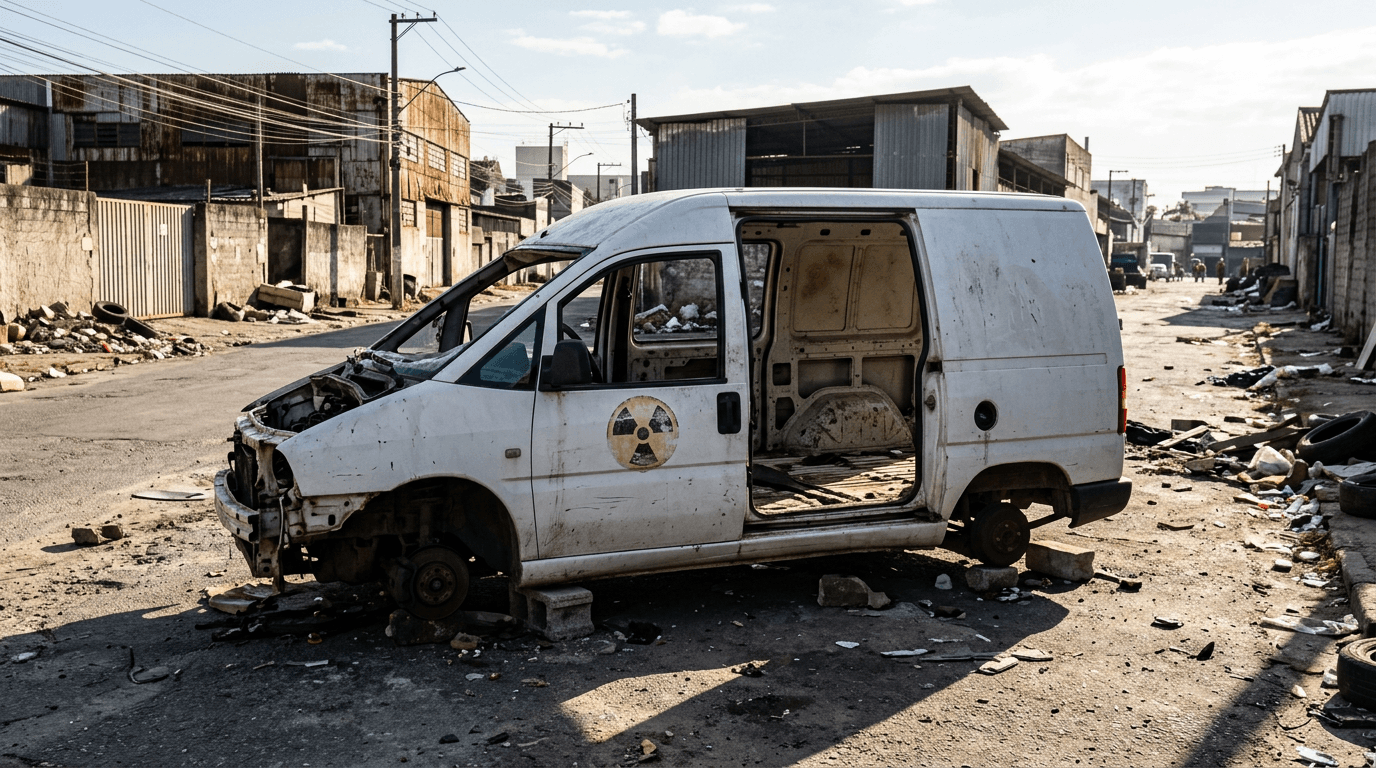
A transport vehicle carrying a highly regulated radioactive isotope used for advanced cancer treatment was hijacked in Guarulhos, a major city in the metropolitan area of São Paulo, triggering a regional nuclear safety alert. The incident occurred on the morning of October 1, 2026, when armed criminals intercepted a commercial cargo van shortly after it departed from São Paulo’s international airport, according to the National Nuclear Safety Authority (ANSN).
The stolen cargo consists of Actinium-225, a scarce and highly sought-after medical isotope imported from the United States. The material was en route to the A.C. Camargo Cancer Center, one of Brazil's premier oncology institutions, where it was scheduled for a single patient's targeted prostate cancer therapy. The vehicle, a Citroën Jumpy cargo van clearly marked with the international trefoil symbol for radiation, was later found stripped and disassembled by police, but both the radioactive material and its specialized transport container remain missing.
The ANSN has issued an urgent public warning, emphasizing that while the packaged material does not pose an immediate environmental or health threat in its current state, it must not be opened or compromised. Actinium-225 is a liquid substance that is difficult to contain once released. If the protective shielding is breached, anyone in close proximity faces severe risks of accidental radiation exposure and localized contamination.
This hijacking highlights the persistent security vulnerabilities plaguing cargo transit in São Paulo, Latin America's largest metropolitan area. While cargo theft is a common logistical challenge for high-value retail goods in Brazil, the interception of medical-grade nuclear materials presents a complex public safety hazard. Federal and state security forces have mobilized specialized teams to locate the container before it can be discarded or opened by unsuspecting individuals.
Authorities have instructed the public that if the marked container is found, they should immediately isolate the area, avoid touching or manipulating the object, and contact the Institute of Radioprotection and Dosimetry (IRD) through emergency channels.