
Flávio Bolsonaro Seizes Debate Chaos to Rally for First-Round Win
Following the abrupt cancellation of Brazil's final presidential debate, Flávio Bolsonaro is launching a strategic voting campaign to absorb moderate votes.
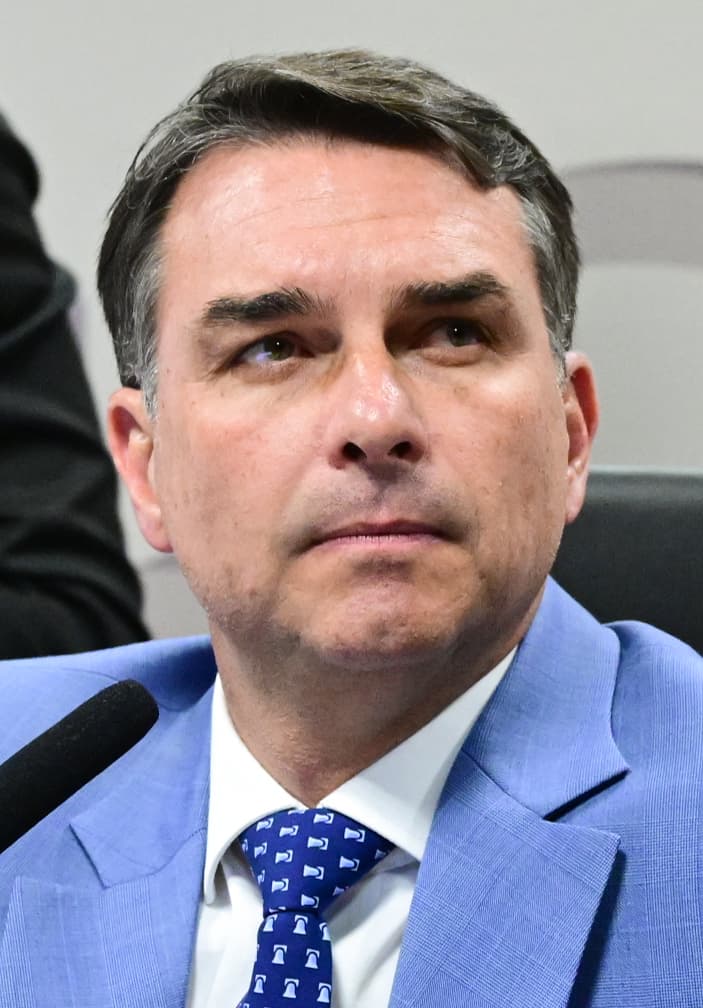
The final presidential debate of the Brazil election cycle, scheduled to air on TV Globo on October 1, 2026, was abruptly canceled just hours before broadcast. The sudden cancellation has reshaped candidate strategies only days before the first-round vote on October 4. Seizing on the institutional chaos, conservative frontrunner Senator Flávio Bolsonaro (PL) immediately launched a campaign for voto útil (strategic voting). His campaign is urging right-wing and centrist voters to unite behind his candidacy to secure an outright victory in the first round.
The dramatic collapse of the debate followed a series of conflicting judicial rulings that the network said created "legal uncertainty". First, Estela Aranha, a minister of the Superior Electoral Court (TSE)—Brazil’s top electoral authority—prohibited TV Globo from displaying an empty podium for incumbent President Luiz Inácio Lula da Silva, who had already declined to attend. The ruling also blocked other candidates from directing questions to the absent president. Shortly after, Supreme Court (STF) Justice Gilmar Mendes ordered the network to include Renan Santos, a candidate from the upstart Missão party. Following these last-minute changes, Flávio Bolsonaro withdrew from the event, prompting TV Globo to cancel the broadcast entirely.
With the country's most-watched television showcase dark, Flávio Bolsonaro took to YouTube to host a live broadcast. He framed the judicial decisions as "censura" (censorship) designed to shield Lula from criticism. Supported by prominent conservative allies, the senator appealed directly to the supporters of moderate right-wing candidates, specifically targeting voters of Ronaldo Caiado (PSD) and Romeu Zema (Novo). The goal of this "revolt vote" campaign is to consolidate the conservative electorate and bypass a highly polarized second-round runoff.
The strategic pivot comes as polls show an incredibly tight race. The latest Datafolha poll, released on October 1, 2026, places Lula in the lead with 42% of voter intentions, followed closely by Flávio Bolsonaro at 38%. Moderate conservative candidates Ronaldo Caiado and Romeu Zema hold 3% and 1% respectively. Under Brazilian electoral rules, a candidate must win more than 50% of valid votes to avoid a second-round runoff. By absorbing the single-digit support of these moderate rivals, the Bolsonaro campaign hopes to trigger an upset that could end the election on Sunday.