
Brazil Dispute Over Patron Saint Drags Electoral Court into Moderation
Brazil's Electoral Court (TSE) ruled to remove posts falsely linking presidential candidate Flávio Bolsonaro to a plot to strip the nation's patron saint of her title.
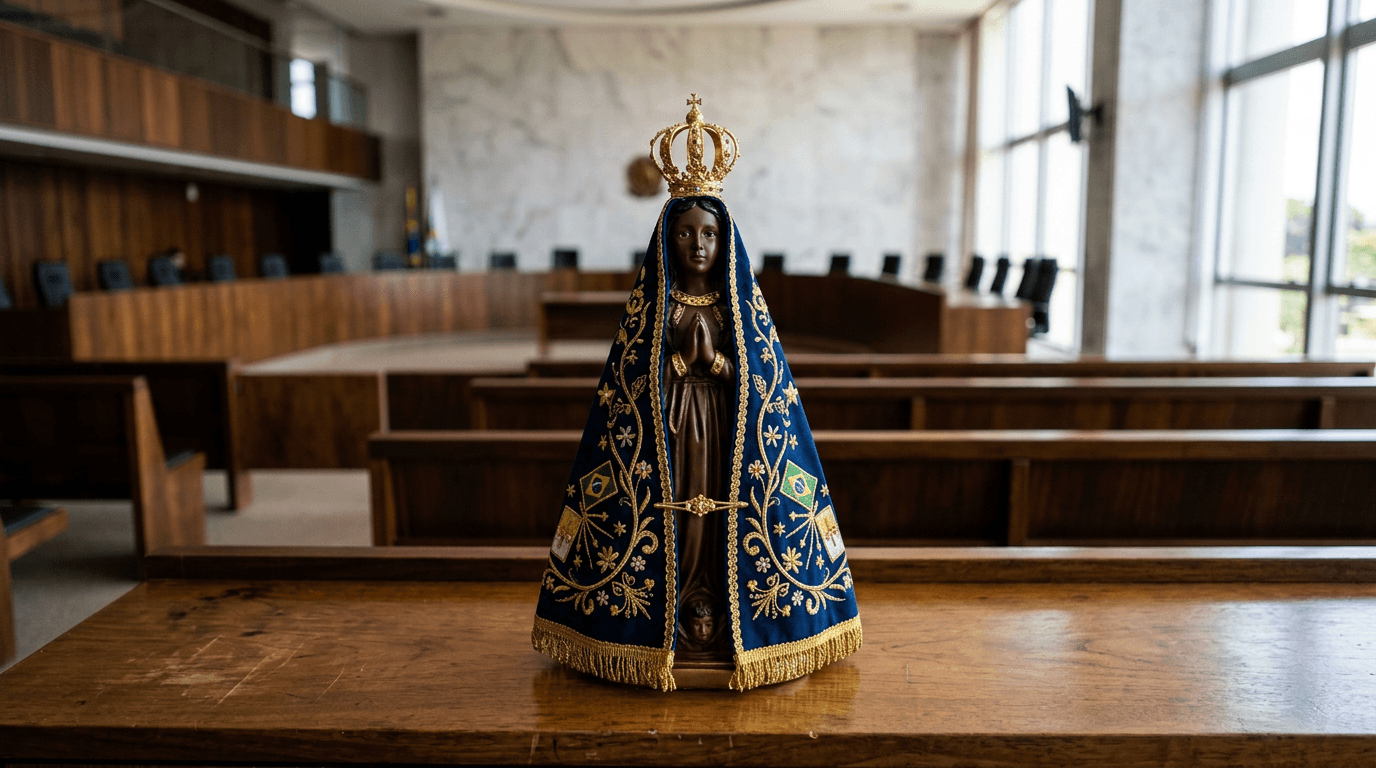
In the final stretch of Brazil's highly polarized presidential campaign, a fierce dispute over the country's patron saint has dragged the Superior Electoral Court (TSE) into a complex debate over content moderation. On September 30, 2026, the TSE voted to uphold an injunction ordering social media platforms to remove posts that falsely claimed Senator Flávio Bolsonaro, a leading right-wing presidential candidate, or his family sought to strip Our Lady of Aparecida of her official title as the patron saint of Brazil.
The controversy erupted as candidates fiercely compete for the crucial Catholic and Evangelical voter bases just days before the election. The false narrative, which was widely shared by political opponents on platforms like X, Instagram, and TikTok, claimed that the Bolsonaro family intended to revoke the saint's status. The rumor was loosely based on an archived 2007 legislative proposal by a different politician, which had no connection to Flávio Bolsonaro. In response, TSE Justice André Mendonça initially ordered the preventive takedown of thousands of links, sparking a heated debate over judicial overreach and free speech.
To resolve the impasse and avoid a broader institutional conflict with the Supreme Court, the TSE refined the scope of its ruling. The court clarified that only direct, false factual associations—specifically claims that the candidate has actively proposed, supported, or articulated a measure to remove the patron saint—must be deleted. Conversely, the justices ruled that general political criticism, satirical commentary, and hypothetical discussions about future political platforms must be preserved. As part of this compromise, Justice Mendonça adjusted his vote to allow a satirical post by a prominent Brazilian humorist that did not name the candidate directly.
The Electoral Stakes of Faith
In Brazil, where religious identity heavily influences voting behavior, symbols like Our Lady of Aparecida carry immense political weight. The Black Madonna is deeply revered by Brazil's Catholic majority, while the country's rapidly growing Evangelical population represents a key constituency for the conservative Bolsonaro family. By weaponizing religious symbols, campaigns on both sides of the aisle are testing the limits of the TSE, an institution uniquely tasked with policing disinformation to ensure fair elections.
The ruling sets a critical precedent for how Brazilian authorities handle online political discourse under tight campaign deadlines. By drawing a distinction between outright lies and protected political speech, the court attempted to strike a balance between safeguarding candidates from targeted defamation and protecting the constitutional right to free expression. However, with deep-seated polarization continuing to fuel the race, the TSE remains under intense scrutiny as it attempts to referee the digital battlefield.