

Global traders build heavy bullish bets on Chicago soybeans
CFTC data shows speculative traders holding a massive net-long position in Chicago soybeans as Brazil kicks off its 2026/27 planting season.
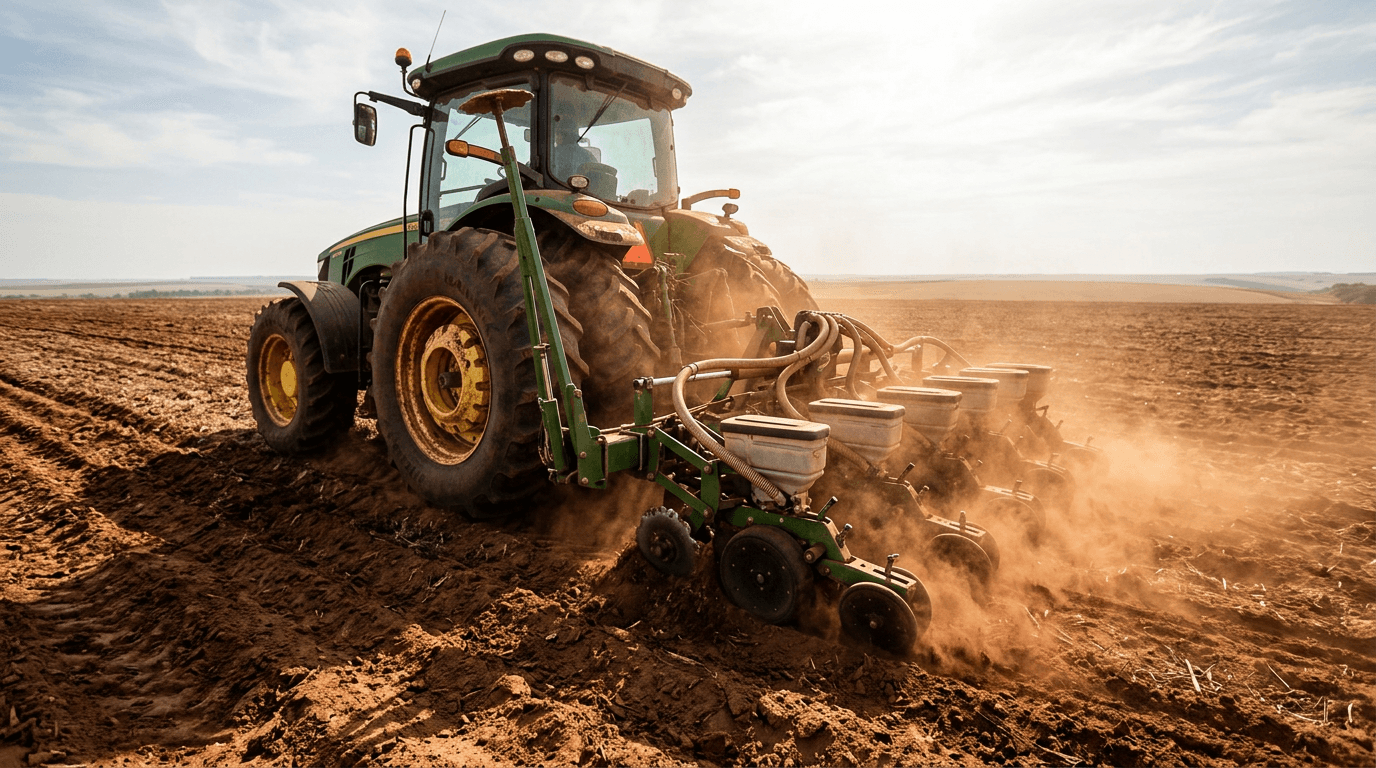
Global financial markets are placing significant bullish bets on the agricultural sector just as South American farmers start up their tractors. According to regulatory data from the U.S. Commodity Futures Trading Commission (CFTC), large speculative players have established a major net-long position in Chicago soybeans, reflecting heightened attention on the early stages of the Brazilian planting season.
For the observation date of September 29, 2026, the CFTC reported that non-commercial traders—a category dominated by hedge funds and investment managers—held 345,383 long contracts compared to 88,511 short contracts for soybeans on the Chicago Board of Trade (Contract 005602). This positioning leaves speculative traders with a net-long stance of 256,872 contracts, set against a total open interest of 1,090,227 contracts.
These weekly trader positioning figures provide valuable context regarding market sentiment rather than a direct price forecast. The heavy concentration of long positions indicates that international financial players are bracing for potential supply disruptions or expecting strong demand as the global agricultural cycle shifts its focus to the Southern Hemisphere.
Weather Splits and Record Projections
The buildup of speculative long positions coincides with the highly anticipated launch of Brazil's 2026/27 soybean campaign. Brazil is the world's largest producer and exporter of the oilseed, making its local weather patterns a matter of intense interest for global food supply chains.
At the start of October, Brazilian farmers faced a split weather pattern. While southern states like Paraná enjoyed abundant soil moisture, the critical central growing regions, including the powerhouse state of Mato Grosso, dealt with a dry and hot start. According to data from the private agribusiness consultancy AgRural, national planting progress stood at 7.3% of the expected area by early October, slightly lagging behind the 9.0% pace recorded at the same point last year.
Despite these initial regional delays, official and private forecasters remain optimistic about the final output. Brazil's national supply agency, Conab, projected a record 2026/27 soybean harvest of approximately 181.6 million tonnes. However, Conab also noted that the projected 1.4% expansion in planted area represents the slowest growth rate in two decades, signaling that the era of rapid land conversion is giving way to a focus on yield optimization.
What it touches
The shifting dynamics in global soybean positioning directly impact major agribusiness companies operating in South America. Among publicly traded entities, agricultural land developer and producer Adecoagro S.A. (NYSE: AGRO) and global protein giant JBS N.V. (NYSE: JBS)—which relies heavily on soy-based animal feed—are closely exposed to fluctuations in Chicago soybean benchmarks and the physical progress of the Brazilian crop.
Related coverage
 Senate Approves PLP 299 Fiscal Adjustment Bill to Calm RatesOn November 18, 2026, Brazil's Senate approved the PLP 299/2026 fiscal adjustment bill by a 69-2 vote, aiming to improve the 2027 primary budget balance.
 US Beverage Processors Squeezed as Global Orange Harvest Drops 7%A Florida Department of Citrus report projects a 7% drop in combined orange harvests in Brazil, the US, and Mexico, raising costs for beverage processors.
 Yield Spread With US Gaps Past 10% as Brazil Futures Hit 14.82%A massive 10% yield gap between U.S. and Brazilian debt is depressing the Real and hurting dollar returns for emerging-market fund investors.