

Senate Approves 56-Billion-Real Fiscal Cap to Protect Brazil Real
Brazil's Senate approved the PLP 299/2026 fiscal package to cap real spending growth at 2%, seeking to rebuild confidence in government debt.
Key takeaways
- The Brazilian Senate approved the fiscal package PLP 299/2026 by a 45-to-31 vote, per Senate records on November 12, 2026
- The bill caps real spending growth at 2.0% above inflation, down from the previous 2.5% limit, per the legislative text on November 12, 2026
- The package aims to save up to 56.1 billion reais in 2027 to address a post-election sell-off, per Ministry of Planning estimates on November 12, 2026
- The legislation moves next to the Chamber of Deputies for a vote scheduled to begin on November 23, 2026, per the Chamber leadership's announcement on November 19, 2026
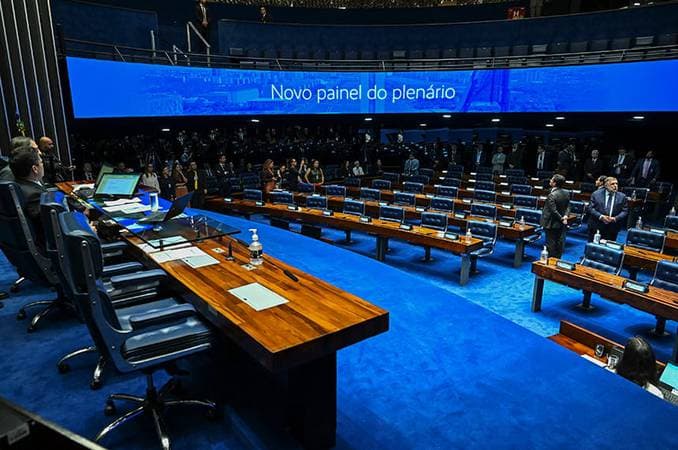
American investors holding emerging market bond funds or exchange-traded assets pegged to South America are watching a critical policy shift unfold in Brasília, where the Brazil Senate approved the core text of Complementary Bill PLP 299/2026 on November 12, 2026, according to the chamber's official legislative record. The measure passed by a 45-to-31 vote, according to the legislative assembly's official roll call on November 12, 2026, establishing a tighter limit on government spending to stabilize the nation's sovereign currency risk. The fiscal package, which completed its final Senate voting rounds by a 69-to-2 margin on November 18, 2026, according to official legislative filings, is designed to generate up to 56.1 billion reais (about 9.6 billion dollars) in budget savings for 2027, as projected by the Ministry of Planning on November 12, 2026.
This legislative push is a direct response to a massive market rout that erased over 700 billion reais in equity value, according to market data compiled by B3 exchange operators following the October 2026 presidential runoff election. To calm anxious bondholders, the new bill introduces a mechanism to cap annual real spending growth at 2.0% above inflation, which sits below the 2.5% ceiling allowed under the country's existing 2023 constitutional framework, as detailed in the text approved by the Senate on November 12, 2026.
For global asset managers, the primary concern remains whether this package goes far enough to curb the widening fiscal deficit. While the Planning Ministry's November 12, 2026, projections claim the bill will improve the 2027 primary surplus by 45.1 billion to 56.1 billion reais, Wall Street analysts had widely called for an adjustment of at least 80 billion reais to permanently anchor public debt, according to a November 17, 2026, survey by local brokerage Rico. The final compromise, which was unlocked after senators agreed to preserve 2 billion reais in annual regional transfers under the Kandir Law rather than cutting them to 1 billion reais as initially proposed, represents a political victory for President Luiz Inácio Lula da Silva but leaves deep structural doubts unresolved, according to a Senate budget report on November 18, 2026.
The legislation also targets corporate tax benefits and restricts companies from using accumulated tax credits to offset their liabilities, a measure that business association Abrasca warned on November 18, 2026, could harm the investment capacity of 262 publicly traded firms. With the Senate phase finished, the bill now heads to the Chamber of Deputies, where voting is scheduled to begin on Monday, November 23, 2026, under an extraordinary session announced by Chamber President Hugo Motta on November 19, 2026. Investors will watch closely to see if the lower house dilutes the spending controls further or preserves the core framework.
In your brokerage app
For retail investors with exposure to South American markets, these fiscal negotiations directly influence the value of the iShares MSCI Brazil ETF, a fund that tracks the country's largest listed corporations and is highly sensitive to the value of the Brazil real. Fluctuations in Brazilian government debt and sovereign currency risk also dictate the yields of emerging market bond funds, which must price in the persistence of high interest rates if these spending caps fail to fully reassure global lenders.
Analysis · NWX analysis desk
Which Brazil assets this touches
- EWZ, IBOV, USDBRL, DI1 — Named in this story.
Technical picture · iShares MSCI Brazil ETF (EWZ)
iShares MSCI Brazil ETF (EWZ) closed at $28.54 on Nov 20, 2026, down 11.4% from five sessions earlier. The last close is below its 20-day average of $31.94 and below its 50-day average of $36.77. Since May 19, 2026 it has traded between $28.54 (low, Nov 20, 2026) and $43.54 (high, Oct 9, 2026).
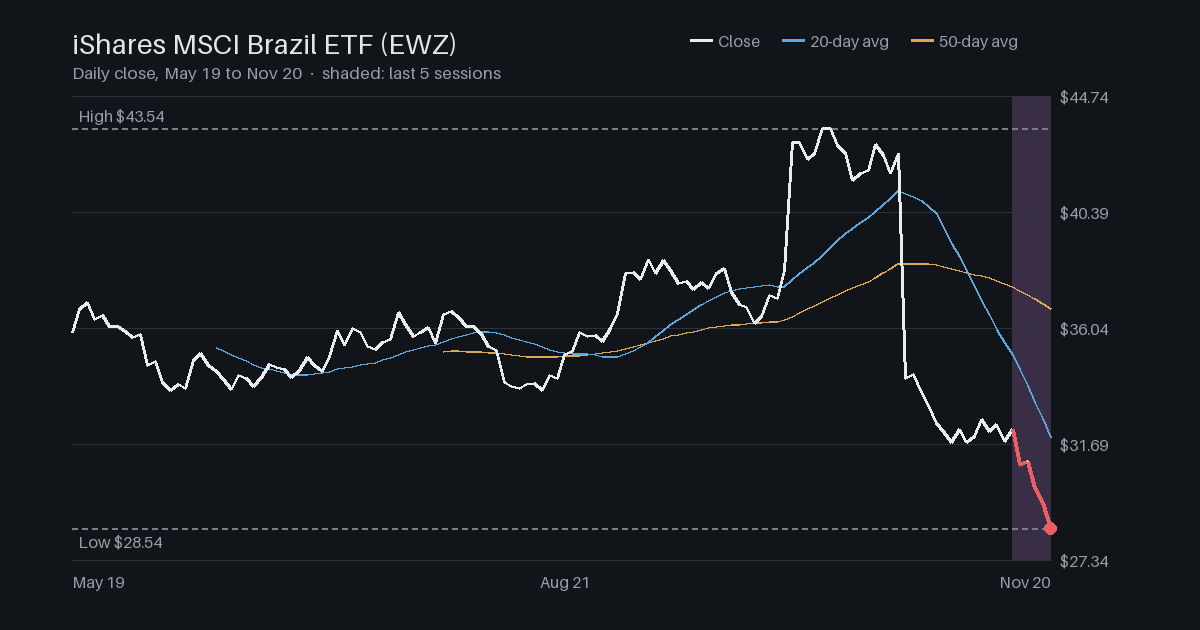
| Last close | $28.54 | Closing price on Nov 20, 2026. |
|---|---|---|
| 5-session move | -11.4% | Change in the closing price over the last five trading days. |
| 20-day average | $31.94 | The average closing price of the last 20 trading days. |
| 50-day average | $36.77 | The average closing price of the last 50 trading days. |
| Period high | $43.54 | Highest price since May 19, 2026. |
| Period low | $28.54 | Lowest price since May 19, 2026. |
Related coverage
 Goldman Sachs Cuts Brazil Stocks to Neutral on Fiscal RisksGoldman Sachs downgraded Brazilian equities to neutral on Nov. 17, 2026, citing a slowing economy, sticky inflation, and fiscal risks.
 Easing Consumer Prices Rose 0.14% in October but Top Brazil's TargetBrazil’s October inflation slowed to 0.14%, but the 12-month trailing rate rose to 4.63%, exceeding the Central Bank's 4.5% target ceiling.
 BofA Eyes Rare Earths, Infrastructure if Spending Cuts DeliveredBank of America's Brazil leadership says global capital could flow back into critical minerals and infrastructure if the government executes spending cuts.