
Dry spell in Bahia soybean belt raises early planting risks
A dry stretch in Luís Eduardo Magalhães, a key hub in Bahia, leaves soils parched just as Brazil's critical soybean planting season gets underway.
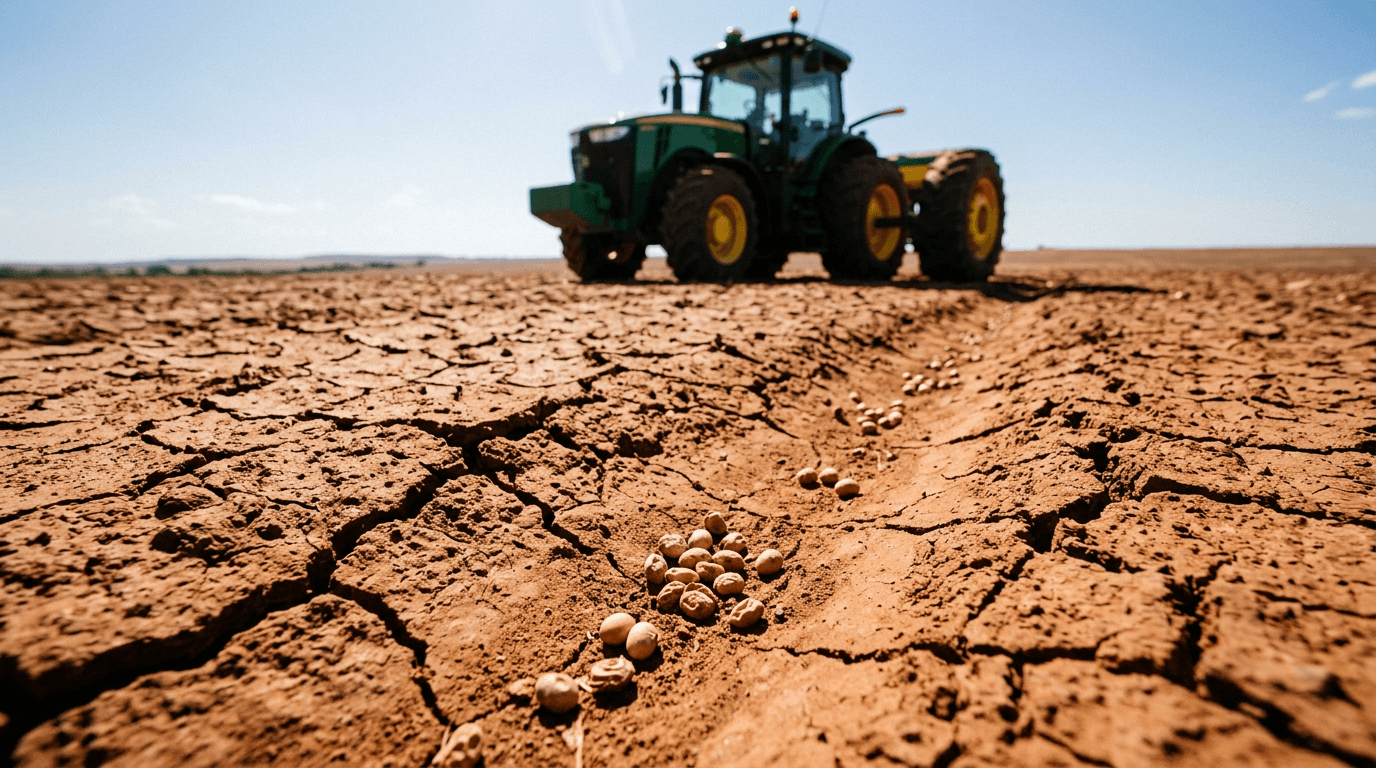
A persistent dry spell in the western plains of Bahia state is raising concerns for local farmers as Brazil's critical soybean planting season begins. In Luís Eduardo Magalhães, a major agricultural hub in Bahia, weather stations recorded five consecutive dry days and a meager 4.5 millimeters of total rainfall over a seven-day period ending in late September. The lack of moisture is forcing growers in this eastern agricultural frontier to weigh the risks of sowing seeds in parched soils.
Luís Eduardo Magalhães is the economic engine of western Bahia, a region that has transformed over the past three decades from a barren savanna into one of the most productive agricultural zones in the country. The city sits in the heart of Matopiba—an acronym for the states of Maranhão, Tocantins, Piauí, and Bahia—which represents Brazil’s newest and fastest-growing agricultural frontier. Unlike the traditional southern farming states, Matopiba relies heavily on timely seasonal rains, as only a small fraction of its vast soybean fields are equipped with modern irrigation systems.
Agronomists warn that starting the brazil soybean planting process under these conditions, a practice locally known as "dry planting" or "dusting in," carries high risks. If seeds are sown into hot, dry soil and receive only light, scattered showers, they may absorb just enough moisture to swell but fail to fully germinate, causing the seed to rot. While other key soybean-producing regions like Cascavel in Paraná received a generous 152.2 millimeters of rain, and Sorriso in Mato Grosso recorded a healthy 49.6 millimeters, Bahia's dry pocket stands out as a localized bottleneck.
The timing is critical because delays in the soybean cycle have a domino effect on Brazil's double-cropping system. In many regions, farmers immediately plant corn or cotton after the soybean harvest. A delayed soybean start pushes the second crop's planting window into the dry season of early next year, compounding the risk of yield losses across multiple commodities. Local grower cooperatives and agricultural analysts are advising farmers in western Bahia to hold off on planting until more consistent, soaking rains return to the region.
What it touches
The localized dryness in Bahia directly impacts the outlook for overall brazil soybean production and export volumes. On global markets, any threat of planting delays in Brazil typically triggers volatility in Chicago soybean futures (ZSF7) due to the country's status as the world's largest exporter. Domestically, physical soybean prices in Paraná traded at R$ 154.1 per 60-kilogram bag, while the exchange rate hovered at 5.2232 BRL per USD, maintaining strong export parity but keeping local input costs elevated for farmers waiting out the dry spell.