
Biofuel Industry Clashes With Flávio Bolsonaro Over Ethanol Mandate
Brazil's sugarcane and corn ethanol producers issue a fierce joint rebuke after presidential candidate Flávio Bolsonaro compares the E32 gasoline blend to shrinkflation.
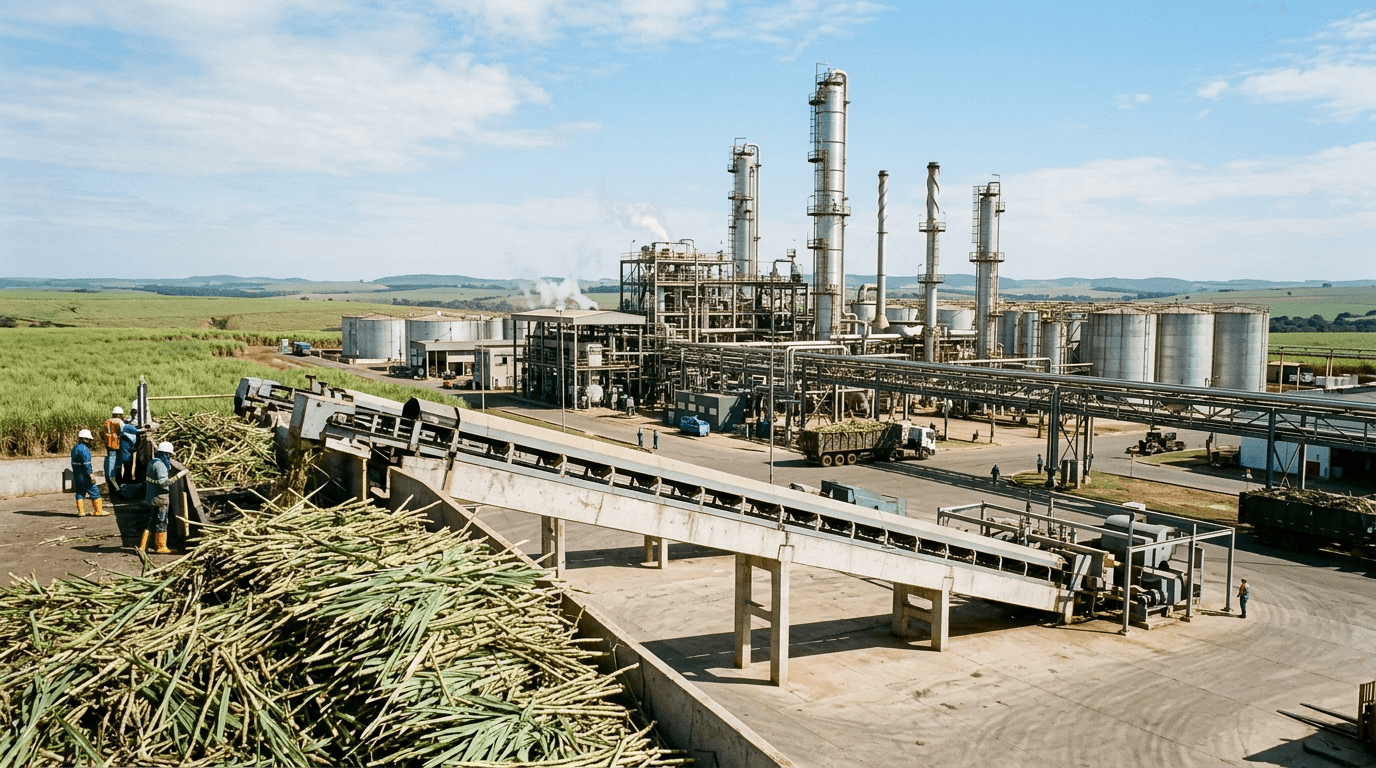
A proposal by right-wing Senator and presidential candidate Flávio Bolsonaro to roll back mandatory ethanol blending targets has sparked a fierce backlash from Brazil's massive sugarcane and corn-ethanol producers. The clash highlights a growing political rift over the country's long-standing energy policies as the 2026 presidential campaign intensifies.
The dispute erupted after the federal government’s National Energy Policy Council (CNPE) temporarily increased the mandatory anhydrous ethanol blend in regular gasoline from 30% to 32% (E32). The measure, which took effect on August 1, 2026, is designed to curb volatile fossil fuel imports and boost domestic demand by an estimated 1 billion liters of ethanol per year. However, Flávio Bolsonaro—the son of former President Jair Bolsonaro and a leading challenger to President Luiz Inácio Lula da Silva—publicly criticized the E32 mandate during an August 20, 2026, social media broadcast. He compared the higher ethanol content to consumer "shrinkflation," arguing that drivers are paying for gasoline but receiving less of it.
Industry Defends Historic State Policy
Brazil's major biofuel associations quickly united to issue a sharp joint rebuke against the presidential candidate's comments. The coalition—which includes the Brazilian Sugarcane and Bioenergy Industry Association (UNICA) and the National Corn Ethanol Union (UNEM)—released a statement on August 21, 2026, calling Bolsonaro's comparison "inappropriate" and accusing him of spreading consumer misinformation. The organizations defended the blending mandate as a vital, 50-year state policy for energy sovereignty that has successfully spanned administrations of all political leanings since the launch of the Pró-Álcool program in 1975.
The industry also pointed out the political contradiction in Bolsonaro's stance. The legal framework enabling the higher blend, known as the Fuel of the Future Law, was passed by the Senate in late 2024 with the senator's own participation and assent. "It is surprising that the criticism comes from someone who participated in the decision," the associations wrote, emphasizing that extensive technical testing by the Mauá Institute of Technology proved the safety and efficiency of the E32 blend for the national fleet.
The Rise of Corn Ethanol
The political friction comes at a time of rapid transformation for the brazil biofuel industry. While Brazil has historically relied on sugarcane to meet its biofuel mandates, the brazil ethanol industry has seen a massive boom in corn-based ethanol production. Centered in top grain-producing states like Mato Grosso, corn ethanol now represents a vital driver of domestic grain demand, helping to absorb record harvests and insulate local farmers from volatile global commodity markets.
By threatening to review the mandatory blend, Flávio Bolsonaro risks alienating a powerful segment of the agribusiness lobby, which has traditionally aligned with conservative political forces in Brazil. How the candidate navigates this tension with agricultural producers in key electoral states will be a critical dynamic to watch as the campaign progresses toward the October vote.
What it touches
The political debate directly exposes the Brazilian sugar and ethanol sector to regulatory uncertainty. Companies heavily invested in domestic biofuel production, such as São Martinho (SMTO3), Raízen (RAIZ4), and Adecoagro (AGRO), rely on stable federal blending mandates to project long-term capital expenditures and demand. Any future reduction in the mandatory blend would directly impact domestic ethanol prices, sugarcane crushing allocations, and local corn demand.