

US Suspends Beef Tariffs on 300,000 Tons Amid Screwworm Outbreak
A New World screwworm outbreak and a historic cattle shortage have forced the US to waive tariffs on 300,000 tons of beef, boosting Brazilian meatpackers.
Key takeaways
- The White House authorized up to 300,000 metric tons of tariff-free beef imports, per CNN Brasil on August 27, 2026
- The USDA confirmed 149 New World screwworm cases in US domestic animals, per USDA on November 21, 2026
- US cattle herd fell to its lowest level since 1952, per USDA/Exame on August 27, 2026
- Brazilian exporters JBS and Minerva sent record volumes of frozen beef to the US, per MDIC on November 21, 2026
American shoppers face historically high ground beef prices at supermarkets due to a perfect storm of a shrinking domestic cattle herd and a spreading sanitary crisis. On November 21, 2026, the U.S. Department of Agriculture (USDA) confirmed that New World screwworm infestations have reached 149 domestic animal cases since June 2026, with 64 of those occurring in November alone across Texas, Arizona, and New Mexico. To curb this retail food inflation, the U.S. government implemented a 90-day emergency tariff waiver authorizing up to 300,000 metric tons of imported beef—bypassing standard import restrictions.
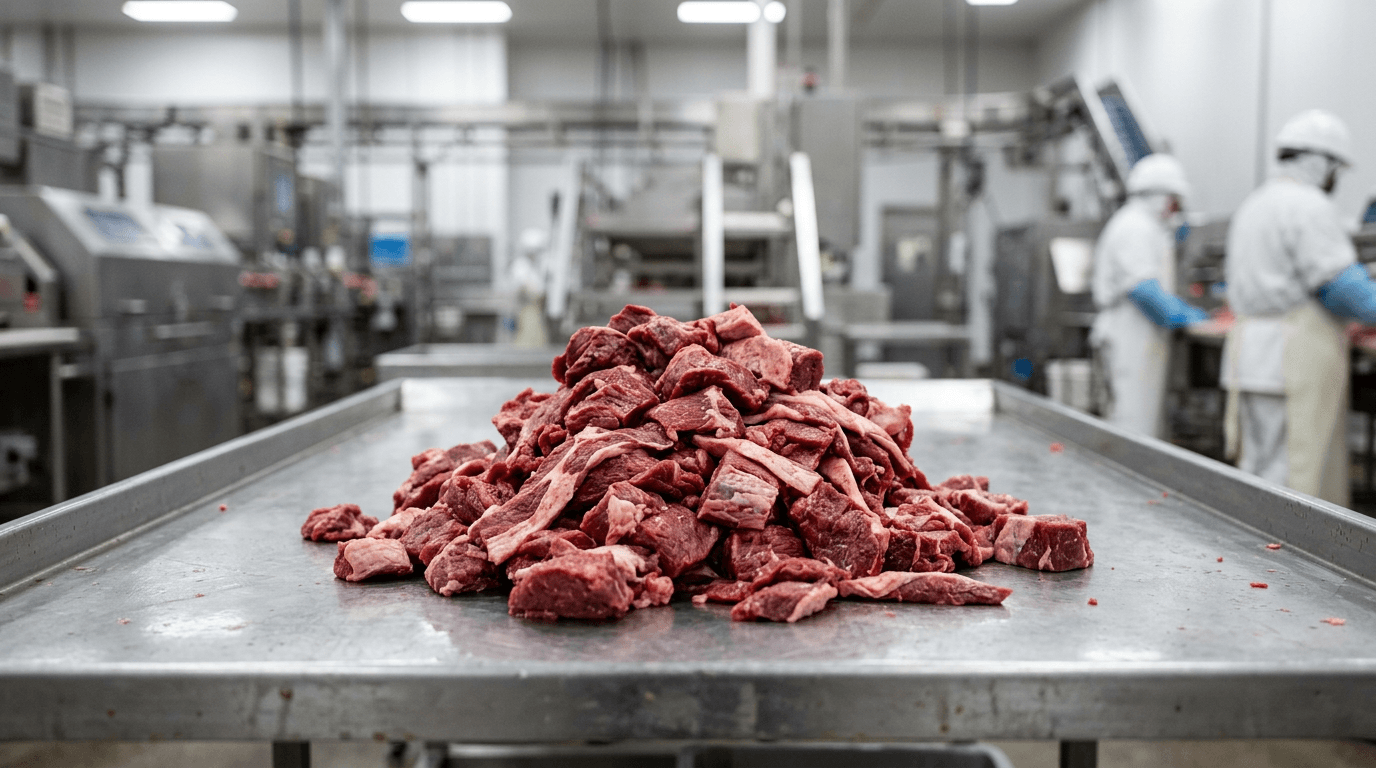
This emergency quota provides an unprecedented gateway for Brazilian meatpacking conglomerates. Normally, Brazilian exporters compete under a highly restrictive "Other Countries" quota capped at just 52,000 metric tons per year, after which they face a steep 26.4% "out-of-quota" tariff. According to a report by CNN Brasil on August 27, 2026, the temporary 300,000-ton tariff-free allotment is designed specifically for lean beef trimmings used to make domestic ground beef.
A Sanitary and Supply Squeeze
The supply squeeze stems from decades-low livestock numbers coupled with the unexpected return of the flesh-eating screwworm fly, Cochliomyia hominivorax. The USDA first confirmed the parasite's reemergence in a Texas calf on June 3, 2026, representing the first domestic detection of the eradicated pest in decades. According to the USDA and agricultural reports on August 27, 2026, this sanitary emergency compounds a pre-existing domestic shortage where the total U.S. cattle herd has shrunk to its lowest level since 1952, keeping slaughter rates tight and domestic wholesale prices elevated.
As a result of this domestic squeeze, Brazilian meatpackers have ramped up frozen beef shipments to record volumes. Foreign trade data compiled by the Ministry of Development, Industry, Commerce, and Services (MDIC) on November 21, 2026, as reported by A Crítica, highlights that the United States has solidified its position as the second-largest destination for Brazilian beef exports, trailing only China. Industry analysts estimate the 90-day tariff exemption could save foreign meat exporters as much as $500 million in taxes, enabling highly competitive pricing in the North American market.
Market participants are closely watching the fast-approaching expiration of the 90-day tariff-free window, which went into effect on September 1, 2026. If the domestic screwworm outbreak continues to spread into additional cattle-producing states, or if the U.S. herd recovery delays further, livestock advocates and retail consumer groups will pressure the government to extend the temporary quota. Meanwhile, Brazilian companies will focus on optimizing their shipping logistics to maximize volumes before any potential reinstatement of the standard tariff.
In your brokerage app
For retail investors holding global agricultural stocks, Brazilian meatpacking giants with American Depositary Receipts (ADRs) are uniquely positioned to capture this trade diversion. Companies like JBS, listed in New York as JBSAY, and Minerva, which trades as MRVSY, operate extensive processing networks in South America that allow them to redirect surplus beef from restricted European channels directly to the high-margin U.S. ground beef market.
Latest articles
 Lula Seeks ASEAN Upgrade as Bilateral Trade Hits $38.4 BillionPresident Lula visited Manila to lobby for Brazil's upgrade to an ASEAN Dialogue Partner, as annual trade with the ten-nation bloc reached $38.4 billion.
 Senate Approves PLP 299 Fiscal Adjustment Bill to Calm RatesOn November 18, 2026, Brazil's Senate approved the PLP 299/2026 fiscal adjustment bill by a 69-2 vote, aiming to improve the 2027 primary budget balance.
 Goldman Sachs Cuts Brazil Stocks to Neutral on Fiscal RisksGoldman Sachs downgraded Brazilian equities to neutral on Nov. 17, 2026, citing a slowing economy, sticky inflation, and fiscal risks.