

Utility Pole Rental Caps Approved as Infrastructure Bill Passes Senate
Brazil's Senate approved a bill on Nov 18, 2026, capping utility pole rents to stabilize margins and streamline grid management for utility and telecom ADRs.
Key takeaways
- The Brazilian Senate approved PL 3220/2019 on November 18, 2026, to cap utility pole rent fees, per the Senado Federal
- The bill establishes a transitional price ceiling and a five-year window to clear irregular cables, per the legislative text on November 18, 2026
- Electricity regulator Aneel and telecom regulator Anatel will jointly set the final maximum pricing formulas, per the bill text on November 18, 2026
American retail investors holding U.S.-listed shares of Latin American telecommunications and electric utility corporations can expect more predictable operating margins in the coming quarters. A long-awaited regulatory overhaul targeting physical grid infrastructure is moving to resolve a multi-billion-dollar operational headache that has historically eroded corporate profits.
On November 18, 2026, the Brazilian Senate approved a landmark bill, PL 3220/2019, that caps the prices telecom companies pay to rent space on the country's utility poles, according to the Senado Federal. The legislation, which now heads to the president's desk for signature, establishes a standardized pricing framework and introduces strict rules to clean up the chaotic overhead grid.
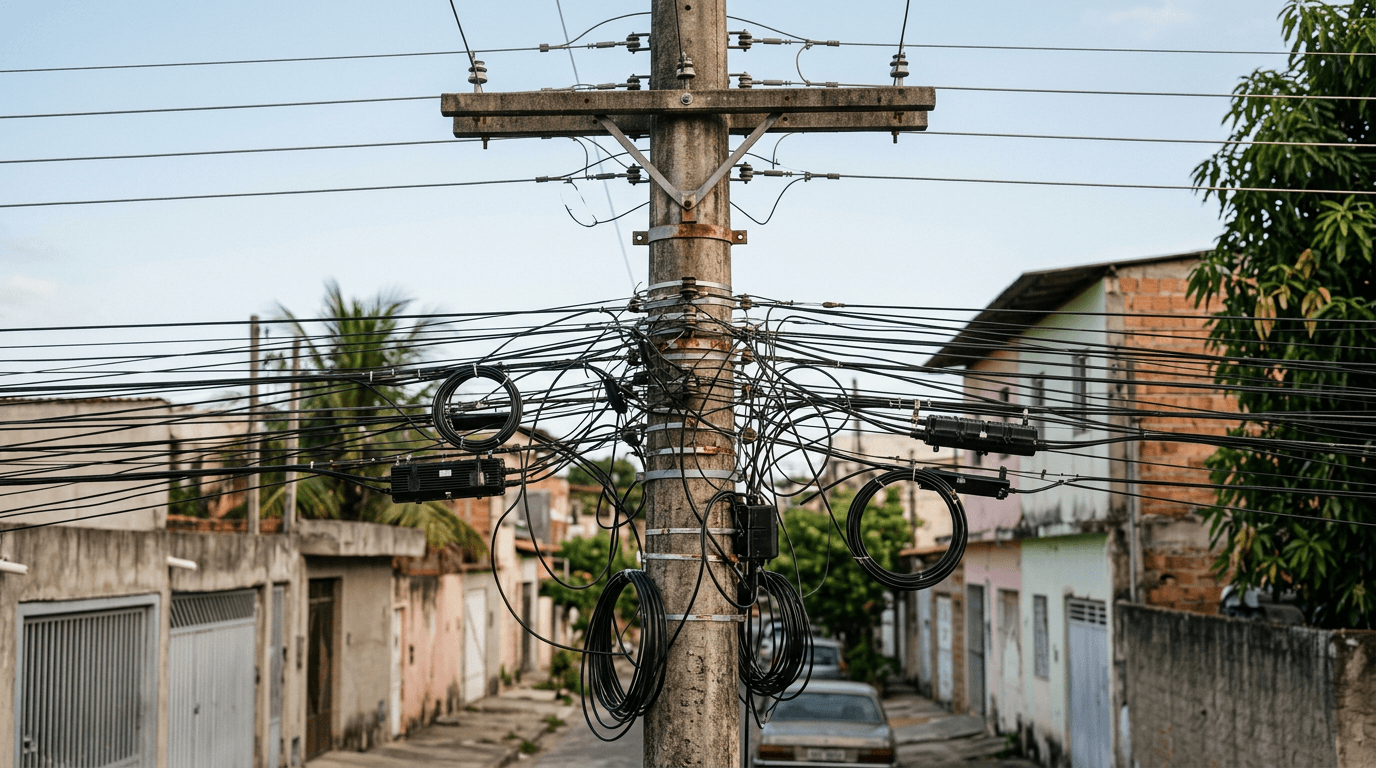
What are the lines on a utility pole?
In Brazil’s rapidly growing urban areas, the physical wires hanging from a utility pole are divided between high-voltage electricity distribution lines and a complex tangle of fiber-optic and telephone cables. Historically, the country's electric distributors owned these poles and rented out the lower spaces to telecom operators. However, explosive market growth—from just 70 internet providers decades ago to more than 22,000 today—led to a chaotic, unregulated "spaghetti" of wires that caused frequent fires and blackouts.
Under the newly approved legislation, the pricing of these pole rentals will become highly regulated, offering relief to telecommunications companies that have faced arbitrary rate increases. The bill sets up a transitional maximum rent fee based on existing benchmarks adjusted by the IPCA inflation index. In the long term, Brazil's electricity regulator, Aneel, and its telecommunications regulator, Anatel, must jointly establish a permanent, formula-based price cap for pole sharing. Companies operating under older, higher-priced contracts will have an 18-month grace period to transition to the new caps once the law is enacted.
Crucially for power distributors, the bill also implements a mechanism to deal with illegal wire installations, giving telecom operators five years to regularize or remove unauthorized cables. If a power utility fails to manage its pole infrastructure properly, Aneel can force it to yield control to specialized, third-party operators known locally as "posteiros". However, a last-minute Senate amendment on November 18, 2026, allows power distributors to manage the poles directly, even if they have telecom affiliates, as long as their operational performance remains adequate.
Following the symbolic Senate approval, the text has been transmitted to the executive branch for presidential signature. Global investors should monitor the subsequent joint decrees from Aneel and Anatel, which will detail the exact technical parameters and the final maximum pricing formulas that will dictate corporate operating expenses starting in 2027.
In your brokerage app
For U.S. retail investors, this regulatory progress directly impacts several prominent American Depositary Receipts (ADRs). Telecom operators like Telefônica Brasil SA (listed in New York as VIV) and TIM SA (listed as TIMB) stand to gain long-term cost predictability as their infrastructure rental expenses are capped. Conversely, major power distributors such as Centrais Elétricas Brasileiras SA (listed as EBR) and Companhia Energética de Minas Gerais (listed as CIG) will face tighter price limits but will benefit from clearer enforcement tools to clean up unauthorized wires on their grids.
Related coverage
 Agribusiness Exporters Shield Billions in Brazil Senate Fiscal VoteBrazilian Senate shields exporter tax credits in a major fiscal bill vote, protecting over R$ 11.2 billion in cash for soy and meat giants.
 New Fiscal Rules Clear Senate to Shore Up Sovereign FinancesThe Brazilian Senate passed a R$ 56 billion fiscal package, capping spending growth and shoring up sovereign credit risk for global investors.
 Senate Passes R$56B Fiscal Package to Curb Corporate Tax CreditsBrazil's Senate approved the PLP 299/2026 fiscal package on November 18, 2026, restricting corporate tax credits and cutting spending caps.