U.S.-Listed Franklin FTSE Brazil ETF Drops 3.2% Near 52-Week Low
The Franklin FTSE Brazil ETF slid 3.23% to $18.58, closing just one cent above its 52-week low on domestic fiscal worries and hawkish Fed minutes.
Key takeaways
- Franklin FTSE Brazil ETF (FLBR) slid 3.23% to close at $18.58 on November 18, 2026, per NYSE Arca
- Brazil's Senate approved President Lula's fiscal package by a 45-to-31 vote on November 18, 2026, per MarketScreener
- The Central Bank of Brazil offered $1 billion in repo-linked dollar auctions on November 18, 2026, to defend the real, per local records
- Federal Reserve minutes released November 18, 2026, showed officials favoring further rate hikes, per the Fed
The Franklin FTSE Brazil ETF (FLBR) fell 3.23% on Wednesday, November 18, 2026, closing at $18.58 and finishing just one cent above its 52-week low of $18.57, according to NYSE Arca market records. This sharp drop occurred as investors reacted to a combination of mounting domestic fiscal anxiety in Brazil and hawkish policy signals from the U.S. Federal Reserve. Because the exchange-traded fund tracks Brazilian equities priced in the local currency, a rapid depreciation of the Brazilian real directly eroded the dollar-denominated value of the fund for foreign investors tracking brazil stocks today.
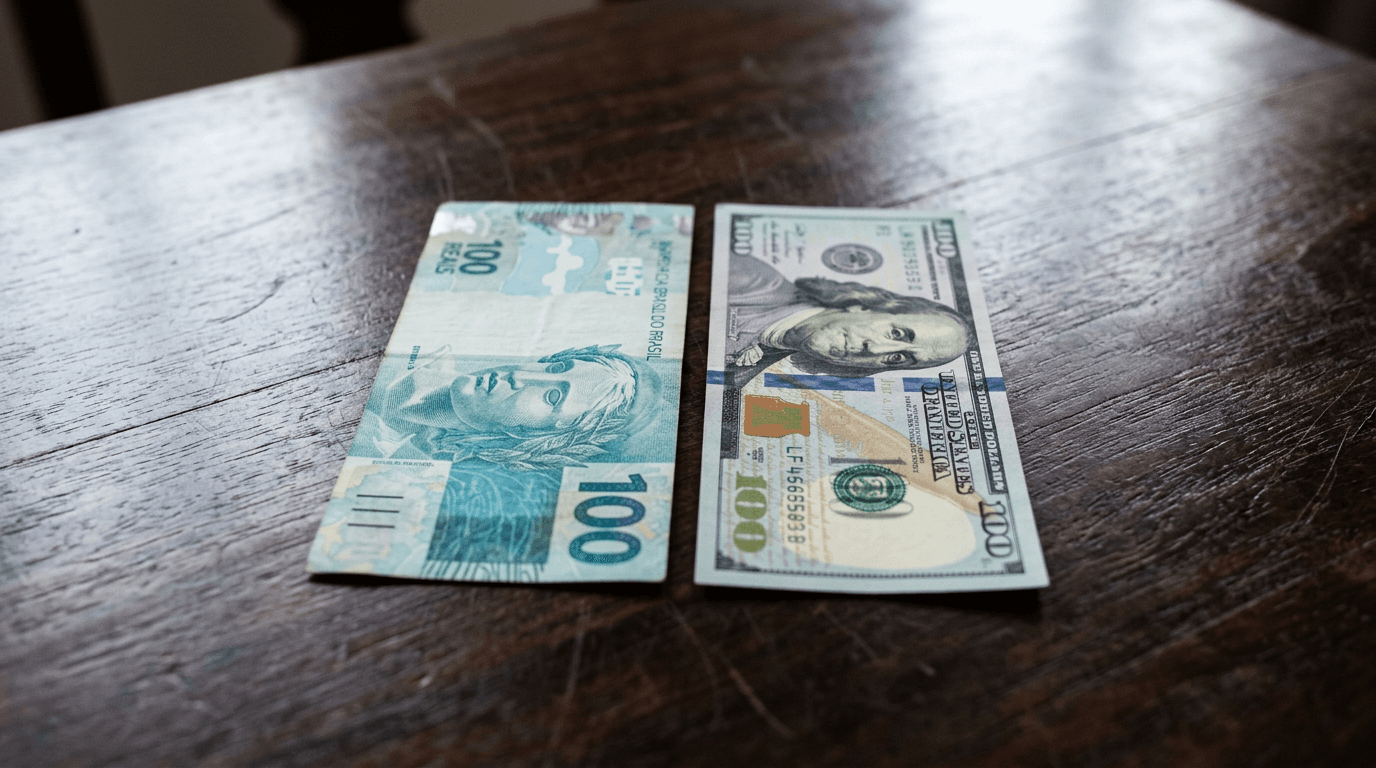
To defend the sliding currency, the Central Bank of Brazil injected liquidity directly into the foreign exchange market on Wednesday. According to reports from MarketScreener, the central bank held two simultaneous dollar auctions with repurchase agreements on Wednesday, November 18, 2026, offering up to $1 billion to ease the currency's slide. Despite this intervention, the Brazilian real finished the session under pressure, closing at 5.8677 per U.S. dollar, according to official exchange data. This depreciation highlights the ongoing currency risk that heavily influences the performance of Latin American equities.
The currency and equity markets remain highly sensitive to Brazil’s sovereign debt trajectory. On Wednesday, November 18, 2026, the Brazilian Senate took a crucial step to address these concerns by passing the main text of President Luiz Inácio Lula da Silva’s fiscal-adjustment bill, PLP 299/2026, in a 45-to-31 vote. The measure, designed to shore up public finances by up to 60 billion reais (about $10.29 billion) in 2027 by curbing corporate tax breaks and tightening expenditure limits to a 2% ceiling, now heads to the Chamber of Deputies. However, the legislative milestone failed to rally the market; many financial analysts expressed skepticism, noting that the package may be too modest to alter long-term debt projections, with some local institutions estimating that gross public debt could still climb to 118% of GDP by 2034.
Adding to the domestic strain was a broader selloff across global emerging markets triggered by monetary policy developments in Washington. On Wednesday, November 18, 2026, the U.S. Federal Reserve released the minutes from its October policy meeting, which revealed that almost all central bank officials judged that further interest rate increases would likely be appropriate to combat sticky inflation. The hawkish revelation pushed the U.S. Dollar Index to a 19-month high of 103.80, reducing the appeal of emerging market assets and accelerating the retreat from broad baskets of equities.
Going forward, individuals following brazil stocks news will be keeping a close eye on the lower house of Congress. The fiscal package must secure approval from the Chamber of Deputies before the legislative recess begins in December 2026. Observers note that market interest in brazil stocks is likely to remain muted unless the government commits to deeper, structural spending cuts that decisively stabilize the country's fiscal outlook.
In your brokerage app
For retail investors searching for brazil stocks to buy, the NYSE Arca-listed Franklin FTSE Brazil ETF represents a low-cost entry point compared to older and more expensive products. Managing over $530 million in assets, the fund charges a net annual expense ratio of 0.19% compared to the 0.59% fee of the iShares MSCI Brazil ETF (EWZ), according to Franklin Templeton's prospectus. While FLBR offers a diversified portfolio concentrated heavily in large-cap cyclicals like mining giant Vale and state-controlled oil firm Petrobras, its dollar-denominated returns remain tightly bound to the fluctuations of the Brazilian real.
Analysis · NWX analysis desk
Which Brazil assets this touches
- FLBR — Named in this story.
- EWZ, USDBRL, IBOV — Higher U.S. interest rates tend to pull money out of emerging markets such as Brazil, which weighs on the real and on Brazilian stocks; lower rates tend to do the opposite.
Technical picture · FLBR (FLBR)
FLBR (FLBR) closed at $18.58 on Nov 18, 2026, down 7.9% from five sessions earlier. The last close is below its 20-day average of $20.76 and below its 50-day average of $23.21. Since May 18, 2026 it has traded between $18.58 (low, Nov 18, 2026) and $27.25 (high, Oct 12, 2026).
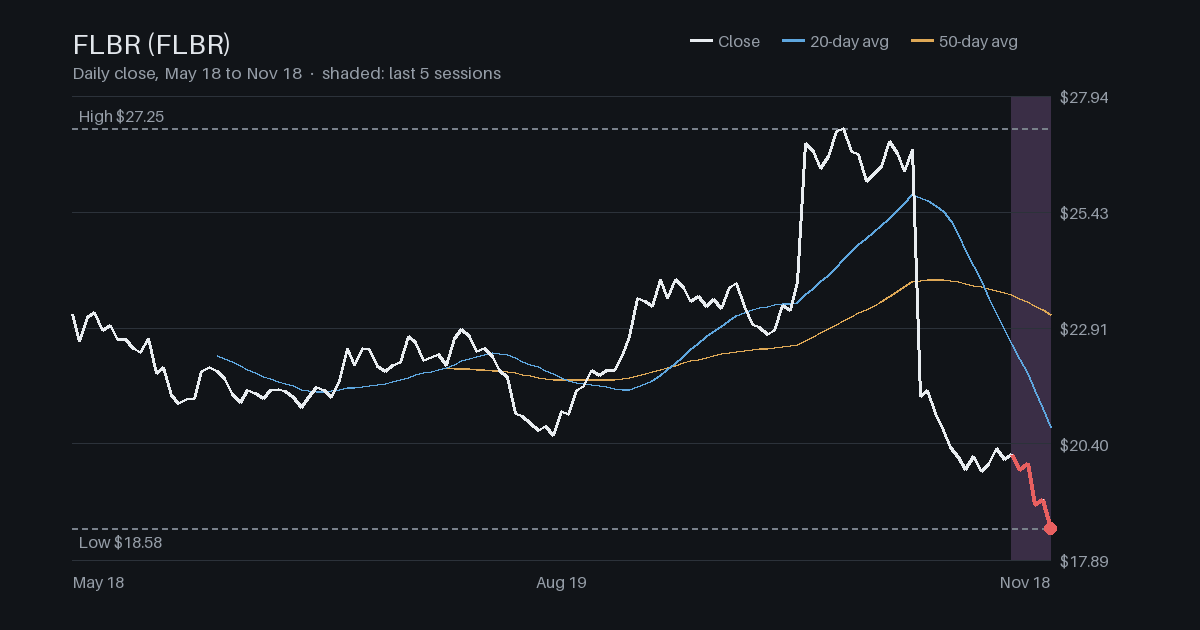
| Last close | $18.58 | Closing price on Nov 18, 2026. |
|---|---|---|
| 5-session move | -7.9% | Change in the closing price over the last five trading days. |
| 20-day average | $20.76 | The average closing price of the last 20 trading days. |
| 50-day average | $23.21 | The average closing price of the last 50 trading days. |
| Period high | $27.25 | Highest price since May 18, 2026. |
| Period low | $18.58 | Lowest price since May 18, 2026. |