
Brazil Supreme Court Signals Detente as Flávio Bolsonaro Leads Polls
Justices Alexandre de Moraes and Gilmar Mendes issued four conciliatory rulings for the right within 48 hours of first-round election results.
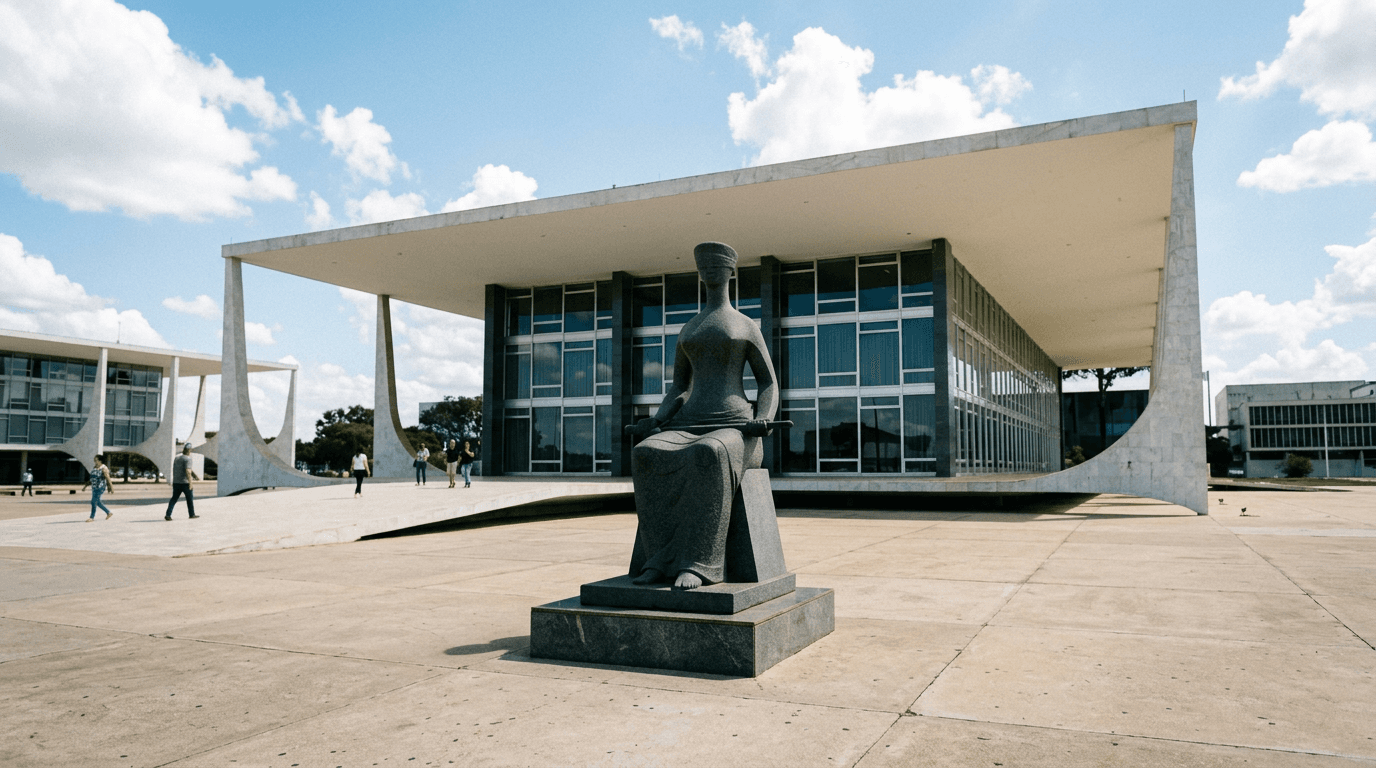
In a rapid series of judicial shifts, Brazil's Supreme Court has signaled a tactical detente toward the country's conservative movement just as the political tide turns. Within 48 hours of the October 2026 first-round election results, Supreme Court Justices Alexandre de Moraes and Gilmar Mendes issued four major decisions favorable to prominent right-wing figures. The sudden pivot coincides with the first post-election poll showing Senator Flávio Bolsonaro—son of former President Jair Bolsonaro—leading incumbent President Luiz Inácio Lula da Silva 53% to 47% in valid votes ahead of the October 25 runoff.
The most symbolic of these decisions came from Justice Moraes, who authorized a transition to a semi-open prison regime for Débora Rodrigues dos Santos. Known nationally as "Débora do Batom" (Debora of the Lipstick), she became an iconic figure of the January 8, 2023, riots after using red lipstick to write "perdeu, mané" (you lost, fool) on the monument to Justice outside the Supreme Court building. Moraes also advanced a request by Flávio Bolsonaro to visit his father, Jair Bolsonaro, who is currently under house arrest—a request the justice had previously blocked during the campaign.
Further easing tensions, Justice Moraes archived a high-profile federal investigation into allied conservative politicians and influencers, including Senator Marcos do Val and bloggers Allan dos Santos and Oswaldo Eustáquio, citing a lack of actionable evidence from the Prosecutor General's Office. Simultaneously, Justice Gilmar Mendes, the court's most senior member, archived a criminal investigation against Alfredo Gaspar, Flávio Bolsonaro’s vice-presidential running mate, dismissing allegations brought by a leftist lawmaker.
For foreign observers, the Brazil Supreme Court is not merely a judicial body but a powerful political arbiter. Over the last four years, the court, led largely by Moraes, has been the primary institutional bulwark against the conservative "Bolsonarista" movement, spearheading sweeping investigations into anti-democratic acts and election disinformation. The sudden easing of judicial pressure suggests the court's leadership is pragmatically preparing for a potential transition of power, seeking to lower the temperature and protect its own institutional standing before a new administration takes office.
The stakes for the judiciary are exceptionally high. The conservative Liberal Party (PL) secured massive gains in the Senate during the first round, strengthening its ability to initiate impeachment proceedings against Supreme Court justices. While the PL leadership continues to publicly demand accountability for what they term judicial overreach, these conciliatory rulings represent an opening for dialogue between the court and the incoming legislative majority. Whether this judicial olive branch will successfully avert a deeper constitutional crisis remains the central question heading into the final weeks of the presidential race.
What it touches
The prospect of a right-wing executive transition alongside a more cooperative Supreme Court could reduce the institutional risk premium that has weighed on Brazilian assets. Investors tracking the MSCI Brazil ETF (EWZ) are closely watching whether a Flávio Bolsonaro victory would accelerate market-friendly policies, such as privatization and tax simplification, without triggering a disruptive legal battle between the presidency and the judiciary.