

US Importers Face Higher Costs as Brazil Seeks WTO Panel on Tariffs
US importers face prolonged surcharges of up to 37.5% after bilateral talks failed, prompting Brazil to request a formal WTO dispute panel.
Key takeaways
- Brazil requested a WTO dispute panel to challenge US tariff surcharges on November 18, 2026, per G1 Globo
- The disputed tariffs levy a combined 37.5% surcharge on $6.6 billion in Brazilian goods, per WTO filings
- Bilateral consultations on September 25, 2026, failed to resolve the trade dispute, per G1 Globo
- The WTO Dispute Settlement Body will address Brazil's request on November 24, 2026, per WTO documents
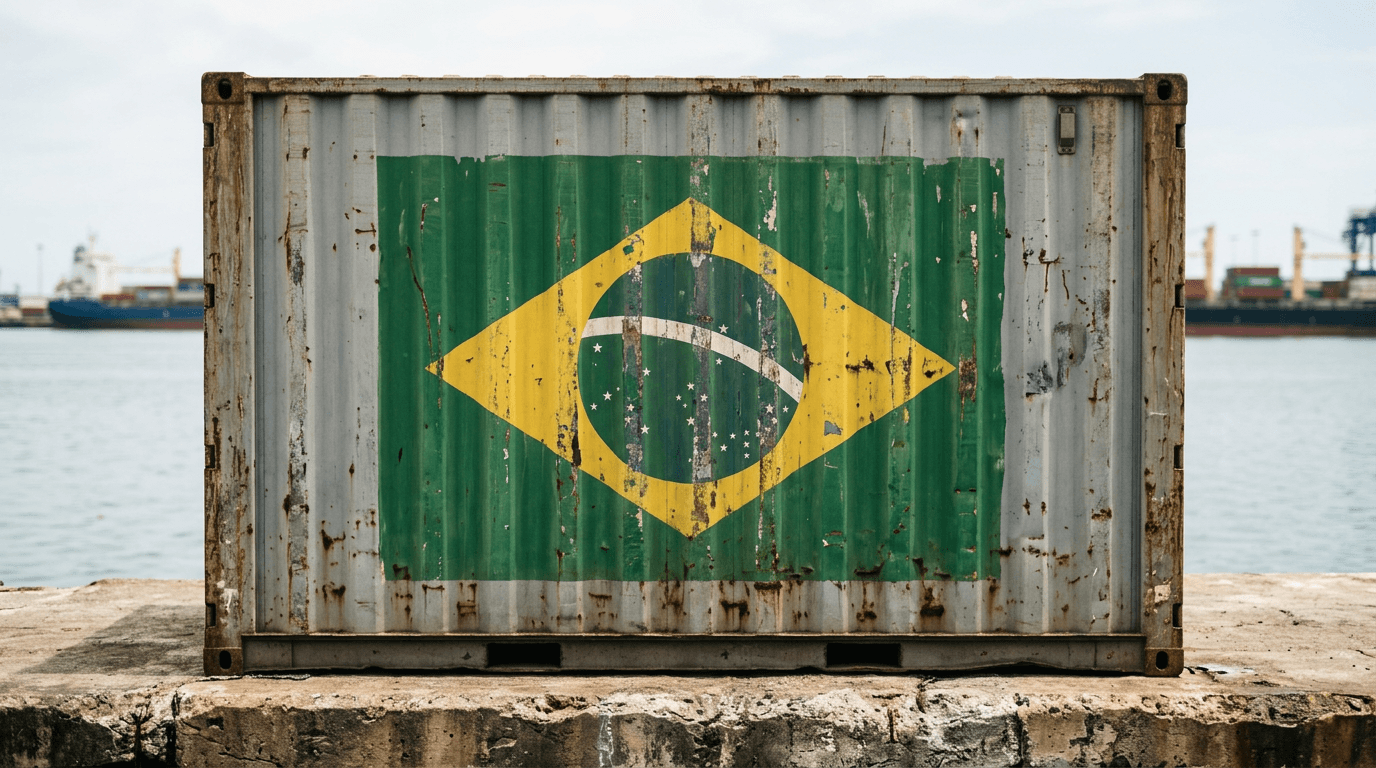
US companies sourcing industrial inputs and consumer products from Brazil face prolonged import surcharges of up to 37.5% after bilateral trade negotiations collapsed. The dispute officially escalated to the international stage on November 18, 2026, when Brazil formally petitioned the World Trade Organization (WTO) to establish a dispute settlement panel to rule on the US tariff surcharges, according to reports from G1 Globo.
This international trade friction threatens to disrupt supply chains and raise costs for American companies. The legal battle, designated as dispute DS646 by the World Trade Organization, targets a combined 37.5% surcharge levied by Washington. This tax includes a 25% tariff under a Section 301 investigation concerning digital services, ethanol, and illegal deforestation, alongside a separate 12.5% tariff stemming from a forced labor investigation launched earlier in 2026. While brazilian importers of US agricultural and technological goods are watching for potential retaliatory measures from Brasilia, the immediate financial burden falls heavily on the American side of the ledger.
These duties directly impact an estimated 23.1% of Brazil's total exports to the United States, representing a trade volume valued at $6.6 billion. The surcharges heavily penalize key sectors, forcing US-based brazil importers of footwear, machinery, apparel, and chemicals to navigate higher industrial costs. Because Brazil is a crucial supplier of these raw and finished materials, the tariffs mean American firms must either absorb these multi-million-dollar surcharges or pass them on to domestic consumers.
The transition from diplomatic talks to formal international litigation occurred after bilateral discussions hit a dead end. Delegations from Brasilia and Washington met in Switzerland on September 25, 2026, to negotiate a resolution. However, those consultations failed to produce a mutually agreeable compromise. This impasse left Brazil with no choice but to request the formal panel, which the WTO’s Dispute Settlement Body is scheduled to address during its next session on November 24, 2026.
In your brokerage app
For global investors holding positions in broad-market funds like the iShares MSCI Brazil ETF, or monitoring the currency movement of the Brazilian real, trade disputes of this magnitude introduce policy risk. While broad equity portfolios may not feel the immediate pinch of a single tariff dispute, prolonged friction in $6.6 billion worth of bilateral trade can drag on the corporate earnings of major industrial exporters and alter capital flows between New York and São Paulo.
Analysis · NWX analysis desk
Which Brazil assets this touches
- EWZ, USDBRL — Named in this story.
Technical picture · iShares MSCI Brazil ETF (EWZ)
iShares MSCI Brazil ETF (EWZ) closed at $30.07 on Nov 18, 2026, down 7.3% from five sessions earlier. The last close is below its 20-day average of $33.26 and below its 50-day average of $37.14. Since May 18, 2026 it has traded between $30.07 (low, Nov 18, 2026) and $43.54 (high, Oct 9, 2026).
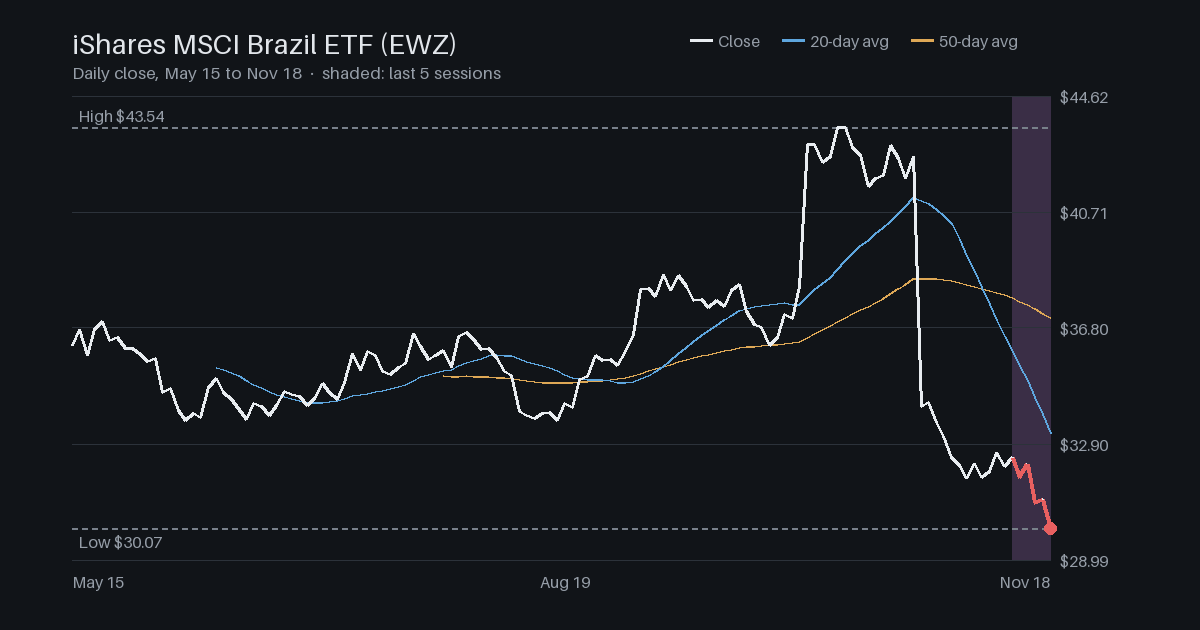
| Last close | $30.07 | Closing price on Nov 18, 2026. |
|---|---|---|
| 5-session move | -7.3% | Change in the closing price over the last five trading days. |
| 20-day average | $33.26 | The average closing price of the last 20 trading days. |
| 50-day average | $37.14 | The average closing price of the last 50 trading days. |
| Period high | $43.54 | Highest price since May 18, 2026. |
| Period low | $30.07 | Lowest price since May 18, 2026. |
Related coverage
 Speculators Hold Large Soybean Net-Long Position as Brazil Planting AdvancesCFTC data shows non-commercial traders held a net-long position of 146,550 CBOT soybean contracts as of November 10, 2026, amid rapid planting in Brazil.
 Dollar Rockets Past 5.90 Reais, Dragging Down US-Listed Brazil ETFUS-listed Brazil ETF holders face currency headwinds as a $1 billion central bank intervention fails to stop the dollar from surging past 5.90 reais.
 JBS US Shares Target 50% Upside at Itaú BBA Despite Q3 Profit DropItaú BBA reiterated its buy rating on NYSE-listed JBS N.V. with an $18 price target, pointing to a projected earnings turnaround starting in late 2026.