

Spending Cap Cuts Head to Brazil's Lower House for Fast-Tracked Vote
Brazil's Chamber of Deputies is set to vote Monday on PLP 299/2026, a fiscal bill lowering real spending growth to 2.0% to save up to R$56.1 billion in 2027.
Key takeaways
- Brazil's Senate passed fiscal adjustment bill PLP 299/2026 to send it to the lower house, per Senado Federal on November 18, 2026
- The bill lowers real federal spending growth from 2.5% to 2.0% during emergency containments to save up to R$56.1 billion in 2027, per Senado Federal on November 18, 2026
- Chamber of Deputies rapporteur Mauro Benevides Filho committed to voting the identical text by November 23, 2026, per his legislative report on November 19, 2026.
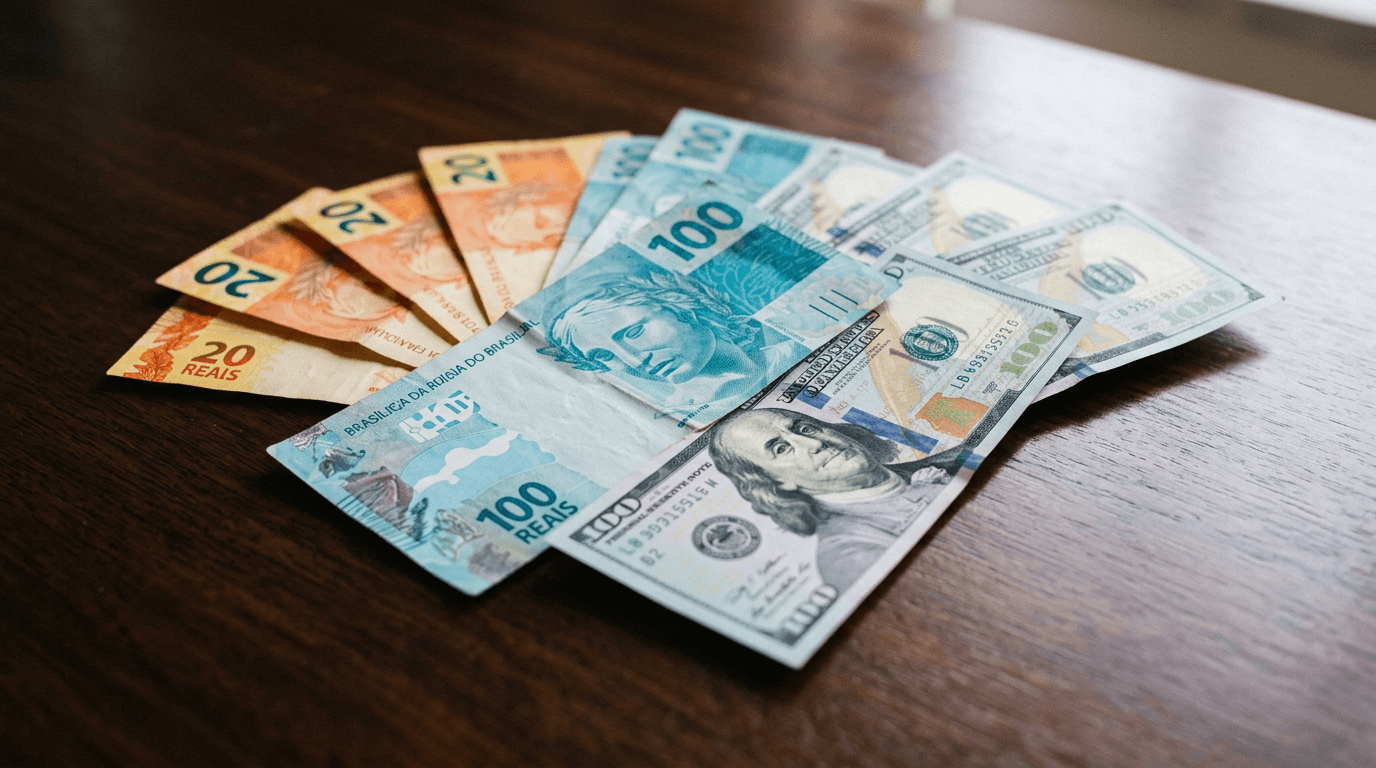
American investors watching the dollar-to-real exchange rate rise past 5.92 on November 19, 2026, according to trading data, are seeing the direct impact of fiscal uncertainty on their emerging market holdings. This currency pressure has hit the iShares MSCI Brazil ETF, which fell to a 52-week low of $30.05 per share on November 18, 2026, according to fund disclosures. The main driver of this selloff is market skepticism over whether the brazil spending cap will be enough to rein in public spending to prevent federal debt from spiraling.
In response to this mounting market pressure, Brazil's Senate completed a critical step on November 18, 2026, by passing a fiscal adjustment bill, known as PLP 299/2026, sending it to the Chamber of Deputies for a final fast-tracked vote. According to the official Senado Federal report on November 18, 2026, the bill aims to improve the country's primary fiscal result by R$45.1 billion to R$56.1 billion in 2027. By establishing tougher triggers for spending caps, the legislation seeks to ease sovereign risk and calm international investors.
how much spending money for brazil
The core of the new legislation modifies Brazil's existing fiscal framework, which was established under a 2023 law, to introduce Control mechanisms. Specifically, the bill lowers the ceiling for real federal expense growth from 2.5% to 2.0% above inflation in years when emergency spending containment measures are active, according to the legislative text on Congresso Nacional. It also expands the government’s legal authority to block discretionary spending earlier in the budget cycle if revenues fall short, allowing the government to contain expenses even when projections are within the tolerated meta band. This mechanism is designed to prevent a rapid expansion of Brazil's public debt, which grew 0.97% in September 2026 to reach R$9.38 trillion, according to National Treasury data released on October 29, 2026.
To prevent further market panic and bypass additional delays, Chamber of Deputies rapporteur Mauro Benevides Filho delivered a favorable report on November 19, 2026, committing to vote on the exact text passed by the Senate. By maintaining the identical text, the lower house avoids sending the bill back to the Senate, allowing it to go straight to President Luiz Inácio Lula da Silva for his signature. The president of the Chamber of Deputies, Hugo Motta, scheduled the fast-tracked plenary vote for Monday, November 23, 2026, at 6:00 p.m., with debates expected to conclude by November 24, 2026, according to legislative announcements.
While the fast-tracked vote on Monday, November 23, 2026, represents a crucial step for the government's fiscal agenda, investors will be watching closely to see if the bill passes without new exemptions. Although the bill protects mandatory spending on federal pensions and basic social programs from cuts, some political factions are still pushing to exclude certain strategic investments and education funds from the spending limits. Whether the Chamber of Deputies can pass the unamended Senate version with the required 257 out of 513 votes will determine whether Brazil's sovereign risk premiums begin to cool down or if the real will continue its downward slide against the US dollar.
In your brokerage app
For retail investors, this legislative push directly impacts broad emerging market funds, Brazilian sovereign debt and equity ETFs, and targeted country exposures. In your brokerage app, these legislative developments are tracked closely through the iShares MSCI Brazil ETF (EWZ) and the USD/BRL currency pair (USDBRL). If the Chamber of Deputies successfully passes the spending cap cuts on Monday, November 23, 2026, it could help stabilize the Brazilian real and ease the pressure on sovereign yields, which reached a near ten-year high of 15.75% on November 3, 2026. Conversely, any unexpected defeat or dilution of the spending triggers in the lower house could trigger further capital outflows, dragging down Brazilian equities and driving the dollar-to-real exchange rate even higher.
Analysis · NWX analysis desk
Which Brazil assets this touches
- EWZ, IBOV, USDBRL, DI1 — Named in this story.
Technical picture · iShares MSCI Brazil ETF (EWZ)
iShares MSCI Brazil ETF (EWZ) closed at $29.51 on Nov 19, 2026, down 7.1% from five sessions earlier. The last close is below its 20-day average of $32.64 and below its 50-day average of $36.96. Since May 18, 2026 it has traded between $29.51 (low, Nov 19, 2026) and $43.54 (high, Oct 9, 2026).
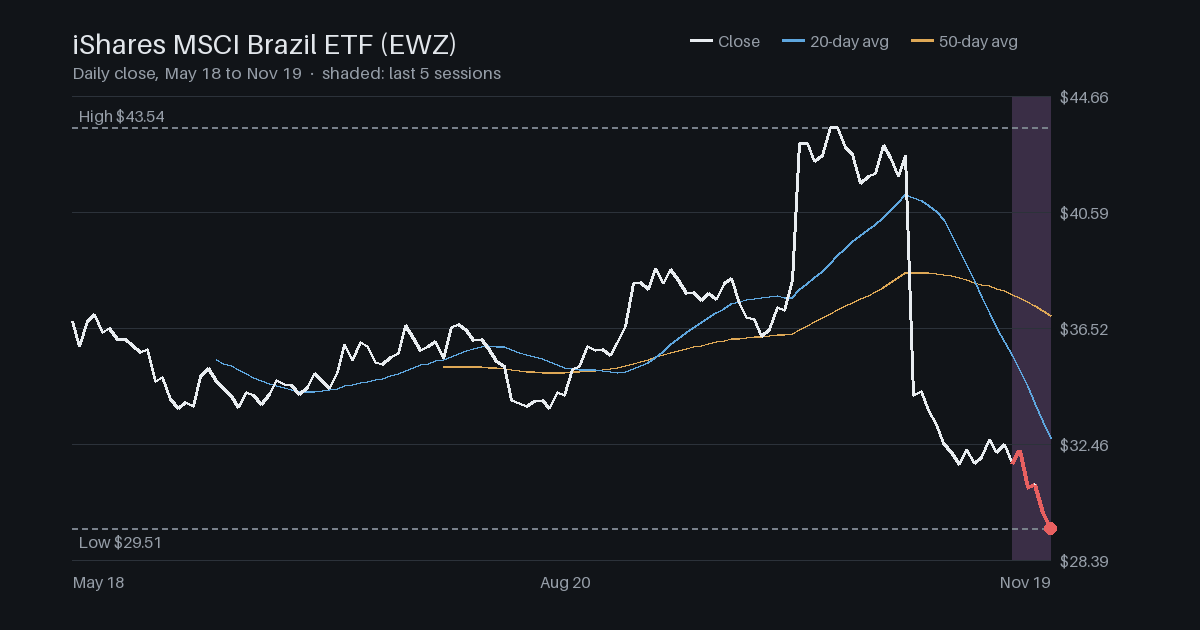
| Last close | $29.51 | Closing price on Nov 19, 2026. |
|---|---|---|
| 5-session move | -7.1% | Change in the closing price over the last five trading days. |
| 20-day average | $32.64 | The average closing price of the last 20 trading days. |
| 50-day average | $36.96 | The average closing price of the last 50 trading days. |
| Period high | $43.54 | Highest price since May 18, 2026. |
| Period low | $29.51 | Lowest price since May 18, 2026. |
Related coverage
 Congress Fast-Tracks $8.4B Fiscal Package to Steady Sovereign BondsBrazilian lawmakers are fast-tracking a major R$ 50 billion fiscal package to prevent a sovereign bond sell-off and anchor soaring interest rate expectations.
 US Dollar Hits R$5.93, Prompting $1 Billion Brazil Central Bank SaleBrazil's central bank sold $1 billion in an emergency spot auction after the US dollar reached R$5.93 on fiscal fears and political delays.
 JBS Completes $150 Million Oman Halal Meat Joint VentureJBS has completed a $150 million joint venture in Oman to build a halal protein platform, a geographic hedge against North American beef margin pressures.