
Dry spell in Brazil's soybean belt slows early planting progress
A lack of rainfall in key agricultural hubs like Mato Grosso and Bahia is forcing Brazilian farmers to pause early soybean seeding, threatening the start of the season.
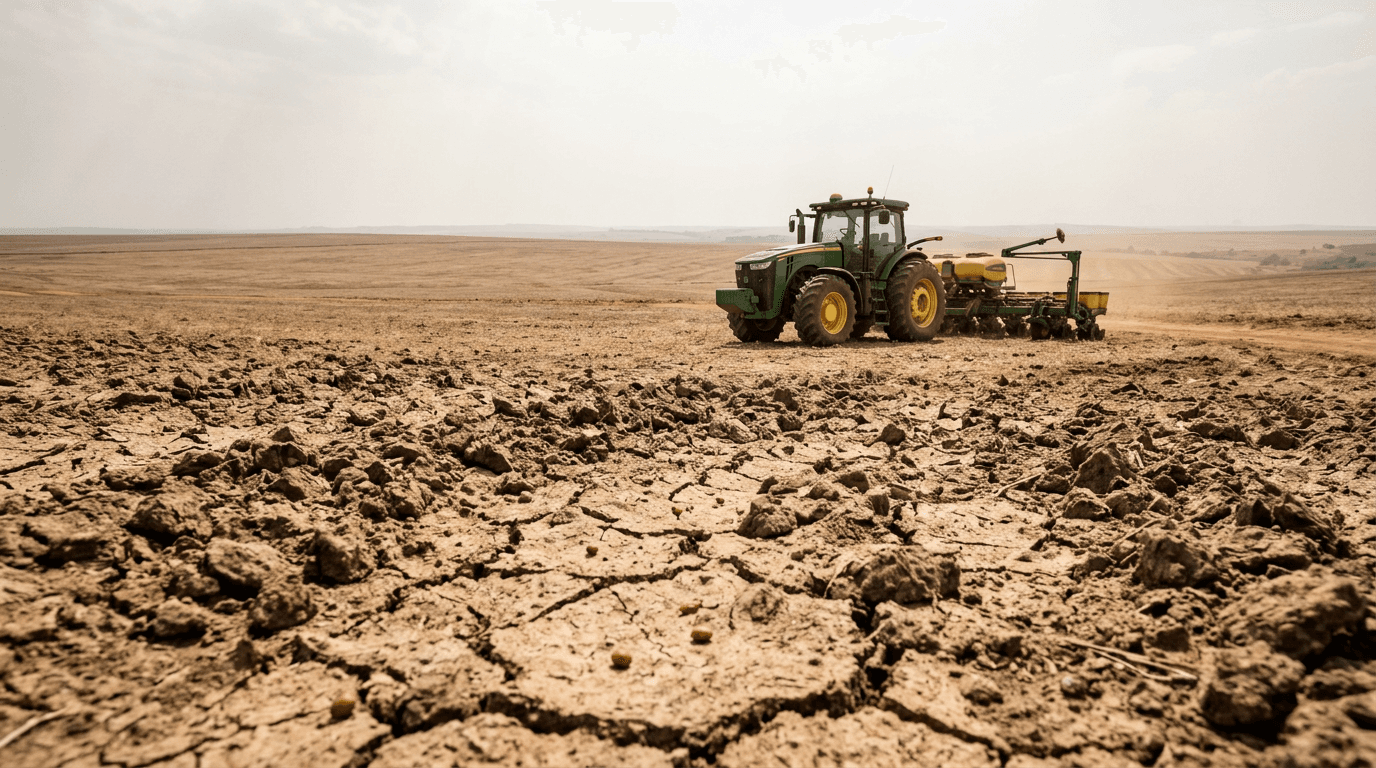
A persistent dry spell across Brazil’s primary agricultural states is threatening to disrupt the initial stages of the country’s crucial soybean planting season. Farmers in key grain-producing municipalities are facing a severe lack of soil moisture, forcing many to halt machinery and wait for more consistent rainfall before continuing to seed what is projected to be a massive crop.
According to regional meteorological data, the water deficit is particularly acute in the central and northeastern agricultural hubs. In Sorriso, located in the heart of the top-producing state of Mato Grosso, only 7.1 millimeters of rain fell over a recent seven-day period, accompanied by five consecutive dry days. Further east, the agricultural frontier town of Luís Eduardo Magalhães in western Bahia recorded no rainfall at all over a seven-day stretch, suffering through a full week of dry weather. In Rio Verde, a key agricultural hub in Goiás, conditions were similarly tight, with just 14.5 millimeters of precipitation and five dry days.
The dry start has already begun to drag on the national planting pace. Data from independent agricultural consultancy AgRural shows that only 7.3% of Brazil’s projected 2026/27 soybean area had been planted as of October 1, lagging behind the 9% pace recorded at the same point last season. While southern states like Paraná have seen abundant rainfall—with Cascavel recording a massive 126.6 millimeters of rain—the central-west and northern regions remain parched, leaving the overall progress of the Brazil soybean crop highly uneven.
This irregular weather pattern aligns with a strengthening El Niño cycle, which meteorologists warn could rank among the most intense since 1950. While El Niño typically brings favorable, heavy rains to southern Brazil and Argentina, it historically subjects the central-west and northern Matopiba regions—which includes Bahia—to high temperatures and prolonged dry spells during the critical spring planting window.
The stakes are high for global food supplies. Brazil is the world's largest exporter of soybeans, and early-season delays can compress the window for the subsequent "safrinha" corn crop, which is planted immediately after the soybean harvest. If planting delays persist past mid-October, agricultural analysts warn that the risk of yield losses will rise, potentially tightening global grain inventories later in the year.
What it touches
The dry weather and sluggish planting pace directly impact global soybean futures traded on the Chicago Board of Trade (CBOT), where prices are highly sensitive to South American weather disruptions. Locally, a smaller or delayed harvest could pressure the Brazilian Real (BRL) and affect domestic transport and logistics operators, while boosting export premiums for physical soybean shipments out of Brazilian ports.