
Delayed Mato Grosso Soy Planting Threatens Brazil 2027 Corn Window
Irregular rains in Mato Grosso have slowed 2026/27 soy planting to 10.23% of projected area, squeezing the critical sowing window for second-crop safrinha corn.
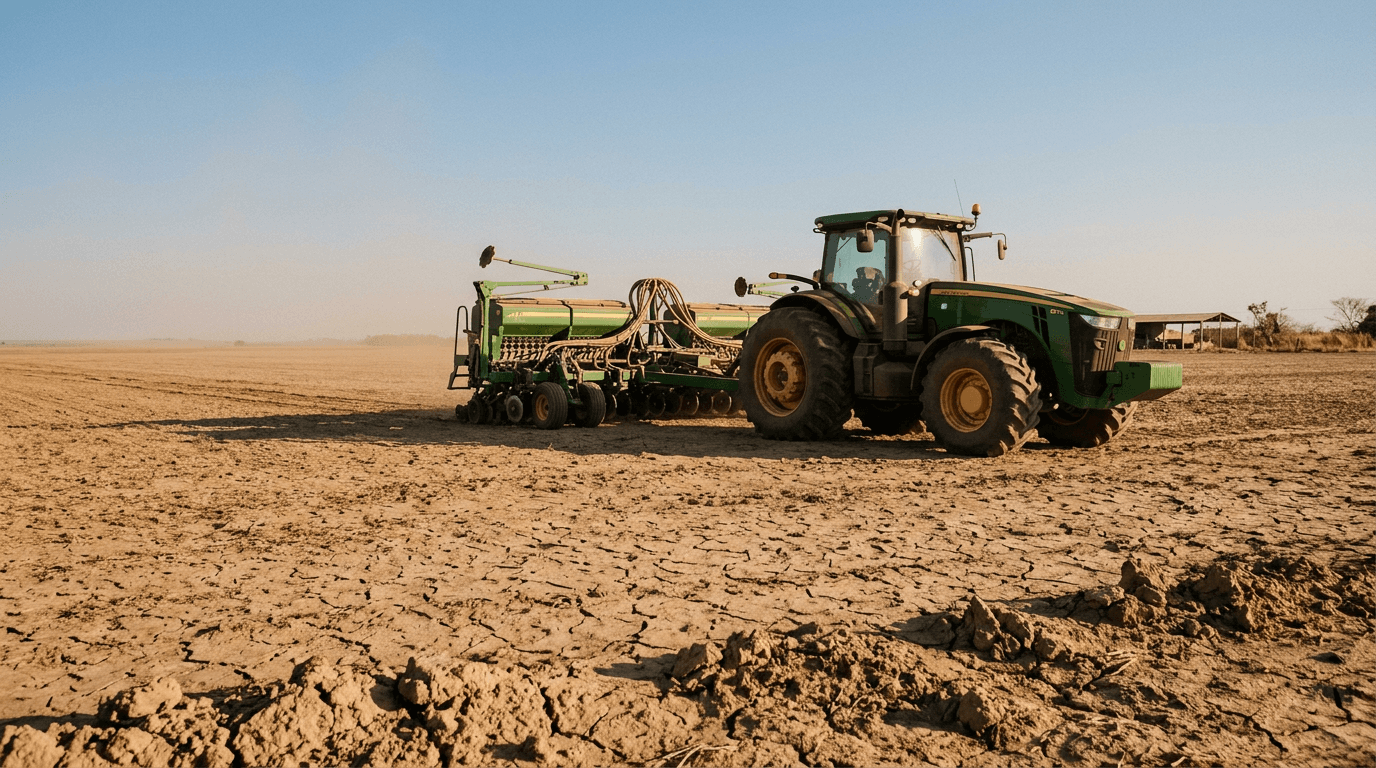
Irregular rainfall and low soil moisture have delayed the start of the 2026/27 soybean crop in Mato Grosso, Brazil’s leading agricultural state. The slow start is raising concerns for the country's dual-cropping system, as any delay in the soy harvest directly compresses the planting window for the subsequent second-crop corn, known locally as the safrinha.
According to data released on October 2, 2026, by the Mato Grosso Institute of Agricultural Economics (Imea), soy planting in the state reached 10.23% of the projected 13.05 million hectares. This pace lags 4.79 percentage points behind the progress recorded during the same period in the previous season. The sluggish start has forced many farmers to halt their machinery to prevent seed germination failure in dry soils.
The delay is highly localized, highlighting the erratic nature of this spring's precipitation. While large agricultural groups in the western region have pushed ahead using advanced machinery in areas that received early showers, smaller producers in municipalities like Tabaporã and Santa Carmem are exercising caution. Many are waiting for more consistent rainfall before risking expensive seed and fertilizer on dry ground.
This delay matters far beyond the state's borders. Mato Grosso is the engine of Brazilian agribusiness, and its farmers rely on a tight chronological sequence: planting soybeans in September and October, harvesting them in early January, and immediately sowing safrinha corn. To avoid the onset of the winter dry season, this second-crop corn must be in the ground by late February. If the soy harvest drags into February, farmers will face a difficult choice: plant corn outside the safe climate window and risk crop failure, or scale back their planned acreage.
While Imea analysts note that the planting season is still in its early stages and can recover quickly if rains regularize in October, the tight margin for error keeps the agricultural sector on high alert.
What it touches
The sowing delay in Mato Grosso directly impacts global grain supplies, exposing multinational grain exporters and agricultural asset markets to volatility. If the safrinha corn window is severely compromised, it could restrict export volumes from major agricultural firms operating in the region, such as Bunge Global SA (NYSE: BG) and Archer-Daniels-Midland Co (NYSE: ADM).