
Lula and Flávio Bolsonaro Headed for Tight Presidential Runoff
Brazil's presidential election on October 4, 2026, is headed for a second-round runoff between incumbent President Lula and Senator Flávio Bolsonaro.
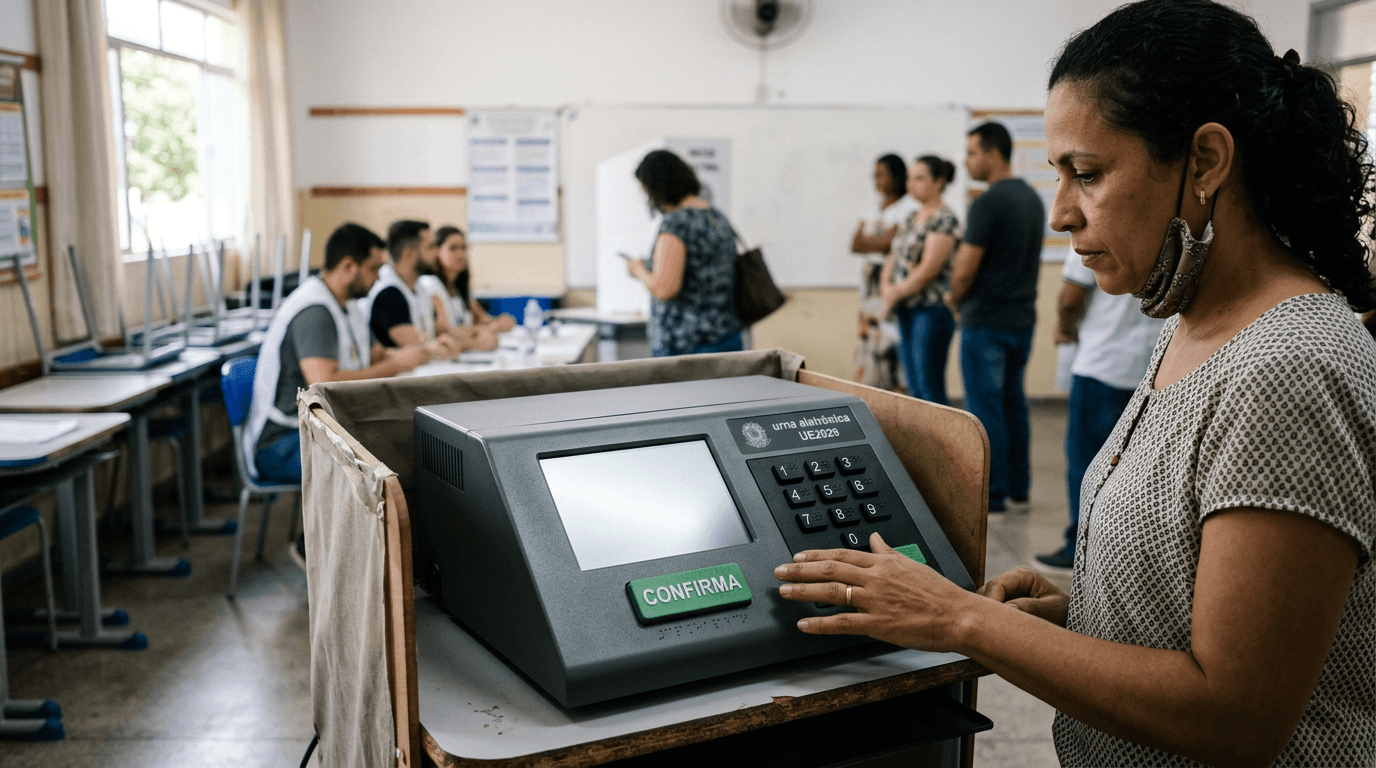
Brazilians voted on Sunday, October 4, 2026, in a highly polarized presidential election that is mathematically headed for a second-round runoff. Neither incumbent President Luiz Inácio Lula da Silva nor his primary challenger, Senator Flávio Bolsonaro, secured the absolute majority of valid votes required to win the presidency outright in the first round. The two candidates will face each other in a decisive head-to-head vote scheduled for October 25, 2026.
The election serves as a high-stakes proxy rematch of the tight 2022 race. President Lula, the 80-year-old leader of the left-wing Workers' Party (PT), is seeking a historic fourth presidential term. His challenger, 45-year-old Senator Flávio Bolsonaro of the conservative Liberal Party (PL), is the eldest son of former right-wing President Jair Bolsonaro. The younger Bolsonaro has successfully consolidated the country's conservative base, presenting himself as the sole viable alternative to the current administration.
Leading up to Sunday's vote, major polling firms signaled an incredibly tight race. Final pre-election surveys from Datafolha and AtlasIntel showed Lula holding a narrow lead, though the margins remained within or very close to the statistical margin of error. While Lula campaigned on preserving social programs and democratic institutions, Flávio Bolsonaro focused his platform on public security, lowering taxes, and criticizing the current administration's economic policies.
A Polarized Path to October 25
The upcoming three-week campaign is expected to intensify political volatility in Latin America's largest democracy. For global observers, the runoff represents a choice between two starkly different paths for Brazil's foreign policy and domestic agenda. Lula has focused on strengthening ties with China and the BRICS bloc, while Flávio Bolsonaro advocates for closer alignment with conservative leadership in the United States.
The Superior Electoral Court (TSE), which oversees Brazil's highly digitized voting system, reported that voting proceeded smoothly across the country's electronic ballot boxes. Beyond the presidency, voters also cast ballots to renew the entire 513-member Chamber of Deputies and two-thirds of the 81-member Federal Senate, which will shape the legislative environment the next president must navigate.
What it touches
The prospect of a tight three-week runoff is expected to keep Brazilian financial assets highly volatile. Investors are closely monitoring how both candidates address fiscal discipline, the future of the Selic benchmark interest rate, and the tax burden. The benchmark MSCI Brazil ETF (EWZ) and major state-backed firms like Petrobras (PETR4) and Eletrobras (ELET3) remain highly sensitive to shifts in the polling data ahead of the October 25 vote.