
Brazil Presidential Election Heads to Runoff as First-Round Closes
Incumbent President Lula da Silva and Senator Flávio Bolsonaro are set for an October 25 runoff after a polarized first-round vote on October 4, 2026.
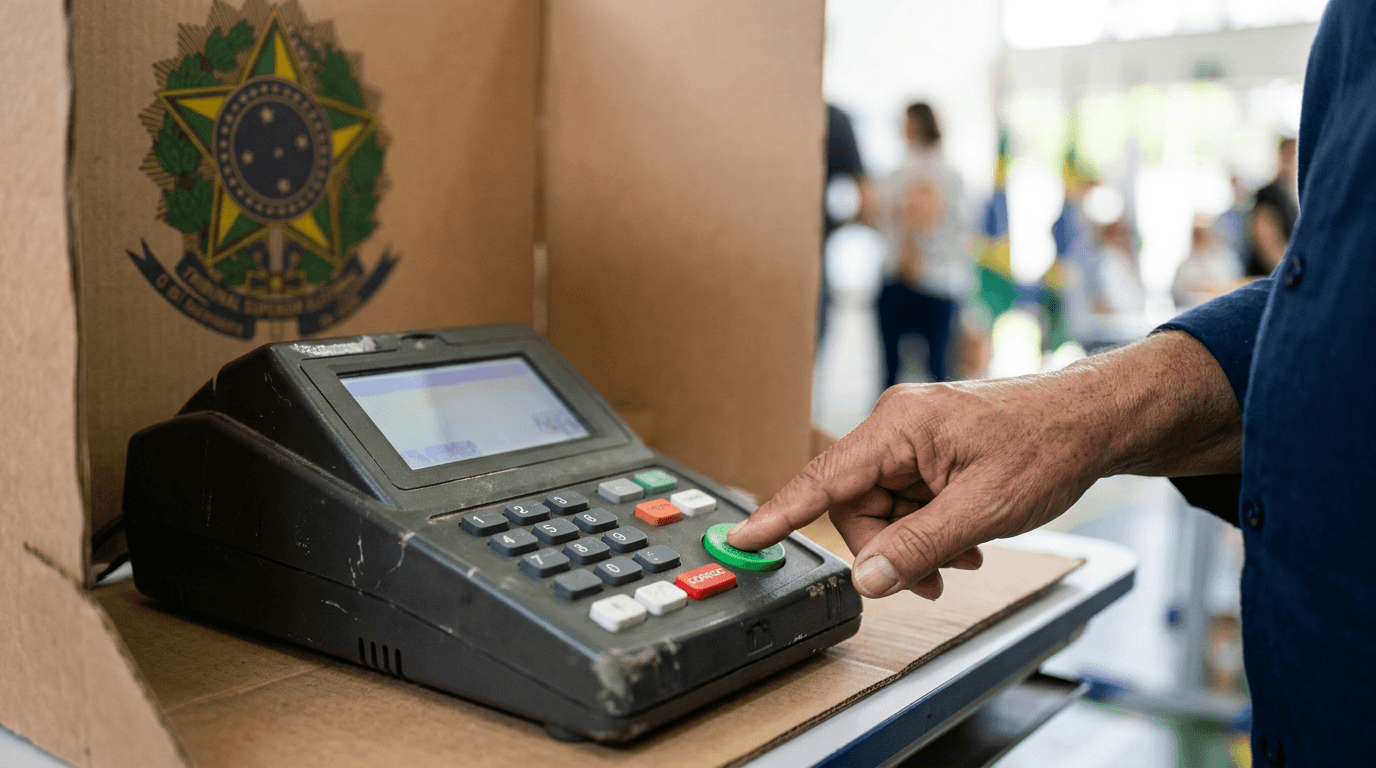
Brazilians headed to the polls on Sunday, October 4, 2026, in a highly polarized presidential election that is set to determine the political and economic trajectory of Latin America's largest nation. With more than 158.7 million voters eligible to cast ballots, the high-stakes race pits the 80-year-old leftist incumbent, Luiz Inácio Lula da Silva, against 45-year-old right-wing Senator Flávio Bolsonaro.
Because Brazil’s electoral system requires a candidate to secure more than 50% of the valid vote to win outright, the tight margins make a second-round runoff on October 25 virtually certain. Final pre-election surveys from major polling firms, including Datafolha and Quaest, showed Lula leading with approximately 45% to 46% of valid votes, while Flávio Bolsonaro closely trailed with 42% to 45%. The narrow gap underscores a deeply divided electorate where voters are largely split between the legacy of Lula's Workers' Party and the conservative movement led by the Bolsonaro family.
A Proxy Rematch with High Stakes
For international observers, this election represents a critical proxy rematch of the bitter 2022 contest. Flávio Bolsonaro, a lawyer and senator representing Rio de Janeiro, is the eldest son of former President Jair Bolsonaro. The elder Bolsonaro was ruled ineligible to run and subsequently imprisoned following investigations into a failed 2023 coup attempt. Running on a platform of economic liberalism, hardline public safety, and evangelical family values, the younger Bolsonaro has positioned himself as an ally of U.S. conservative movements while promising to challenge Supreme Court overreach.
Meanwhile, President Lula da Silva is seeking a historic fourth non-consecutive term. Lula's campaign has focused on defending democratic institutions, expanding social welfare programs, and positioning Brazil as a global leader in environmental preservation and green transition. Beyond the presidency, Sunday's general election also decides crucial races for all 513 seats in the Chamber of Deputies, 54 of the 81 Senate seats, and all 27 state governorships, which will dictate how effectively the next president can govern.
What it touches
The outcome of the election directly impacts the iShares MSCI Brazil ETF (EWZ), the primary exchange-traded fund used by foreign investors to access Brazilian equities. A victory for Flávio Bolsonaro would likely be received favorably by state-controlled corporate assets due to his pro-market, privatization-friendly rhetoric. Conversely, a victory for Lula would signal policy continuity, supporting ongoing green transition initiatives and social spending, though potentially keeping fiscal deficit concerns at the forefront for foreign capital.