
Why Speculators Are Sticking to Big Bets on Soybean Futures
Speculative traders maintain significant long positions in soybean futures as they weigh massive global supply projections against South American weather risks.
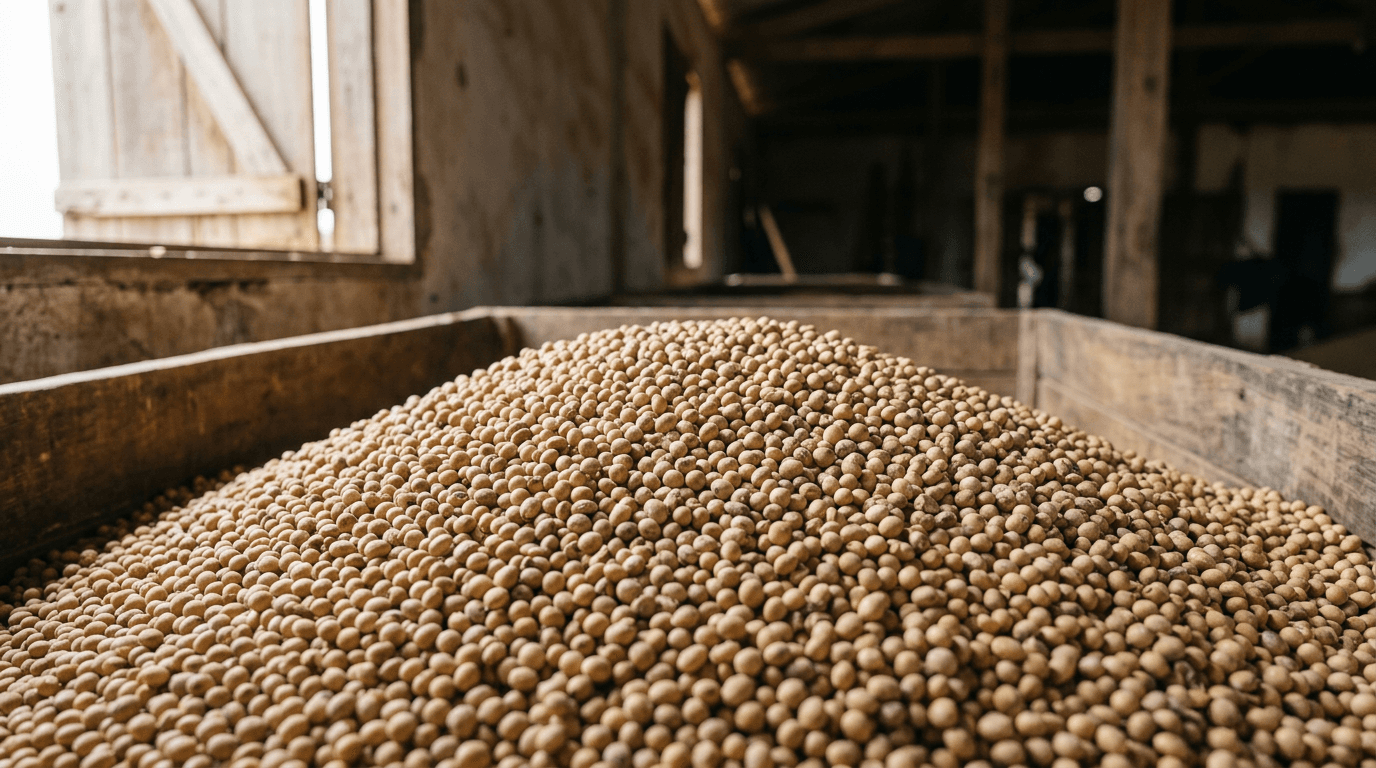
If you hold agricultural exchange-traded funds or broad commodity baskets in your brokerage account, your portfolio is currently tied to a high-stakes weather watch in South America. Speculative traders are maintaining significant exposure to agricultural commodities, balancing expectations of massive global supply against unpredictable weather patterns in the southern hemisphere.
The primary engine behind this global supply dynamic is Brazil. As the world's largest exporter of soybeans, Brazil's planting progress dictates the pricing of grain contracts from Chicago to Shanghai. The country's agricultural heartland, particularly the central state of Mato Grosso, has faced irregular rainfall patterns in recent planting seasons, meaning any sudden shift in South American weather can trigger immediate volatility in global food and feed markets.
According to the U.S. Commodity Futures Trading Commission (CFTC) Commitments of Traders report for the Chicago Board of Trade (CBOT) soybean contract (code 005602) as of November 3, 2026, non-commercial traders held 239,253 long contracts compared to 75,635 short contracts. This resulted in a net-long position of 163,618 contracts. Total contract open interest stood at 959,576 contracts for the same weekly observation date.
While these figures reflect a bullish bias among large speculative funds, weekly trader positioning is a snapshot of market sentiment rather than a guaranteed price forecast. Speculators are balancing their long positions against the reality of a massive Brazilian crop expected to hit the market in early 2027. Brazil's national agricultural agency, Conab, and private analysts monitor these planting conditions closely, as the eventual harvest size will determine whether global soybean inventories remain comfortable or tighten rapidly.
For global retail investors, the fluctuations in these futures contracts ripple directly into the valuations of multinational agribusinesses and land-management companies. When speculative positioning shifts, it alters the profit margins of companies that process, transport, and trade these physical crops across international borders.
In your brokerage app
Adecoagro S.A. is a company listed in New York that operates in this sector. The company owns and manages extensive farmland assets across South America, where its crop yields and land valuations are highly sensitive to the global soybean pricing trends tracked by the CFTC.
Related coverage
 Why Brazil's new labor rules and high rates hit US portfolios nowBrazil's Supreme Court has locked in a mandatory five-day workweek transition, while high interest rates force payment giant StoneCo to slash its profit outlook.
 Brazil Largest Retailers Settle Long-Standing Billion-Real DisputeCasas Bahia and GPA resolve a legal battle stemming from their failed 2009 merger, removing major balance sheet liabilities for both debt-laden companies.
 Nubank Secures Official Banking License in BrazilBrazil's Central Bank approved Nubank's acquisition of Banco Porto Real, officially granting the New York-listed fintech a full banking license.