

US Soybean Speculators Hold Large Net-Long Position on CBOT
Weekly CFTC data shows non-commercial traders held a net-long position of 145,816 soybean contracts as of November 17, 2026, amid strong Brazilian planting.

Key takeaways
- Speculators held a net-long position of 145,816 Chicago soybean contracts, per the CFTC on November 17, 2026
- Brazil’s food agency CONAB reported soybean planting at 66.8% complete, per its November 17, 2026 update
- Total contract open interest reached 997,948 contracts, per the CFTC on November 17, 2026
For American retail investors tracking agricultural commodities or grocery store food price pressures in their brokerage portfolios, market sentiment on the Chicago Board of Trade is pointing toward continued speculatively backed confidence. In the weekly snapshot ending November 17, 2026, large non-commercial traders held a net-long position of 145,816 soybean contracts, according to the Commodity Futures Trading Commission (CFTC) Commitments of Traders database. While these positioning reports reflect weekly investor sentiment rather than a live trading quote or a guaranteed price forecast, they show that agricultural desks remain structurally positive on the crop.
This speculative posture on the Chicago Board of Trade is heavily dependent on South America, where Brazil reigns as the world's largest exporter of soybeans. Because Brazilian exports dictate global baseline pricing, any disruptions or bumper crops in South America immediately filter back to US futures markets. On November 17, 2026, Brazil’s federal food supply agency, CONAB, reported that domestic soybean planting was 66.8% complete. CONAB projected a record crop of 181.6 million metric tons for the current season in its November 17, 2026 report. Meanwhile, private agricultural consultancy AgRural estimated planting progress even higher at 78% on November 17, 2026, signaling a highly efficient start to the South American growing season.
A closer look at the CFTC data for the soybean contract (code 005602) on November 17, 2026, reveals that non-commercial buyers held 227,439 long contracts, compared to 81,623 short contracts. This dynamic indicates that speculative funds are heavily exposed to upward price movements, even as total open interest in the contract reached 997,948 contracts on November 17, 2026, per the CFTC report. Historically, such high speculative interest can lead to sharp volatility on the Chicago exchange if weather conditions in South America shift unexpectedly or if global export demand falters.
Moving forward, the major catalyst for these speculative positions will be the weather across Brazil's key agricultural states, such as Mato Grosso, where exceptional early-season rainfall has so far bolstered crop development. Investors will also closely monitor trade policy negotiations, particularly between Washington and Beijing, since China remains the primary global buyer of both US and Brazilian soybeans. Any shifts in bilateral tariffs could instantly redirect cargo flows and prompt a rapid rebalancing of these speculative CBOT positions.
In your brokerage app
For retail investors looking to express a view on this international trade flow, agricultural exposure can be found via the Teucrium Soybean Fund, an exchange-traded fund listed in New York that tracks CBOT soybean futures. Alternatively, those interested in direct agricultural land exposure can look to Adecoagro S.A., a major South American farmland and crop producer listed in New York, whose revenues are highly sensitive to global soy and grain pricing.
Related coverage
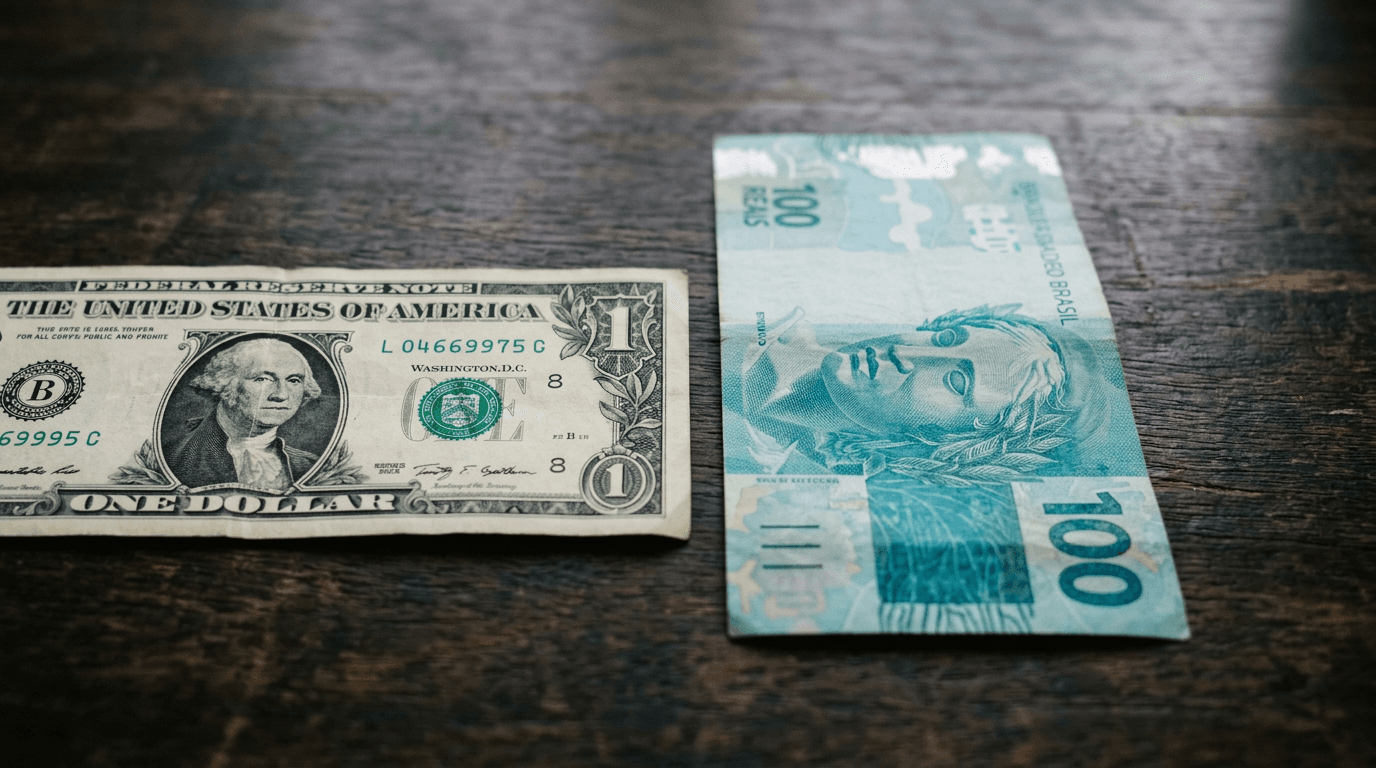 Dollar Breaches 6.00 Reais as Lula Pulls Minister for Fiscal VoteThe U.S. dollar briefly crossed 6.00 Brazilian reais as President Lula temporarily dismissed a minister to secure a vote on a 56 billion-real fiscal package.
 Vale Restarts Viga Iron Ore Mine After 10-Month ShutdownVale S.A. obtains judicial and federal approval to partially resume iron ore operations at its Viga mine in Minas Gerais, idle since January.
 US Dollar Breaches 6.00 Reais as Chamber Votes on Fiscal PlanThe U.S. dollar reached an intraday high of 6.005 Reais on November 23, 2026, amid market concerns over the government's fiscal adjustments.