

Macron's 'Doped' Meat Jab Raises Trade Hurdles for JBS and BRF
French President Emmanuel Macron slammed Brazilian meat imports as "doped," escalating a protectionist trade row that impacts major global food suppliers.
Key takeaways
- French President Emmanuel Macron labeled South American meat imports as "doped" on November 25, 2026, per Elysée Palace statements
- Brazilian trade associations ABIEC and ABPA rejected the remarks as unscientific on November 26, 2026, per official press releases
- The EU’s ban on Brazilian animal products remains active since September 3, 2026, under Commission Regulation 2026/1189
- EU regulators are scheduled to vote on resuming poultry and honey imports on December 7-8, 2026, per European Commission documents
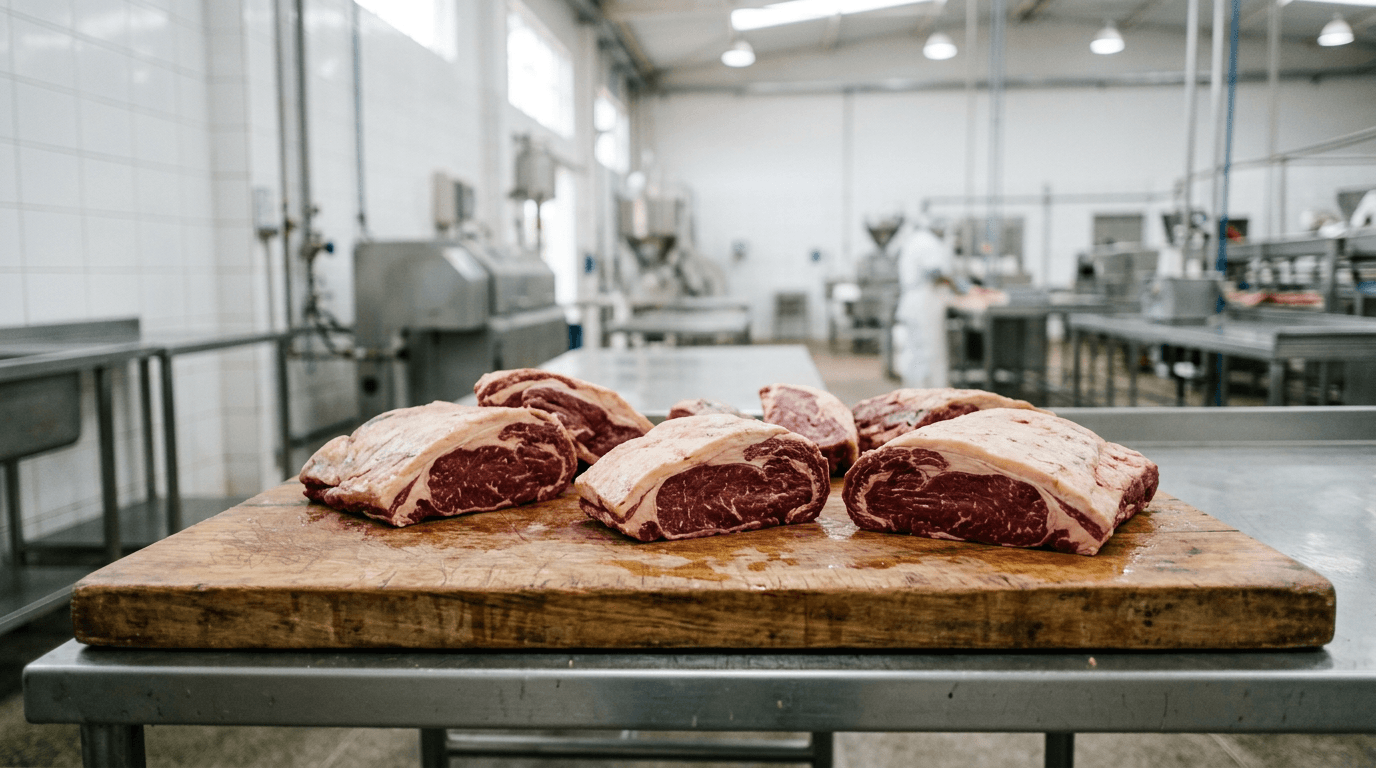
US investors holding stakes in global food processing giants JBS and BRF are navigating a fresh round of geopolitical friction after French President Emmanuel Macron publicly labeled South American meat "doped" (viande dopée) on November 25, 2026. Speaking to French agricultural representatives at the Elysée Palace, Macron cheered the European Union’s active import restrictions, linking the blockade directly to French political pressure against the Mercosur-EU free trade agreement, as reported by Brazilian news outlet Poder360.
In Brazil, the agricultural sector is feeling the weight of a ban that has been active since September 3, 2026. The restriction was formalized under the European Commission’s Implementing Regulation (EU) 2026/1189. The suspension was not triggered by an active sanitary outbreak, but rather by regulatory disputes over whether Brazil’s tracking systems can guarantee that livestock operations comply with the EU’s strict limits on antimicrobial growth promoters. The financial stakes are high: EU purchases of Brazilian animal products reached $1.8 billion in 2025, according to trade data published by the GZH news portal on November 26, 2026.
A Bitter Agricultural Dispute
Brazil's prominent trade associations quickly condemned the French president's rhetoric. On November 26, 2026, the Brazilian Beef Exporters Association (ABIEC) and the Brazilian Animal Protein Association (ABPA) released statements rejecting Macron’s "doped" characterization as unscientific and technically unfounded, as reported by Exame. ABPA pointed to an official European Commission audit from September 2026 that verified Brazilian poultry controls met the bloc's antimicrobial standards, accusing Macron of using misinformation for local political gain among French farmers.
The immediate outlook for global meat processors hinges on an upcoming European Union regulatory decision. EU officials are scheduled to meet on December 7 and 8, 2026, to vote on whether to lift the temporary ban on Brazilian poultry and honey exports. A vote to reinstate Brazil would immediately ease supply-chain bottlenecks for multinational exporters, whereas continued delays will force producers to keep redirecting shipments to alternative consumer markets in Asia and the Middle East.
In your brokerage app
Global food giants with direct US listings face ongoing operational headwinds from these European regulatory hurdles. JBS N.V., which is listed on the New York Stock Exchange, operates a highly diversified global production base that cushions it from localized trade disputes, though prolonged European bans alter overall global protein flows. Meanwhile, poultry and pork exporter BRF S.A., which trades in New York as American Depositary Receipts, is highly sensitive to the EU's impending December decision on poultry import lists.
Analysis · NWX analysis desk
Which Brazil assets this touches
- JBS, JBSS3 — Named in this story.
Technical picture · JBSS3 (JBSS3)
JBSS3 (JBSS3) closed at R$70.91 on Nov 26, 2026, down 0.6% from five sessions earlier. The last close is above its 20-day average of R$69.12 and above its 50-day average of R$64.96. Since Jun 1, 2026 it has traded between R$55.44 (low, Oct 1, 2026) and R$73.85 (high, Aug 19, 2026).
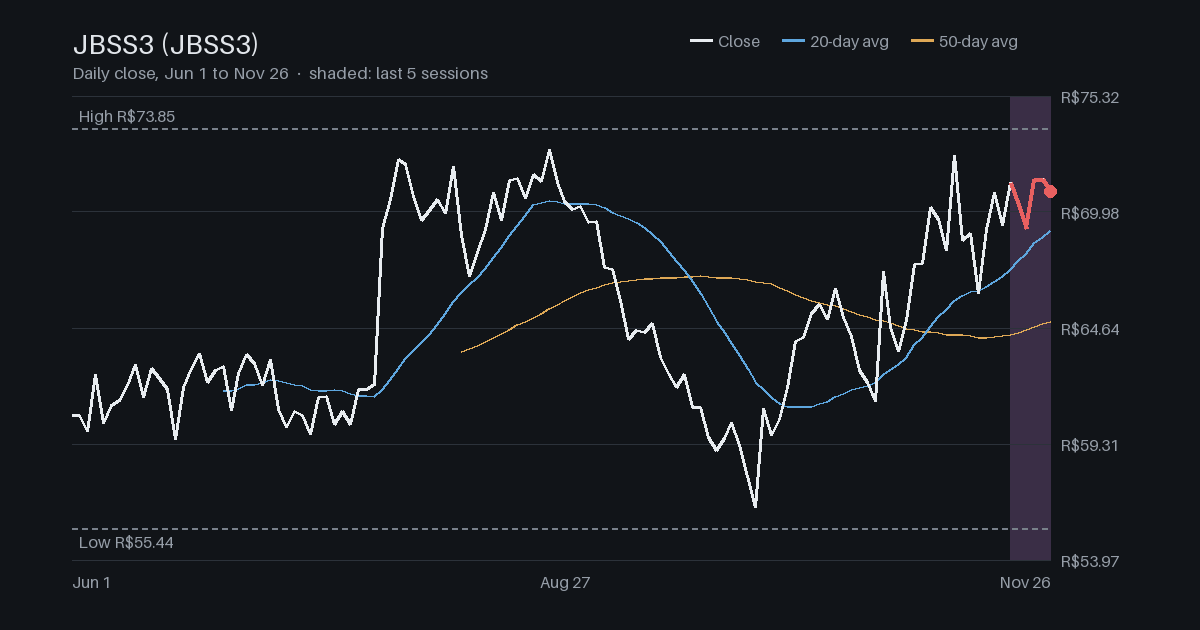
| Last close | R$70.91 | Closing price on Nov 26, 2026. |
|---|---|---|
| 5-session move | -0.6% | Change in the closing price over the last five trading days. |
| 20-day average | R$69.12 | The average closing price of the last 20 trading days. |
| 50-day average | R$64.96 | The average closing price of the last 50 trading days. |
| Period high | R$73.85 | Highest price since Jun 1, 2026. |
| Period low | R$55.44 | Lowest price since Jun 1, 2026. |
Related coverage
 New Regulatory Rulings Reshape Paths for Big Tech, Vale, and SabespRegulators and courts in Brazil enact sweeping rules targeting US tech companies, unlocking railway funding for Vale, and boosting Sabesp's tariff base.
 Court Ruling Unlocks Vale Funding for R$ 4.1 Billion RailwayBrazil's Federal Court of Accounts approved the use of linked accounts for railway investments, unlocking R$ 826.1 million from Vale for the EF-118 railroad.
 Soybean Speculators Hold 145,816 Net Longs as US Harvest Hits 96%Speculative net-long positions in Chicago Board of Trade soybean futures stood at 145,816 contracts as of November 17, 2026, amid a wrapping US harvest.