

Agribusiness Defaults Slash Banco do Brasil Profit, Shaking Funds
Banco do Brasil's Q3 2026 profit fell 65.6% due to agribusiness defaults, impacting retail investors holding Brazil and emerging market ETFs.

Key takeaways
- Banco do Brasil reported a 65.6% drop in adjusted net income for Q3 2026 due to agricultural losses, per UOL News on November 12, 2026
- CEO Tarciana Medeiros accused large producers of strategic defaults, per EBC on November 12, 2026
- Congress finalized a bill easing criteria to restructure up to R$120 billion in farm debt, per Rico aos Poucos on November 14, 2026
- The bank cut its dividend payout ratio to the legal minimum of 25% to preserve capital, per company results on November 12, 2026
American retail investors tracking a major brazil emerging market etf like the iShares MSCI Brazil ETF (EWZ) are facing unexpected headwinds in the brazilian emerging markets financial sector. State-controlled Banco do Brasil reported a massive 65.6% drop in adjusted net income for the third quarter of 2026, falling to R$1.27 billion (approximately $220 million USD) due to skyrocketing provisions for agricultural loan losses, according to a report by UOL News on November 12, 2026. This sudden earnings collapse directly exposes global investors holding diversified emerging market funds to a widening local policy dispute between the lender and wealthy rural landowners.
The root of the cash crunch is a tense standoff over "moral hazard" in the countryside. During an earnings presentation on November 12, 2026, Banco do Brasil CEO Tarciana Medeiros openly accused medium and large-scale agricultural producers of organizing deliberate defaults, as reported by EBC. Medeiros asserted that wealthy soybean, corn, and livestock producers chose to withhold payments despite having the cash to pay. Instead of honoring their debts, these large borrowers allegedly engaged in a strategic delay, waiting out the federal government for softer, subsidized restructuring terms.
This corporate gridlock was further aggravated by political moves in Brasilia. On November 14, 2026, Rico aos Poucos reported that the National Congress finalized voting on Provisional Measure 1,376/26. This controversial law eases the formal criteria required to restructure up to R$120 billion in agribusiness debts. By loosening these requirements, the measure delayed anticipated cash flows for state-run banks and gave debtors further incentive to wait for more favorable terms. The bank's agricultural credit risk provisions soared to R$21.2 billion in the third quarter of 2026, up 18.4% year-over-year, leading the lender to slash its 2026 profit guidance by half.
Agricultural lobby groups immediately pushed back on the bank's "deliberate default" narrative, arguing that high interest rates, high production costs, and falling commodity prices had genuinely eroded cash flows. While Banco do Brasil clarified that 90% of its 544,000 rural clients pay on time, the 31,000 borrowers in default dragged the bank's return on equity down to 6.2% for the first nine months of 2026—far below the 16% historical norm. In response to the capital squeeze, the bank slashed its expected dividend payout ratio to the legal minimum of 25% from 30% to preserve capital, as reported during the November 12, 2026 earnings call.
What happens next depends on the executive branch. For these new restructuring rules to fully take effect and potentially clear the logjam, the revised text of the provisional measure must still be officially signed into law by the President of the Republic. Until then, the credit standoff will likely depress earnings. Meanwhile, Banco do Brasil is shifting toward aggressive collection efforts against medium and large debtors while attempting to rebuild its core capital ratio, which fell to 10.80% in September 2026, below its own 11% target.
In your brokerage app
American retail investors holding the iShares MSCI Brazil ETF (EWZ) or broader vehicles like the iShares MSCI Emerging Markets ETF (EEM) have direct exposure to Banco do Brasil through their financial sector allocations. The state-controlled bank, which trades locally on the B3 exchange under the ticker BBAS3, saw its shares tumble as much as 8.8% following the earnings release on November 12, 2026, directly dragging on the overall performance of these funds.
Analysis · NWX analysis desk
Which Brazil assets this touches
- EWZ, EEM, BBAS3, CATTLE, SOYBEAN, CORN — Named in this story.
Fundamentals · Banco do Brasil (BBAS3)
Banco do Brasil (BBAS3) trades at 7.3x its yearly earnings and 0.4x its book value. Its return on equity is 6.8%. Its dividend yield is 4.9%. The market values the company at R$83.6 billion. Its financial health score is 48 out of 100 (stable), based on profitability, liquidity, debt and growth. Latest: Q3 2026 results, published Nov 11, 2026.
| Price / earnings (P/E) | 7.3x | How many years of the current yearly profit the share price adds up to. |
|---|---|---|
| Price / book (P/B) | 0.4x | The share price compared with the accounting value of what the company owns, per share. |
| Return on equity (ROE) | 6.8% | Yearly profit for every R$100 that shareholders have put into the company. |
| Net margin | 4.3% | The part of every R$100 in sales that is left as profit. |
| Dividend yield | 4.9% | Cash paid to shareholders over the past year, as a share of today's price. |
| Market value | R$83.6 billion | What the whole company is worth at today's share price. |
Technical picture · iShares MSCI Brazil ETF (EWZ)
iShares MSCI Brazil ETF (EWZ) closed at $30.07 on Nov 18, 2026, down 7.3% from five sessions earlier. The last close is below its 20-day average of $33.26 and below its 50-day average of $37.14. Since May 15, 2026 it has traded between $30.07 (low, Nov 18, 2026) and $43.54 (high, Oct 9, 2026).
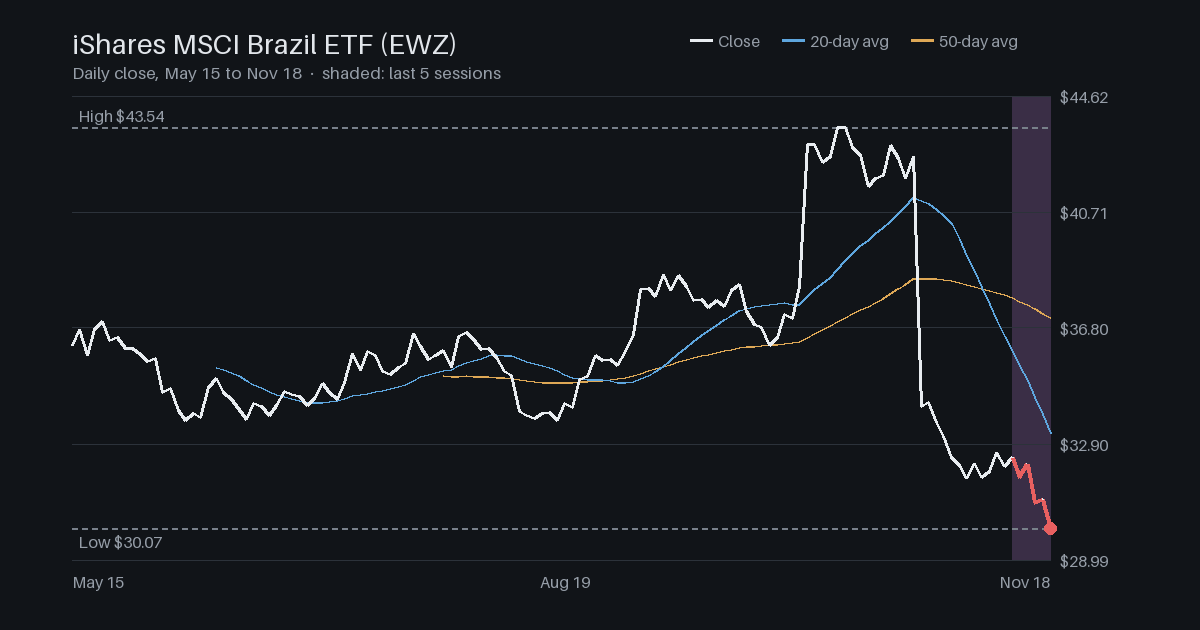
| Last close | $30.07 | Closing price on Nov 18, 2026. |
|---|---|---|
| 5-session move | -7.3% | Change in the closing price over the last five trading days. |
| 20-day average | $33.26 | The average closing price of the last 20 trading days. |
| 50-day average | $37.14 | The average closing price of the last 50 trading days. |
| Period high | $43.54 | Highest price since May 15, 2026. |
| Period low | $30.07 | Lowest price since May 15, 2026. |
Related coverage
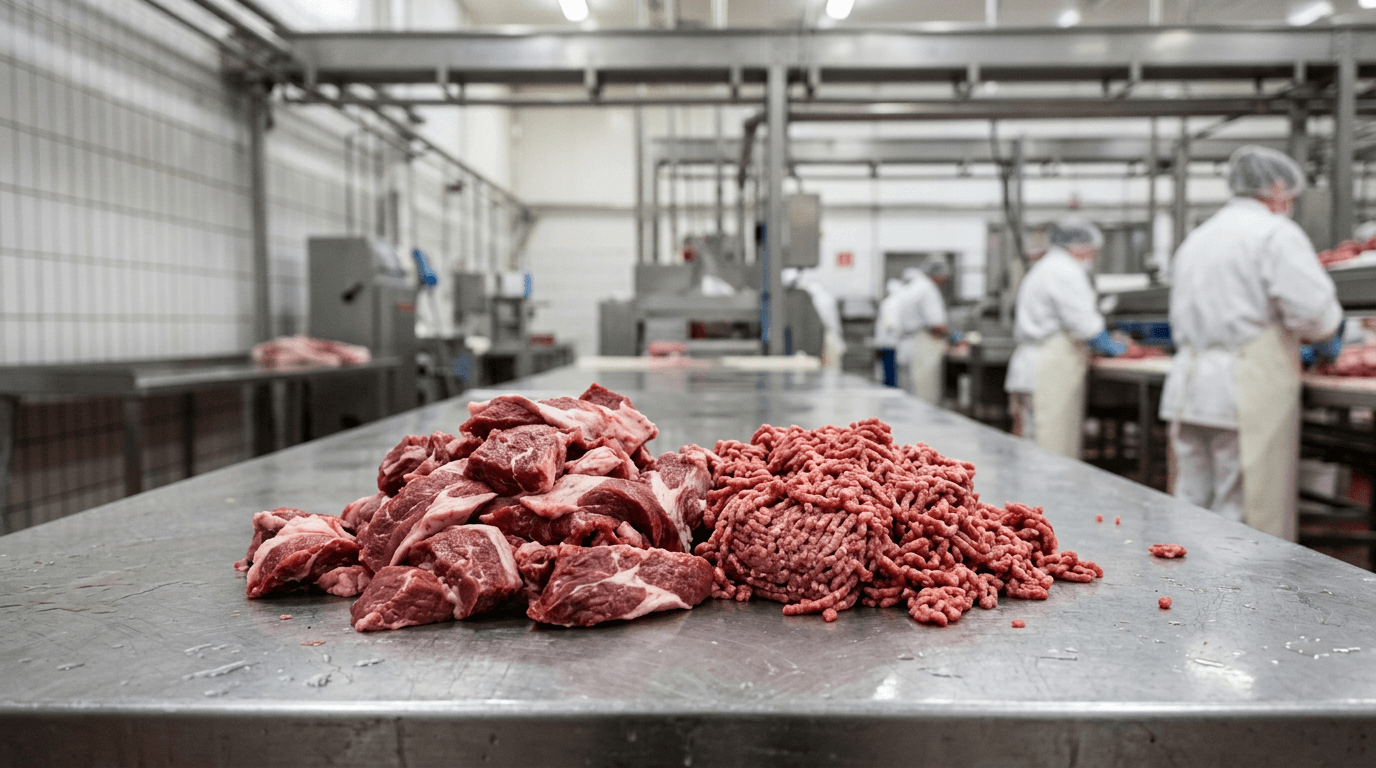 US Grocery Buyers Face Price Pressure as Beef Flows Shift to ChinaGlobal food inflation risks are rising for US grocery buyers as Brazil’s meatpackers divert lean beef shipments back to a rebounding Chinese market.
 Telefônica Brasil Confirms December Payout to New York InvestorsTelefônica Brasil confirmed the December payment date for a previously approved interest-on-capital distribution. Here is what ADS holders can expect.
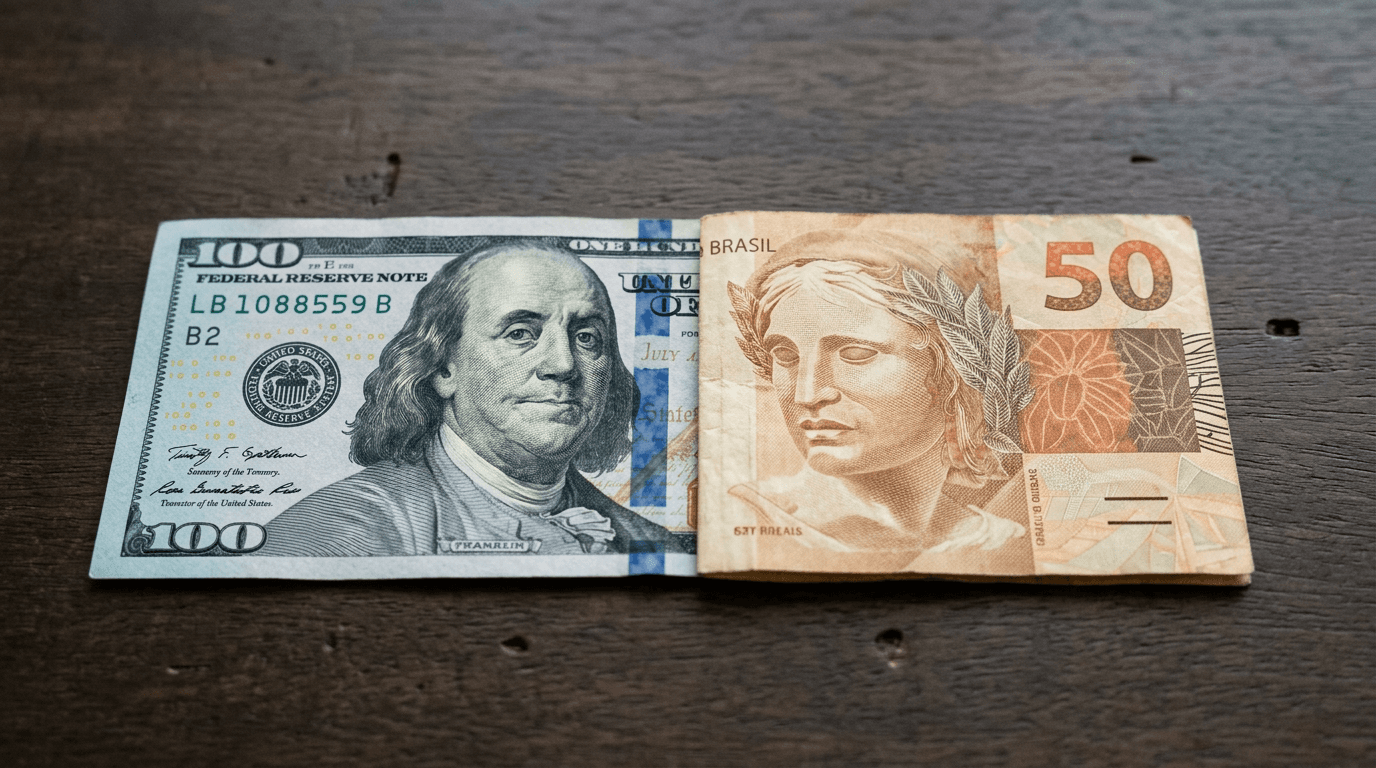 Fed, Fiscal Fears Push US Dollar to 19-Month High Against Brazil RealA hawkish Fed and weakened Brazilian fiscal savings push the US dollar to its highest level since April 2025, devaluing American investor returns.