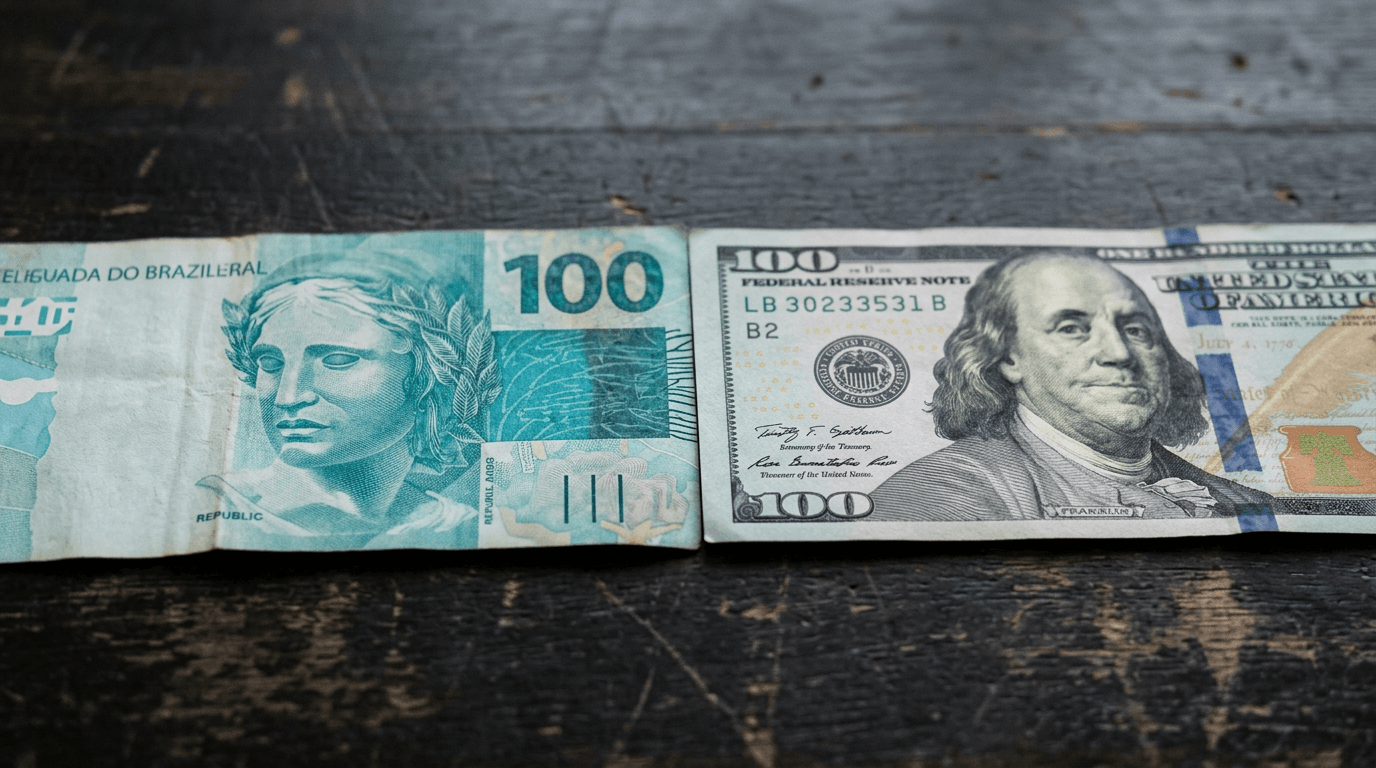
U.S. Fed and Brazil Rate Gap Holds at 9.75% as Central Banks Pause
The interest rate gap between the Fed's 4.0% upper bound and Brazil's 13.75% Selic rate remains at 9.75%, anchoring carry trade returns for global investors.

Key takeaways
- The U.S. Federal Reserve kept its target upper bound at 4.00%, per the Federal Reserve Bank of St. Louis FRED on November 20, 2026
- Brazil's central bank maintained its Selic target rate at 13.75%, per Banco Central do Brasil on November 21, 2026
- The policy rate differential between the two nations held steady at 9.75 percentage points, unchanged from October 22, 2026
For an American retail investor looking at a brokerage account, the yield premium for holding high-yielding overseas debt over risk-free U.S. Treasuries is holding steady at 9.75 percentage points, as the U.S. Federal Reserve keeps its benchmark target rate upper bound locked at 4.00%. This interest rate decision, maintained as of November 20, 2026, according to the Federal Reserve Bank of St. Louis FRED database, continues to dictate the performance of international assets and heavily influences the value of the brazil real to us dollar.
In Brazil, the central bank’s Monetary Policy Committee (Copom) previously decided to pause its monetary easing cycle, holding its benchmark Selic target rate steady at 13.75% per year. According to official data from the Banco Central do Brasil’s SGS series 432 retrieved on November 21, 2026, this rate remains unchanged. By keeping the Selic target at 13.75% and the Fed funds upper limit at 4.00%, the yield differential between the two countries remains flat compared to 30 days ago, when the gap was also exactly 9.75 percentage points.
This 9.75-percentage-point difference represents the "carry trade" premium—the yield spread that international investors earn, or pay, to hold Brazilian debt over Treasury bills. When the brazil real is stable, this high carry rate acts like a magnet for foreign capital, as investors borrow dollars at lower U.S. interest rates to buy high-yielding Brazilian bonds. However, if the brazil real to dollar exchange rate experiences sudden volatility, exchange-rate losses can quickly erase these yield gains.
The mechanism behind this rate gap is critical for understanding the direction of the brazil real vs dollar pair. Brazil's central bank has kept rates high to combat persistent inflation pressures, while the Federal Reserve remains cautious, maintaining its restrictive stance at 4.00%. As long as this wide margin persists, it provides a structural cushion for the local currency, although domestic fiscal uncertainties and international risk sentiment can still drive volatility.
Looking ahead, investors should watch the upcoming policy decisions of both central banks in December. The Federal Open Market Committee is scheduled to announce its next rate decision on December 9, 2026, while Brazil's Copom will release its final interest rate decision of the year on the same day, December 9, 2026. Any signs of further cuts in Brazil or unexpected shifts by the Fed could begin to narrow this gap, shifting capital flows and triggering movements in currency-denominated assets.
In your brokerage app
For retail investors holding the iShares MSCI Brazil ETF, the main Brazil fund traded on U.S. exchanges, this interest rate differential is a double-edged sword. In the spot currency market, the dollar traded at 5.8883 reais on November 20, 2026. Because a stronger real boosts the dollar-denominated returns of Brazilian equities, movements in this 9.75-point yield gap directly impact the net asset value of exchange-traded funds. However, extremely high domestic interest rates also act as a drag on local corporate earnings, leaving international investors to balance high bond yields against slower economic growth.