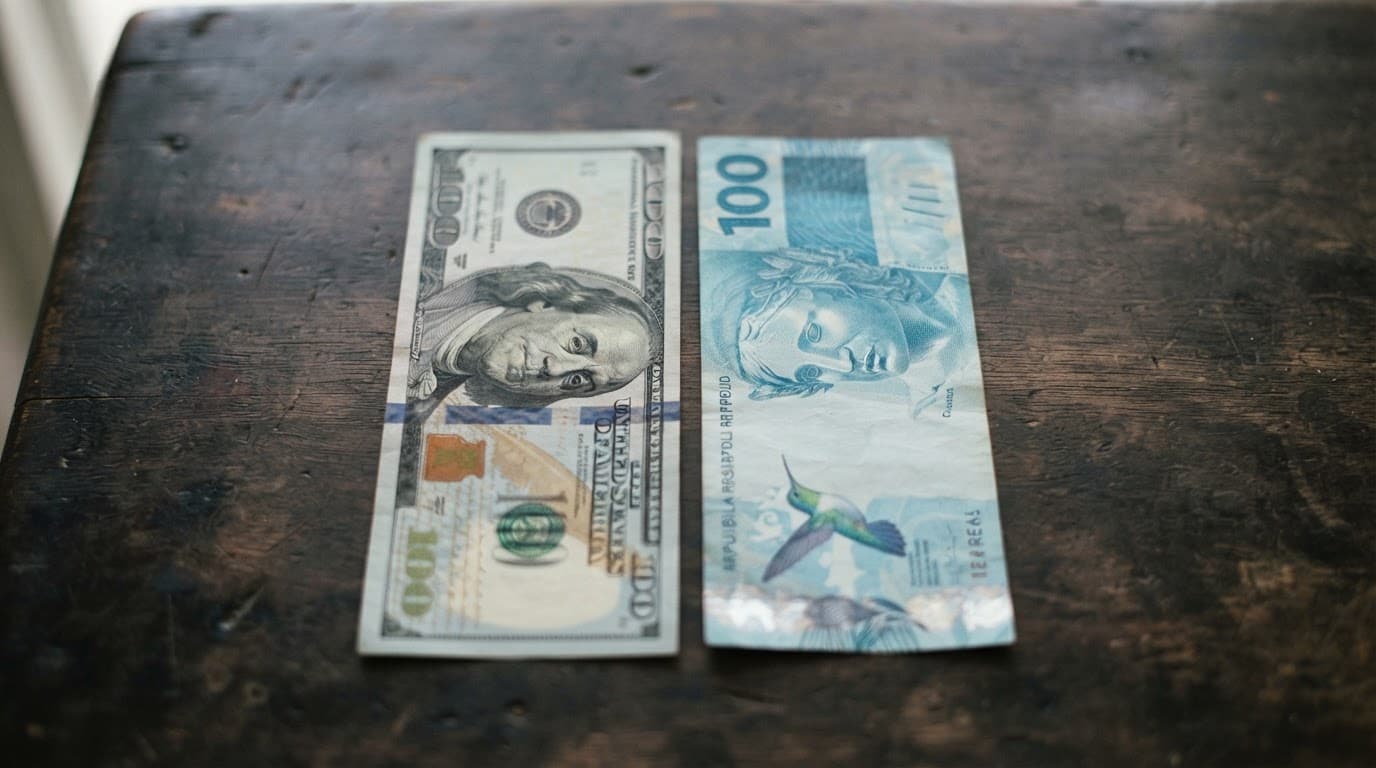
Dollar Touches Six-Real Milestone on Shaky Brazil Fiscal Outlook
The USDBRL exchange rate briefly touched the six-real threshold on Monday as domestic fiscal anxieties and global rate pressures intensified investor concerns.

Key takeaways
- The Brazil real briefly crossed the R$ 6.00 threshold on November 23, 2026, before closing at R$ 5.929, per market data
- Brazil's Ministry of Finance cut its 2027 GDP growth forecast from 2.3% to 1.8% and raised the inflation outlook to 4.5%, per its November Boletim Macrofiscal
- President Lula criticized financial markets on November 21, 2026, adding friction to the R$ 56.1 billion spending-curb package (PLP 299/2026) currently in Congress
The brazil real to usd exchange rate briefly crossed the historic threshold of six reais to the dollar on Monday, November 23, 2026, before closing the commercial trading session at R$ 5.929. This milestone reflects deepening international concern over South America's largest economy as local fiscal anxieties combine with global interest rate pressures.
For global investors managing diversified portfolios, the devaluation creates a mechanical drag. A weaker real directly reduces dollar-denominated returns for popular assets such as the iShares MSCI Brazil ETF (EWZ) or the Vanguard Total International Stock ETF (VXUS), forcing capital managers to re-evaluate their exposure to Brazilian assets.
The sudden spike in the brazil real vs dollar rate coincided with worsening domestic forecasts. On Monday, November 23, 2026, Brazil's Ministry of Finance released its November Boletim Macrofiscal, reducing the country's 2027 GDP growth forecast from 2.3% to 1.8% and cutting 2026 growth to 1.9%. Simultaneously, the ministry raised its 2027 consumer price inflation outlook to 4.5%—the absolute ceiling of the central bank’s target tolerance range—while expecting 2026 inflation to reach 5.3%.
Compounding these macroeconomic revisions are deep political frictions. During an online address on Saturday, November 21, 2026, President Luiz Inácio Lula da Silva actively criticized the financial market, asserting that financial agents were focused on personal profit rather than the poor. According to reports of his remarks compiled by Poder360, Lula stated that the financial system would not dictate how his administration runs the country.
This sparring comes at a delicate legislative juncture. A crucial spending-curb package designed to secure up to R$ 56.1 billion in savings, designated as Projeto de Lei Complementar (PLP) 299/2026, was sent to the House of Representatives (Câmara dos Deputados) with an approved urgency status as of November 23, 2026, according to congressional records. While the government presents the package as an essential mechanism to guarantee fiscal governance, investors remain highly skeptical. The high stakes of legislative dilution are underscored by the Ministry of Finance's own Boletim Macrofiscal for November 2026, which warns that prolonged high interest rates and elevated credit costs are dragging down economic activity, magnifying the need for structural reforms to stabilize the nation's fiscal outlook.
Beyond the domestic arena, global monetary policy continues to weigh heavily on the brazil real. Rising U.S. Treasury yields and expectations of a more cautious rate-cut path by the Federal Reserve have strengthened the greenback against emerging market currencies. This widening yield gap forces international investors to demand a steep risk premium to hold Brazilian debt, rendering the real highly sensitive to any local fiscal slippage.
Looking ahead, market participants will closely watch the floor debates in the House of Representatives. Lawmakers are under pressure to approve the PLP 299/2026 package without weakening its core measures. Any compromise during the voting sessions that dilutes the proposed spending curbs is likely to trigger renewed volatility for the exchange rate and local bond yields.
In your brokerage app
For retail investors holding the iShares MSCI Brazil ETF (EWZ), currency swings directly hit asset valuations. Because EWZ is a dollar-denominated fund, a weaker real reduces the net asset value of its holdings when converted back into greenbacks, even if local stock prices remain flat. Similarly, diversified funds like the Vanguard Total International Stock ETF (VXUS) will see a minor drag on their Latin American exposure as the real continues to slide.