

Dry spell in Bahia's soy belt threatens crop yields as heat rises
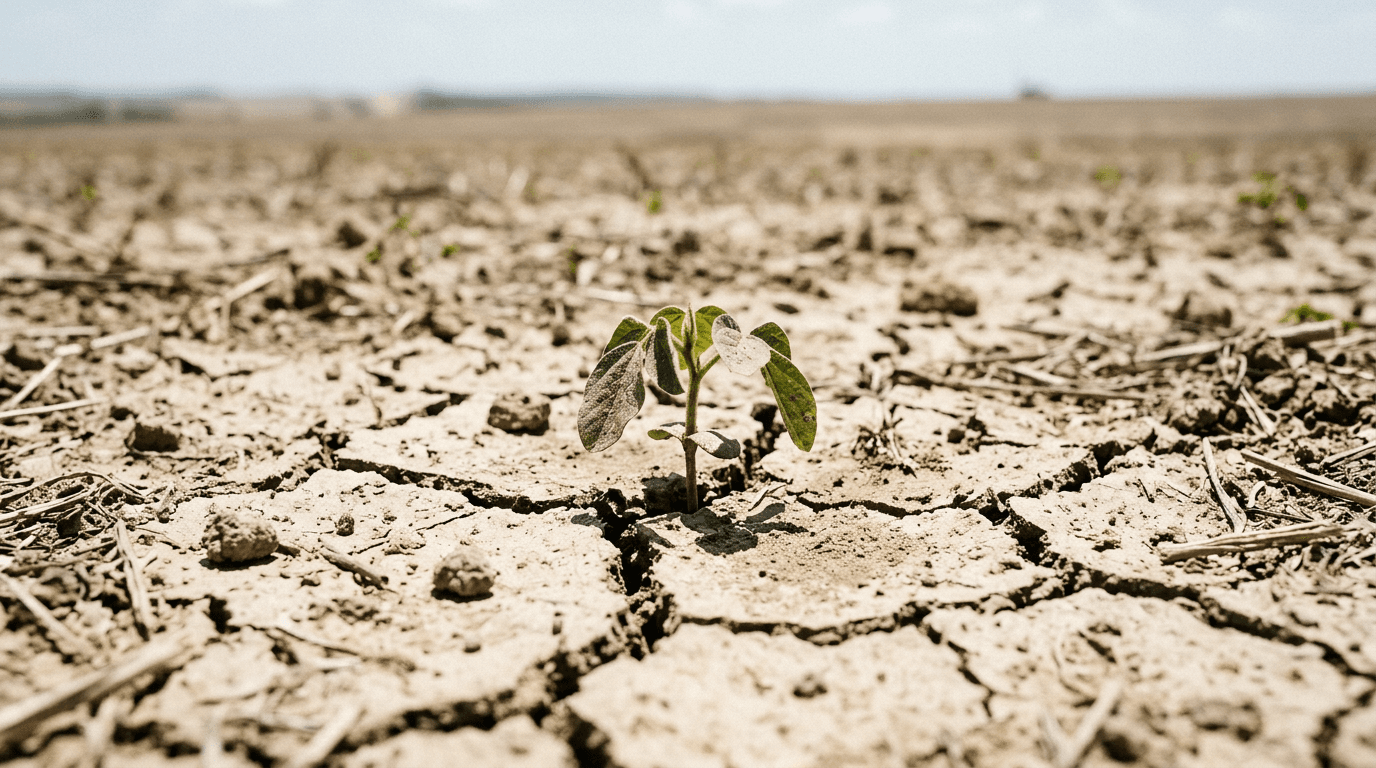
A dry spell of just 7.5mm of rain in seven days in Luis Eduardo Magalhaes, Bahia, threatens young soybean crops as temperatures rise.
Key takeaways
- Soybean planting in Bahia faces localized heat stress with Luis Eduardo Magalhaes receiving only 7.5 mm of rain over seven days, per meteorological data on November 24, 2026.
- Core agricultural hubs like Rio Verde and Cascavel remain well-watered, receiving over 117 mm of rain in the same period, per monitoring stations on November 24, 2026.
- Non-commercial traders held a net-long position of 145,816 contracts for CBOT soybeans, according to CFTC data on November 17, 2026.
American retail investors tracking agriculture ETFs and food commodity futures are keeping a close watch on South American weather as a key Brazilian growing frontier experiences an early-season dry spell. Chicago Board of Trade soybean futures hovered at 1230.25 cents per bushel on November 24, 2026, amid concerns that localized moisture deficits could threaten the record crop projections that have otherwise kept global prices in check.
The immediate worry centers on Bahia, a key state in the northeastern "MATOPIBA" agricultural frontier. In Luís Eduardo Magalhães, the commercial hub of Bahia’s western soybean belt, fields have logged six dry days over the last week, receiving a mere 7.5 mm of rainfall, according to regional agro-meteorological monitoring data on November 24, 2026. This sudden lack of moisture threatens young, recently germinated plants that require consistent water to establish healthy root systems.
This dryness in western Bahia stands in stark contrast to the abundant moisture across Brazil's core agricultural heartlands. Over the same seven-day period ending November 24, 2026, local weather stations recorded zero dry days and significant rainfall elsewhere: Sorriso in Mato Grosso received 76.7 mm of rain, Cascavel in Paraná saw 117.5 mm, and Rio Verde in Goiás registered 136.3 mm. While those regions enjoy ideal early-season conditions, the irregular distribution in the northeast has already caused uneven germination, forcing some Bahia farmers to prepare for potential replanting operations.
The localized stress comes as speculative financial players maintain significant exposure to Chicago soybean contracts. Non-commercial market participants held 227,439 long contracts compared to 81,623 short contracts, according to the U.S. Commodity Futures Trading Commission report from November 17, 2026. A prolonged dry spell could trigger speculative buying if it begins to threaten Brazil's broader export potential.
Meteorologists are warning that the dry window in western Bahia may persist. A temporary dry spell, locally known as a "veranico," is forecast to keep temperatures elevated between 34°C and 35°C (93°F to 95°F) through early December 2026, accelerating soil moisture depletion. Agronomists will be watching satellite soil moisture indices over the next two weeks to gauge whether the heat stress causes permanent yield drag on Bahia's early-planted soy.
In your brokerage app
Retail investors can monitor direct exposure to physical soybean prices through the Teucrium Soybean Fund, a US-listed ETF tracking Chicago soybean futures. The pricing of Brazilian exports is also tied to currency swings, with the US dollar trading at 5.9702 Brazilian reais on November 24, 2026, while local physical soybeans in Paraná state fetched 163.79 reais per 60-kilogram bag, according to CEPEA index data.
Latest articles
 PagSeguro shares rise 5.1 percent as US investors buy directlyPagSeguro stock jumped 5.1% to end at $7.68, reminding American retail investors of a rare Brazilian stock that can be traded directly without ADR fees.
 Dollar Touches Six-Real Milestone on Shaky Brazil Fiscal OutlookThe USDBRL exchange rate briefly touched the six-real threshold on Monday as domestic fiscal anxieties and global rate pressures intensified investor concerns.
 Petrobras returns to biofuels with $467 million corn-ethanol dealPetrobras acquires a 42% stake in corn-ethanol producer Neomille for R$2.8 billion ($467 million), marking a massive pivot back into Brazilian biofuels.