
Why Brazil's Presidential Hopefuls Are Wooing AI Data Centers
As US communities block energy-hungry AI data centers, Brazilian politicians are offering tax breaks and green energy to capture the computing boom.
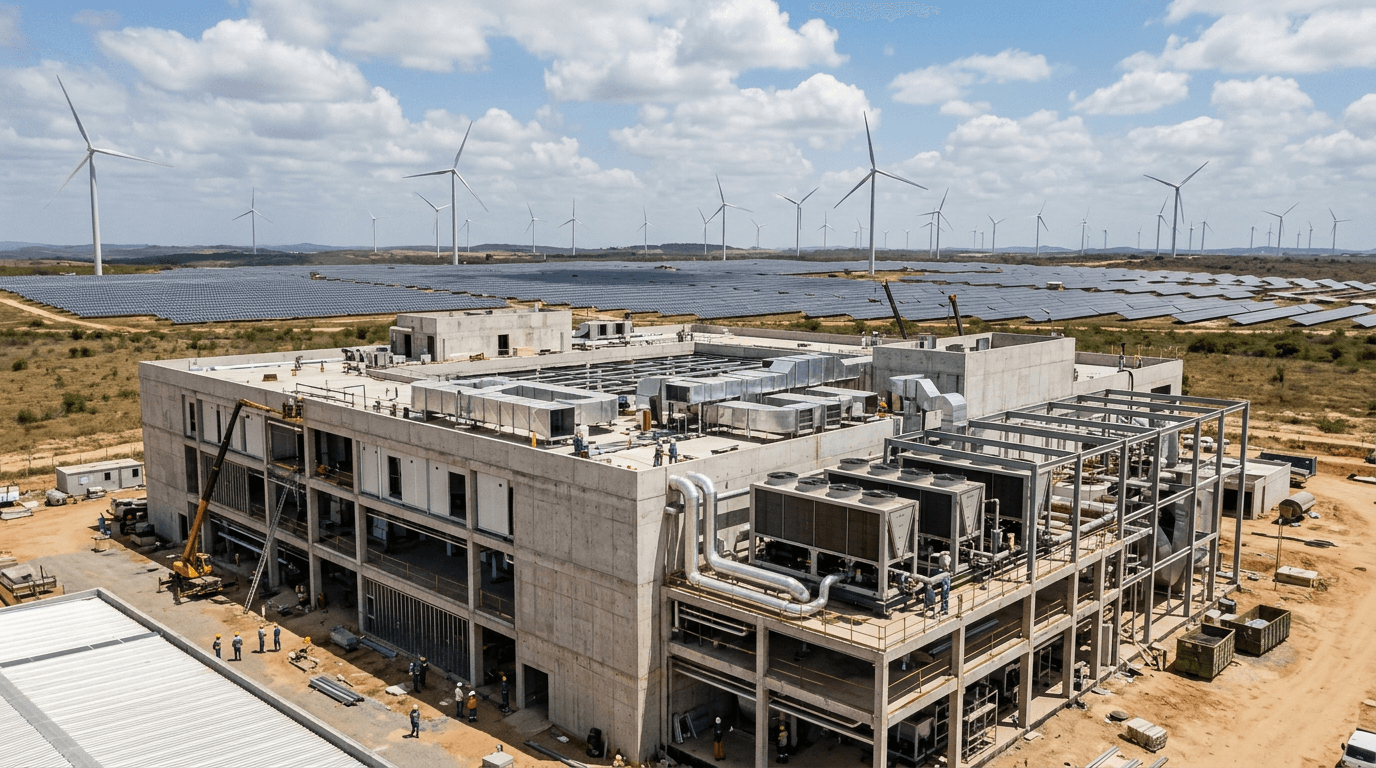
As local communities across the United States increasingly block energy-hungry artificial intelligence data centers, Brazil’s political class is moving in the opposite direction. Brazilian presidential candidates and federal policymakers are actively trying to capture a slice of the global computing boom, pitching the country's abundant green energy and newly minted tax breaks to international tech giants.
The contrast between the two nations has grown stark. In the United States, 120 data center projects worth $198 billion were delayed or blocked in the first half of 2026 due to local environmental protests and grid capacity constraints. Meanwhile, Brazil is facing a severe digital infrastructure deficit. The country currently has only 218 data centers compared to over 4,700 in the U.S., a bottleneck that contributed to an $8 billion deficit in Brazil's computer services trade balance in 2025 due to overseas data processing.
To bridge this gap, President Luiz Inácio Lula da Silva sanctioned a major piece of legislation on September 15, 2026, establishing the Special Tax Regime for Data Center Services, known as Redata. The new law zeroes federal import duties, PIS/Cofins, and industrial products taxes (IPI) on data center equipment for five years. In exchange, operators must power their facilities with renewable energy, meet strict water-efficiency limits, and reserve at least 10% of their processing capacity for the domestic market. The federal government estimates the tax relief will total 5.2 billion reais ($950 million) in 2026 alone, aiming to unlock up to 20 billion reais in immediate private investments.
This push for digital infrastructure has quickly become a key talking point ahead of Brazil's upcoming presidential election. Leading center-right contenders, including Goiás Governor Ronaldo Caiado and Minas Gerais Governor Romeu Zema, are championing tech-friendly platforms. Zema has advocated for a highly stable regulatory framework to guarantee legal security for global tech firms, while Caiado has pushed for regional tax incentives to draw infrastructure away from the saturated São Paulo-Rio de Janeiro corridor.
However, the rapid expansion of these facilities is not without controversy. While Brazil's electricity matrix is over 80% renewable—primarily driven by hydroelectric, wind, and solar power—critics point out that data centers require constant, uninterrupted "baseload" power. This has sparked an internal debate within the federal administration: some ministries are pushing to allow natural gas backup generation, while environmental purists argue that only pure wind, solar, and hydro should qualify under the Redata rules. How the government resolves these regulatory details in the coming months will determine how quickly global hyper-scalers can break ground.
What it touches
The regulatory push under Redata directly impacts Brazil's major utility and power generation firms, which are poised to sign long-term power purchase agreements (PPAs) with tech multinational corporations. Companies with massive renewable portfolios and transmission assets, such as Equatorial Energia (EQTL3), Cemig (CMIG4), and Copel (CPLE6), are highly exposed to this new wave of industrial energy demand.