
Young Farmers Drive 179% Surge in Brazil Land-Purchase Credit
Subsidized land credit contracts in Southern Brazil have nearly doubled, signaling a major shift in generational succession for the agricultural powerhouse.
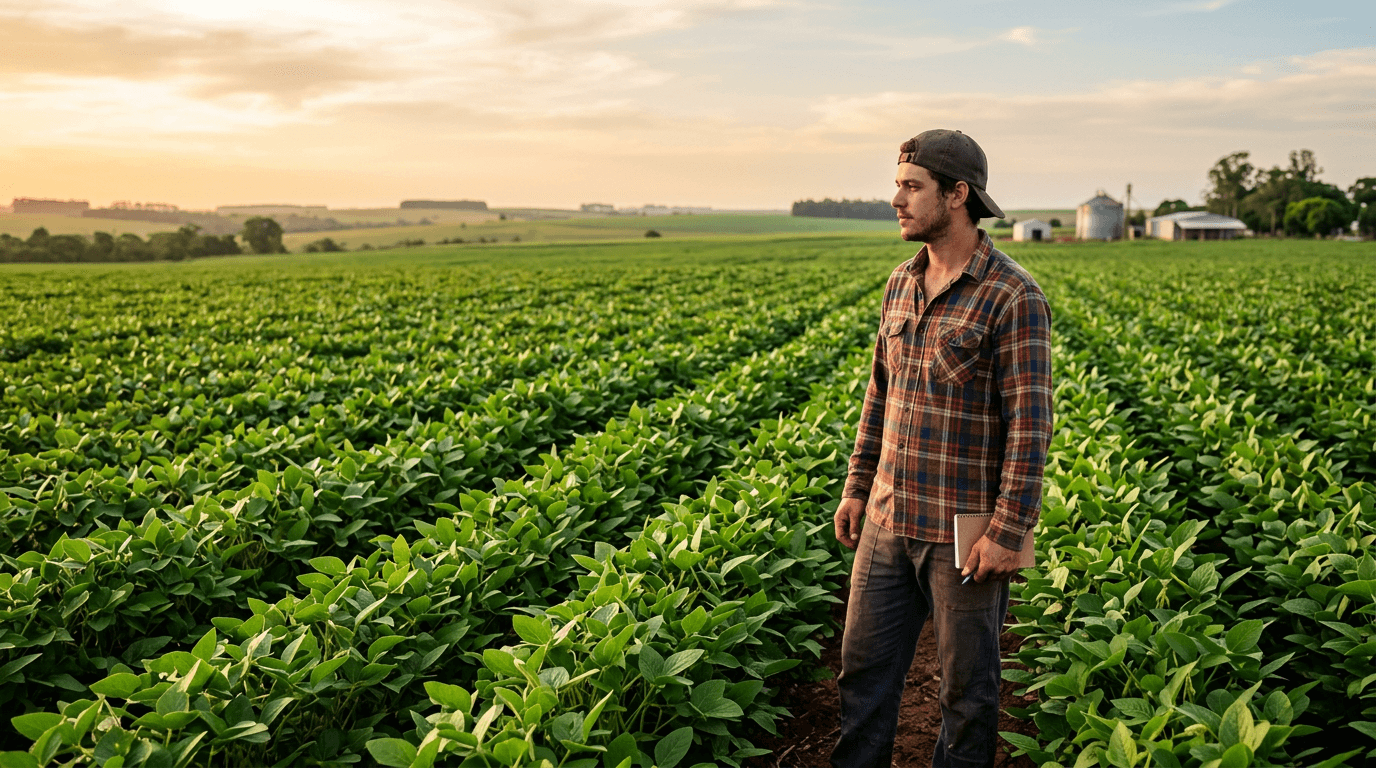
A quiet generational shift is underway across the rolling fields of Southern Brazil, where a new wave of young agriculturalists is leveraging heavily subsidized government loans to buy their own farms. Between 2024 and 2025, land-acquisition contracts signed under the National Land Credit Program (PNCF) nearly doubled in the country's southern region, jumping from 191 to 383 active operations. Over the same period, the total capital allocated to these transactions surged by 179%, skyrocketing from R$ 32.2 million ($5.8 million) to R$ 89.8 million ($16.2 million).
This sudden rush for land is reshaping the demographics of the world’s leading exporter of agricultural commodities. Run by the Ministry of Agrarian Development and Family Farming (MDA), the PNCF—originally established to assist landless workers—has become a vital tool for family succession. In states like Paraná, which sits at the heart of Brazil's soybean production, young producers under the age of 30 accounted for approximately 45% of all land credit transactions in 2025.
To keep the next generation from migrating to urban centers, the federal government has tailored the program's terms to favor youth. The specialized "PNCF Jovem" line offers subsidized interest rates starting at just 0.5% per year, paired with a three-year grace period and a 25-year repayment term. For young farmers trying to establish financial independence, these terms are virtually unmatched in the private market. The program allows young families to purchase properties up to a ceiling of R$ 306,000 ($55,000) to build their own homesteads or buy out retiring relatives.
However, the path to ownership remains steep. Despite the influx of federal funding, young applicants face soaring land prices driven by the global demand for the Brazil soybean harvest. Bureaucracy also presents a formidable barrier; obtaining the necessary environmental licenses, georeferencing property lines, and clearing title deeds can stall transactions for months. Furthermore, the lack of consolidated national transparency data makes it difficult for local cooperatives to track available properties, leaving many eager buyers waiting in administrative limbo.
As Brazil prepares for its next political cycle, the continuity of these subsidized credit lines remains a key point of discussion. The current administration of President Luiz Inácio Lula da Silva has actively expanded the program by partnering with local rural unions and family farming federations to streamline applications. However, conservative lawmakers and the powerful agribusiness lobby in Congress frequently debate the balance of federal funding between agrarian reform programs and large-scale commercial agricultural credits.
What it touches
The surge in young land ownership directly impacts the long-term productivity of Brazil's domestic grain belt. While these family-scale operations do not trade on public exchanges, their collective output feeds into the broader supply chains of major grain exporters. Companies heavily exposed to Brazilian grain origination and logistics—such as Archer-Daniels-Midland (NYSE: ADM), Bunge (NYSE: BG), and local logistics operator Rumo (B3: RAIL3)—rely on the steady generational transition of Southern Brazil's farms to secure future crop volumes.